 By
By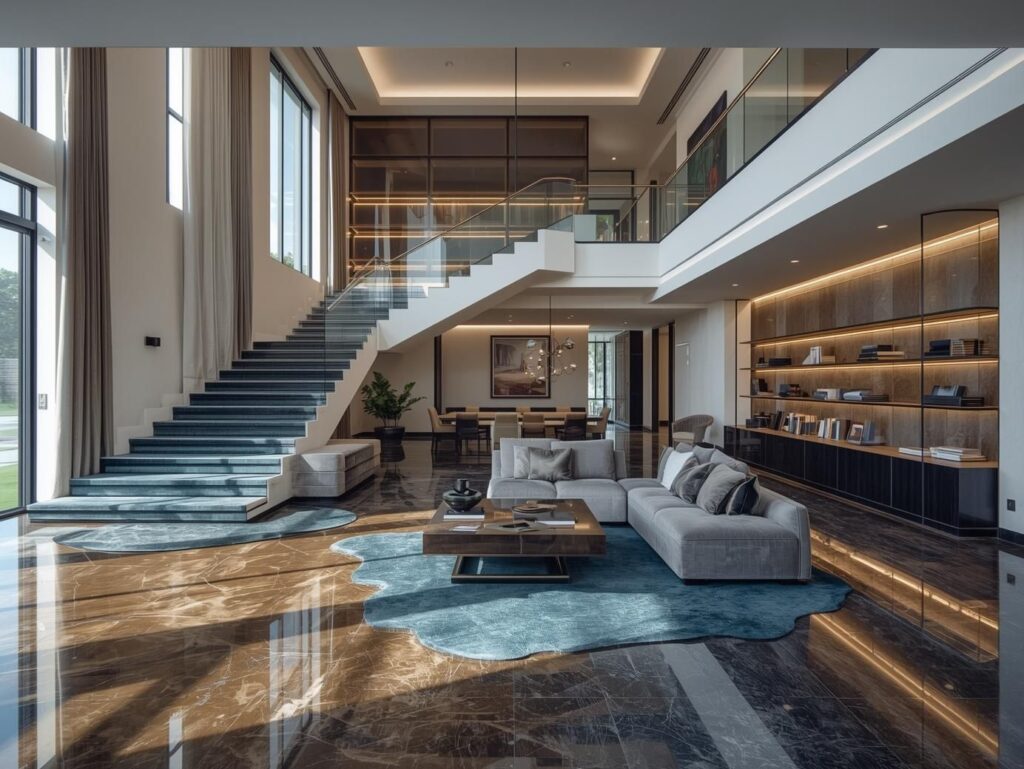
Have you ever walked into a Blue and Brown Living Room Decor and felt like something was almost right but still a little dated? I’ve seen this happen countless times. The colors themselves aren’t the problem. In fact, blue and brown are one of the most naturally balanced color pairings we have. Blue calms the mind; brown grounds the space. The issue is how they’re used.
Modern interiors don’t rely on color alone. They depend on tone, proportion, texture, and restraint. Once you understand that, a blue and brown living room stops looking traditional and starts feeling intentional, current, and surprisingly fresh.
Let’s walk through the room step by step and modernize every element without replacing everything you already own.
Modern Blue Color Selection
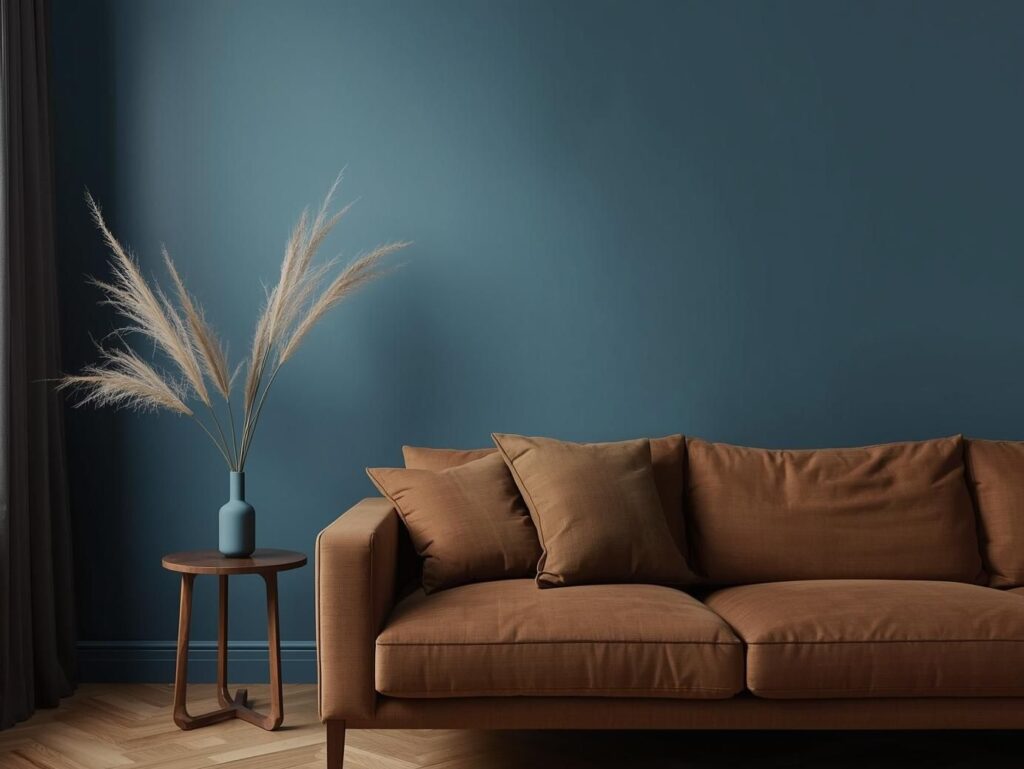
The first turning point in any blue living room is the shade itself. Modern spaces lean toward blues that feel quieter and more complex, think slate, smoky blue, steel blue, or deep navy. These tones have a gray or muted undertone, which instantly makes them feel more architectural and less decorative.
Bright or overly saturated blues tend to dominate the room. They demand attention. Muted blues, on the other hand, sit back and let materials and shapes shine. That’s why a navy room often feels more modern than a sky-blue one; it creates depth without visual noise.
Muted blues absorb light instead of bouncing it aggressively, which helps the space feel calmer and more cohesive.
Your living room looks refined and current, not playful or themed.
Modern Brown Tone Choices
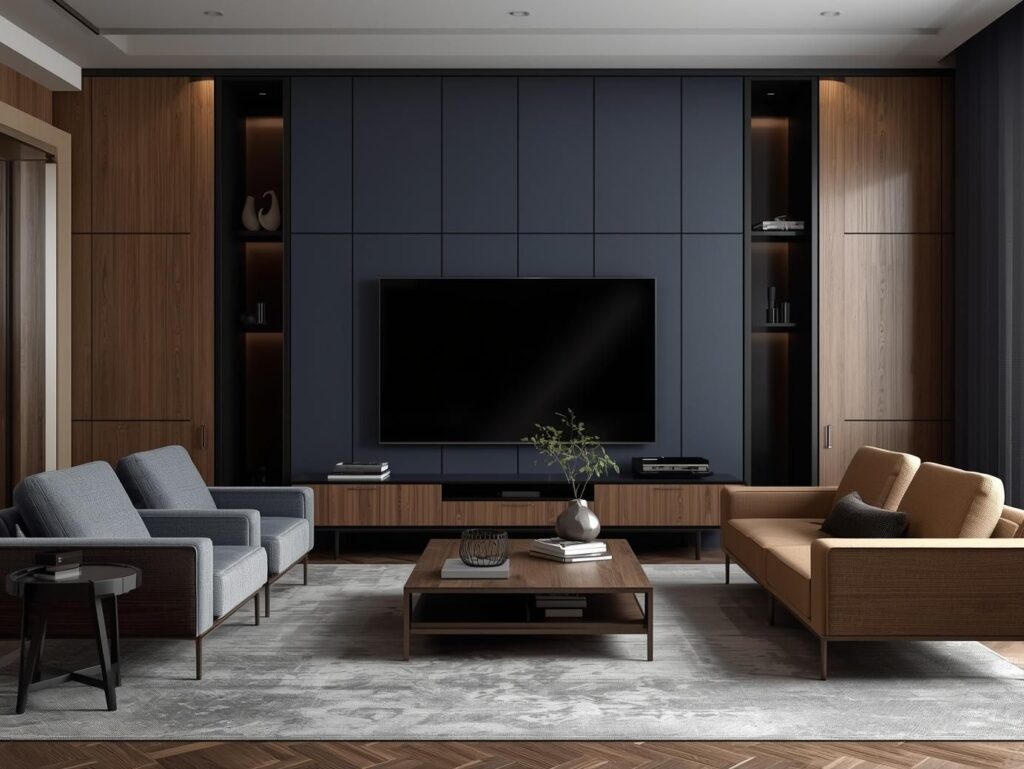
Brown is where many living rooms lose their modern edge. Red-toned woods, orange leather, or glossy finishes can instantly push the space into traditional territory.
Modern brown leans cooler and deeper walnut, espresso, weathered oak, or soft taupe. These shades pair better with contemporary blues because they share similar undertones. Instead of competing, they support each other.
Cooler browns visually “quiet down” the room and let blue feel intentional rather than overpowering.
Brown becomes grounding and elegant instead of heavy or rustic.
Epoxy Flooring in a Blue and Brown Living Room
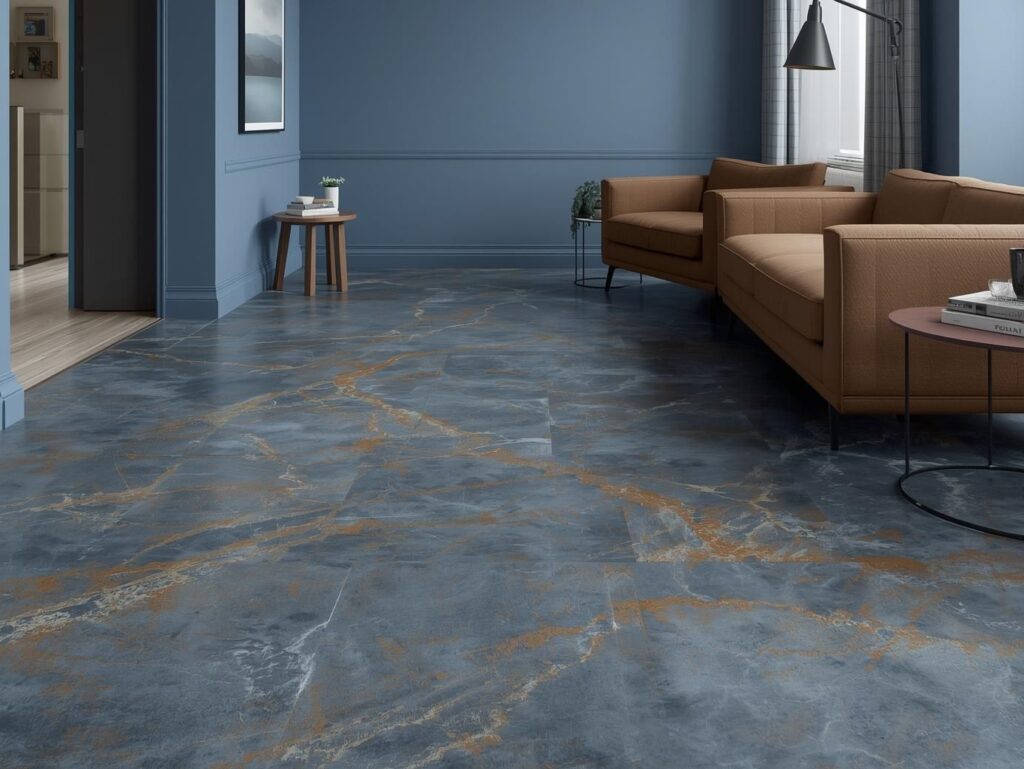
Epoxy flooring can look surprisingly modern in a blue and brown living room if the design is handled with restraint. The most successful epoxy floors avoid loud marbling or high-gloss finishes that feel commercial. Instead, modern spaces use soft, stone-inspired epoxy patterns where blue appears as subtle movement and brown shows up as earthy depth, not contrast.
A cool-toned blue-gray epoxy base with faint brown veining creates a grounded yet contemporary surface. It feels almost like polished concrete but warmer. Matte or satin epoxy finishes are key here; overly glossy floors reflect too much light and can cheapen the look.
Epoxy allows seamless color blending, which helps blue and brown coexist naturally instead of in blocks.
The floor becomes a design feature that feels custom, modern, and visually expansive especially in open living rooms.
Wall Treatment Updates
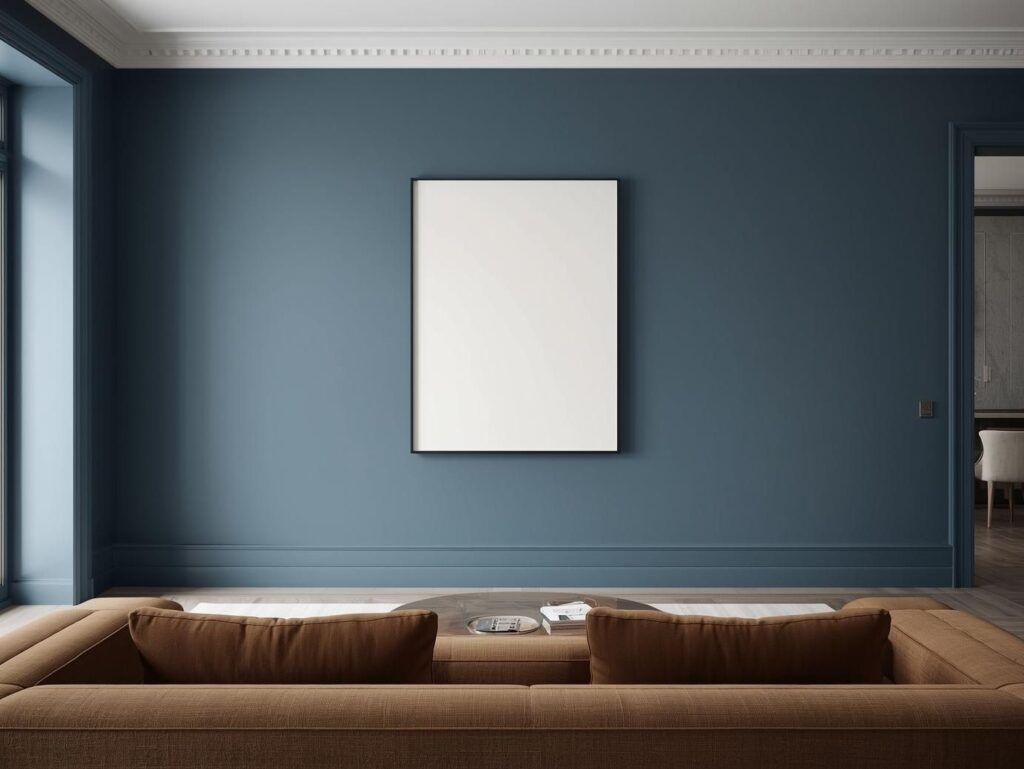
Walls do more than hold color; they set the tone for the entire room. In modern blue and brown spaces, walls are clean and understated. Flat or eggshell finishes feel current because they reduce glare and texture.
If your walls are blue, keep them solid and uninterrupted. If they’re neutral, use blue through art or furniture instead. A subtle black and white wall whether through minimal artwork or graphic photography can add contrast without introducing new colors.
Simple wall treatments keep attention on proportion and materials.
The room feels intentional, not over-designed.
Sofa and Seating Design
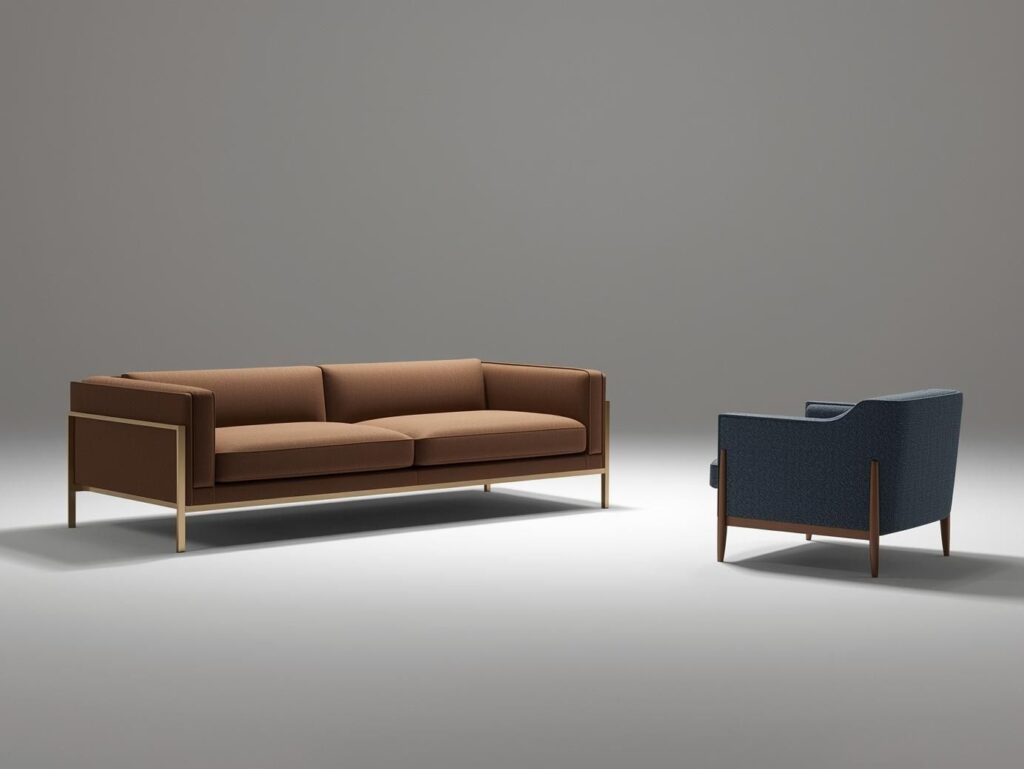
Here’s an insider truth: furniture shape dates a room faster than color ever will. A brown sofa with rolled arms will look traditional even in the trendiest blue palette.
Modern seating is low-profile, clean-lined, and visually light. Straight arms, slim cushions, and visible legs instantly modernize both blue and brown upholstery.
Clean silhouettes reduce visual weight.
Even familiar colors feel contemporary when paired with modern forms.
Wood Furniture Styling
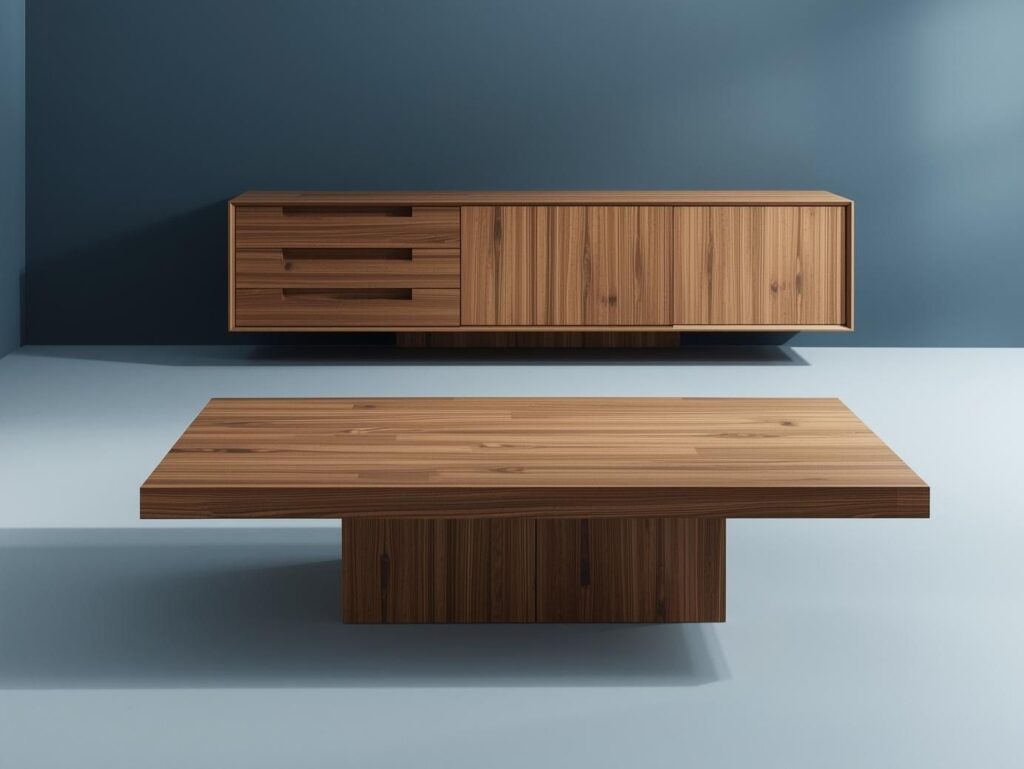
Brown furniture doesn’t need to disappear, it just needs editing. Modern wood furniture avoids ornate detailing, thick edges, and heavy finishes. Flat surfaces, subtle grain, and simple geometry are key.
Spacing matters here. Give each piece room to breathe. Crowded furniture makes brown feel heavier than it actually is.
Simpler forms highlight the natural beauty of wood instead of its bulk.
Brown reads as warm and sophisticated, not dominant.
Flooring and Rugs
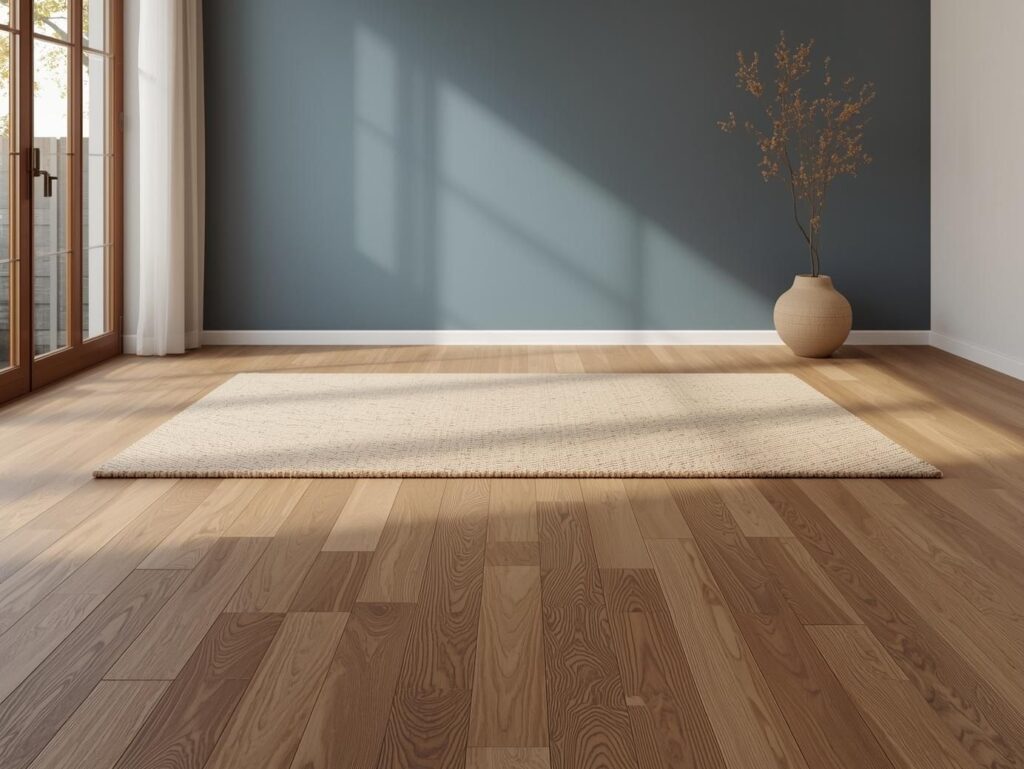
Floors quietly shape the mood of the entire living room. Matte or satin-finish wood floors work best with blue and brown because they don’t reflect too much light.
When it comes to rugs, less pattern equals more modern appeal. Solid or lightly textured rugs let the color palette shine. This is where many people overdo it, when in reality, restraint is what modern design relies on.
Simple flooring acts as a neutral foundation.
Blue and brown remain the focus instead of competing with patterns.
Texture Instead of Extra Colors
One of the most modern design moves you can make is not adding more color. Instead, layer texture. Think leather against linen, smooth wood beside woven fabric, or matte finishes paired with subtle grain.
Even small touches like a vase of blue and white flowers add visual interest without breaking the palette.
Texture adds depth without chaos.
The room feels layered and rich, not busy.
Shelves with Books and Decor That Feel Modern
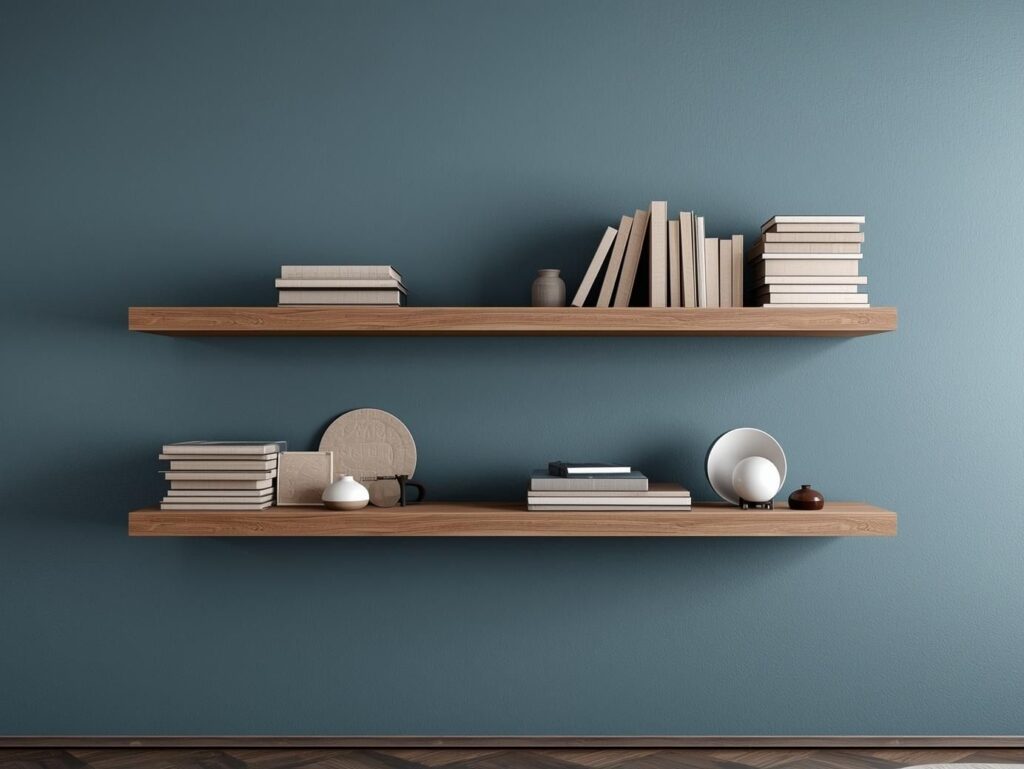
Shelving is where personality lives, but it’s also where blue and brown rooms often drift into clutter. Modern shelving keeps structure clean and styling intentional. Floating shelves in warm wood tones against blue walls or matte black shelves against neutral walls create contrast without adding new colors.
Books should be styled horizontally and vertically, leaving negative space between stacks. Mixing books with a few sculptural objects, ceramic pieces, or subtle blue accents ties the shelves back into the room’s palette. Avoid filling every inch; empty space is part of the design.
Clean shelving lines paired with edited styling reinforce modern design principles.
The shelves feel curated and personal, not crowded adding depth to the room without distracting from the blue and brown balance.
Lighting That Feels Contemporary
Lighting is often overlooked, yet it dramatically affects how blue and brown are perceived. Warm yellow lighting can make blue feel dull and brown feel muddy.
Modern living rooms benefit from neutral-white lighting. Pair that with simple fixtures—clean metal, black accents, or minimal glass and you instantly update the space.
Balanced lighting sharpens color contrast.
The room feels crisp, not cozy-traditional.
Modern Accent Use
Accents should support the palette, not compete with it. Black, cream, and subtle metallics work best with blue and brown. Repeating these accents in small doses creates rhythm and cohesion.
This is where Living Room Color & Palette Ideas often go wrong; too many accent colors dilute the main combination.
Limiting accents keeps the color story clear.
The room looks curated instead of cluttered.
Art and Wall Decor
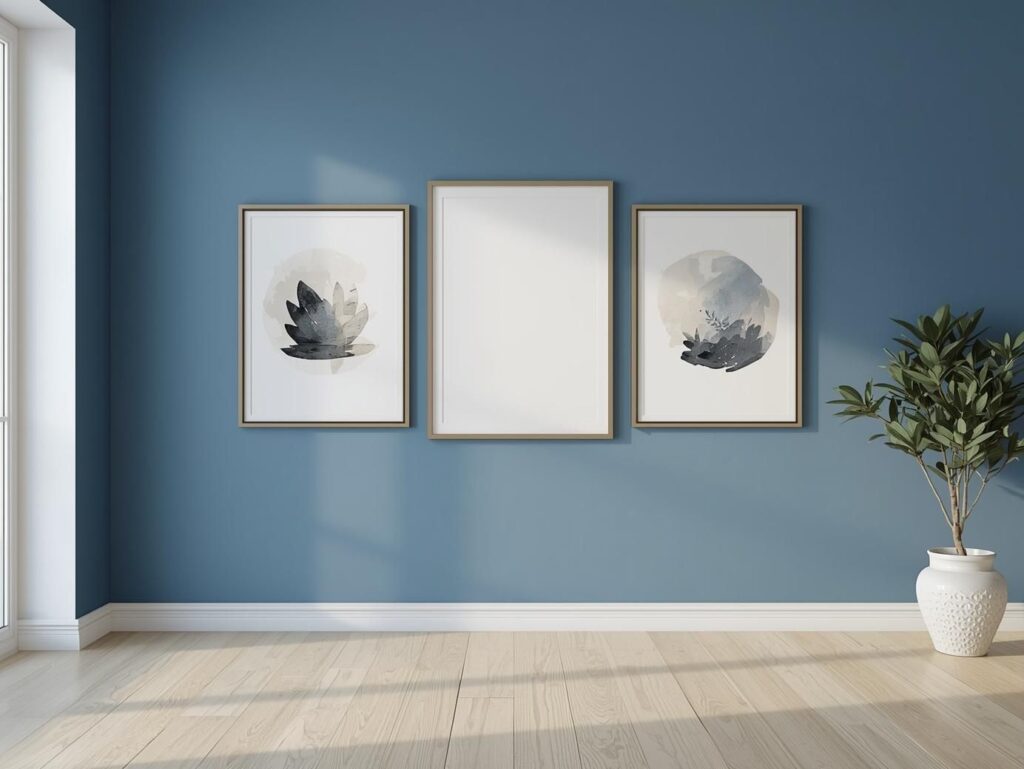
Modern wall decor favors fewer, larger pieces. Oversized art with simple compositions complements blue and brown without overwhelming them. Skip busy gallery walls unless they’re extremely restrained.
Negative space matters here. Empty wall space isn’t unfinished, it’s intentional.
Simplicity lets color and form do the work.
Walls feel designed, not filled.
Styling with Fewer Objects
The final step is often the hardest: editing. Modern spaces don’t showcase everything you own. They highlight what matters most.
When you remove excess decor, blue feels deeper and brown feels warmer. The room finally has space to breathe.
Fewer objects reduce visual noise.
The living room feels calm, premium, and modern.
Final Thoughts
A modern blue and brown living room isn’t about chasing trends or replacing everything at once. It’s about refining what’s already there, choosing the right tones, simplifying shapes, layering texture, and embracing restraint.
Once you approach the room as a system instead of a collection of items, blue and brown stop feeling dated and start feeling timeless.
If you’re rethinking your space, start small. One change at a time can completely transform how the room feels.