 By
By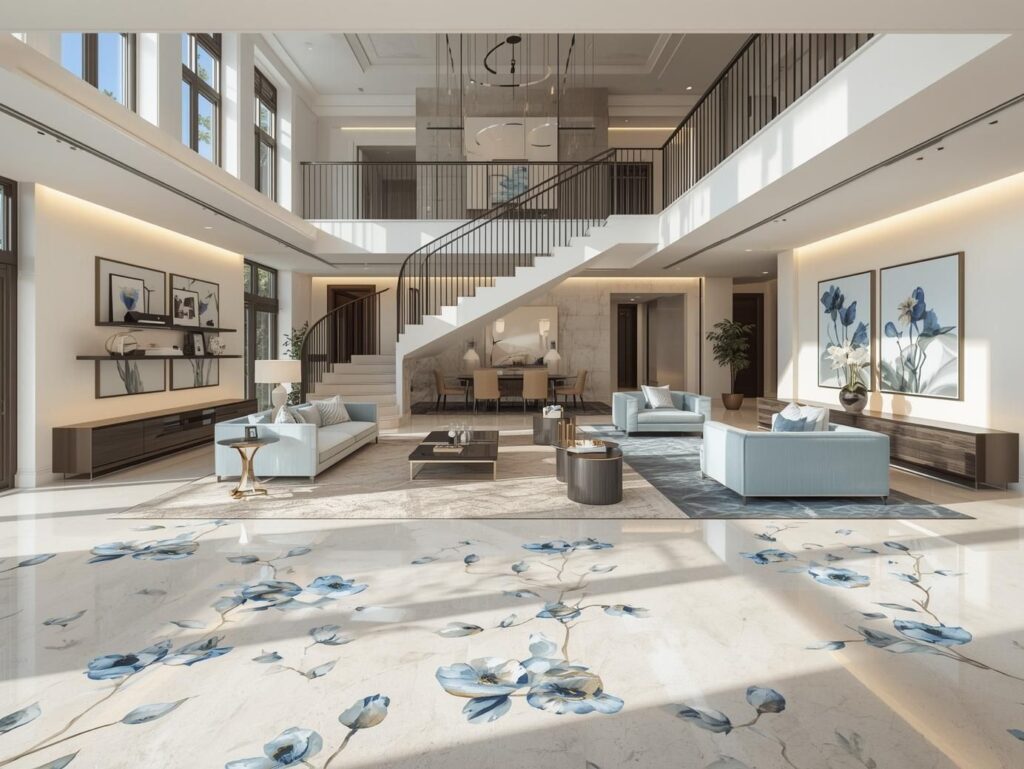
Walking into a living room where blue and white flowers are styled well feels different. The space breathes. Decorating ideas with blue and white flowers for living room spaces work year-round because this pairing doesn’t chase trends; it grounds the entire Living Room Color & Palette This pairing works because it mirrors what the eye already trusts open skies, water meeting stone, clouds against calm horizons. When done thoughtfully, blue and white florals stop being “decor” and start acting like a design language that holds the room together through every season.
Why Blue and White Flowers Always Work in Living Room Décor
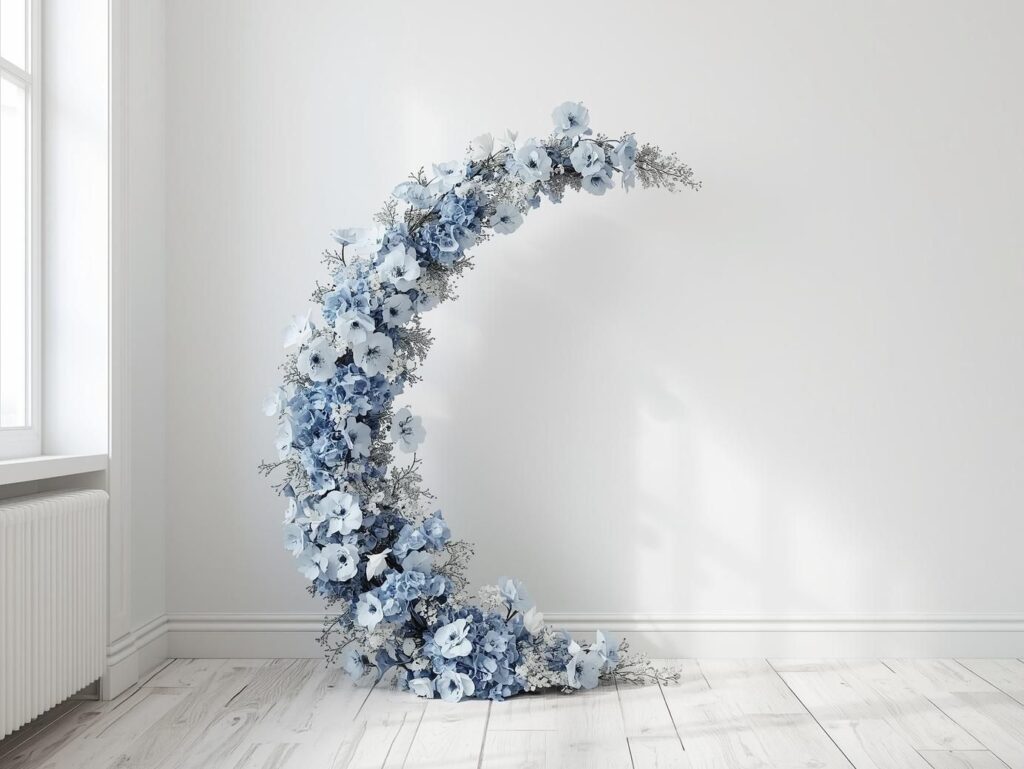
Blue carries a proven psychological effect: it lowers visual tension and promotes calm. Interior design studies consistently show that blue tones reduce perceived clutter and visual noise, which is why designers rely on them in high-traffic spaces like living rooms. White, on the other hand, reflects light, sharpens edges, and keeps arrangements from feeling heavy. Together, they balance emotion and clarity.
This pairing never feels dated because it exists outside trend cycles. While earthy greens surge one year and terracotta dominates another, blue and white remain stable. Historic interiors from European salons to coastal homes used this combination long before modern trends coined names like “minimal” or “transitional.”
Seasonal décor often fails because it leans too hard into symbolism. Tulips scream spring. Red berries signal winter. Blue and white flowers avoid that trap. Hydrangeas, delphinium, and white roses read as architectural rather than seasonal. In a white living room, they add definition. In a black living room, they soften contrast. Even in a navy room, the lighter blues create depth instead of blending into the background.
Fresh Flowers That Last Beyond a Single Season
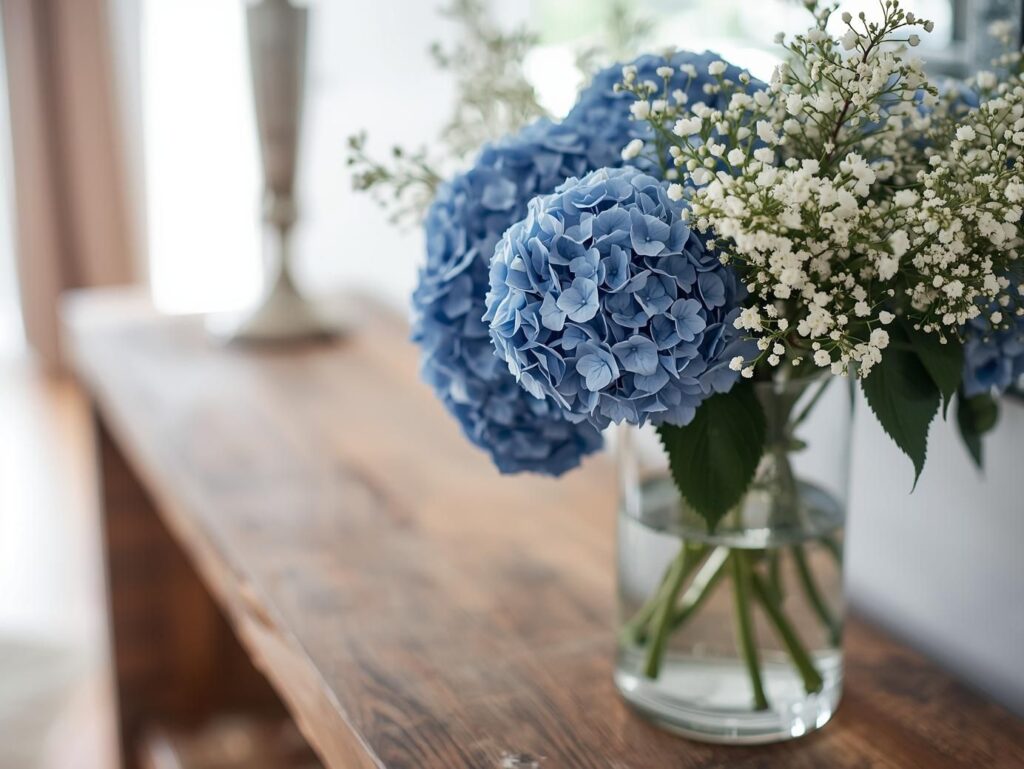
Some flowers simply age better indoors. Hydrangeas top the list because of their dense bloom structure. Large petals don’t wilt visually as quickly as thin, delicate blooms. Even as they dry slightly, hydrangeas maintain form, which is why designers often let them transition naturally instead of discarding them immediately.
Delphinium brings height. Vertical flowers trick the eye into seeing space as taller, a useful strategy in living rooms with standard ceilings. Their cooler blue tones also avoid the “spring pastel” look that fades fast.
Lisianthus offers a softer alternative to roses. With layered petals and muted color saturation, it works year-round without feeling romantic or festive. White roses remain a classic for a reason: neutral shape, consistent availability, and adaptability across styles from a modern blue room to a more traditional setting.
Bloom shape matters more than people realize. Rounded blooms feel timeless. Spiky or novelty shapes often lock arrangements into a season. That distinction alone explains why certain flowers look out of place by mid-year while others stay relevant.
Faux vs Real Flowers
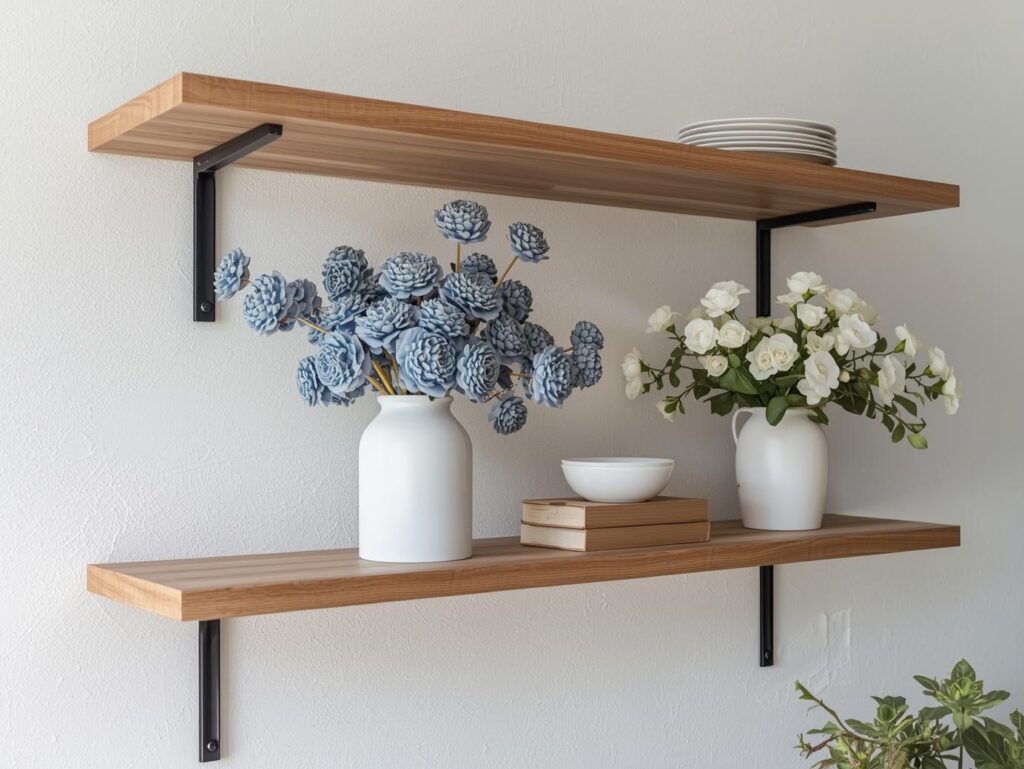
Fresh flowers bring movement and scent, but faux flowers outperform them in consistency. High-quality faux stems maintain color integrity, especially with blues that tend to fade under indoor lighting. Modern faux flowers now use layered fabric, latex coatings, and weighted stems to mimic real growth patterns.
Realistic faux flowers share three traits: variation in petal tone, visible stem joints, and imperfect symmetry. Perfectly uniform flowers almost always look artificial. Designers often blend real and faux by placing fresh greenery at eye level and faux blooms slightly lower or higher, where close inspection rarely happens.
In homes with fluctuating temperatures or limited natural light, faux flowers offer a practical advantage. A teal blue white arrangement in a faux format stays crisp without daily maintenance, making it ideal for busy households.
Blue and White Flower–Inspired Epoxy Flooring: A Bold but Surprisingly Timeless Choice
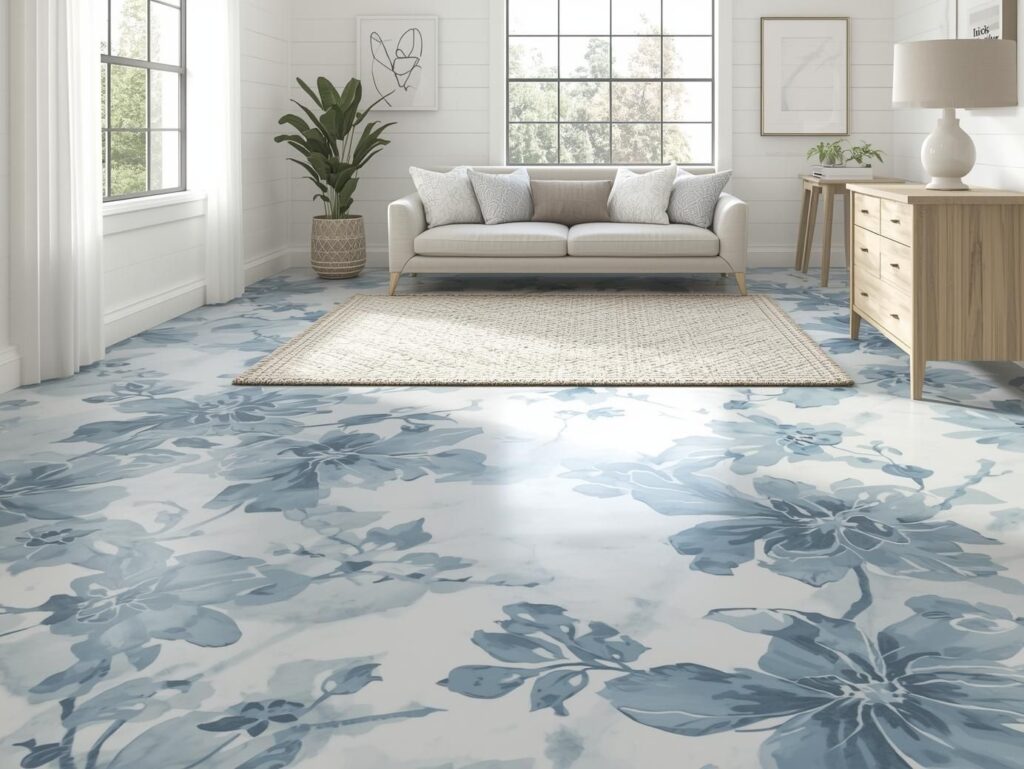
Epoxy flooring with blue and white floral movement works best when treated as art, not pattern. Instead of literal flowers, successful designs use soft blue veining and cloudy white swirls that echo petals in motion. The result feels calm and fluid, especially in modern farmhouses or minimal living rooms.
Creation starts with a warm white epoxy base, followed by hand-poured blue pigments shaped gently with tools or heat. Restraint matters. Too much detail turns the floor busy; subtle movement keeps it elegant. A clear topcoat seals the design and adds depth.
In a white living room, this flooring becomes a quiet focal point. In a blue room or navy room, it works when furniture stays simple and floral décor is minimal. Beyond looks, epoxy floors resist stains, reflect light, and clean easily, ideal for high-use living spaces.
This choice suits confident design decisions. When balanced with blue and white flowers above the floor, the room feels cohesive, modern, and unexpectedly timeless.
Where to Place Blue and White Flowers in a Living Room
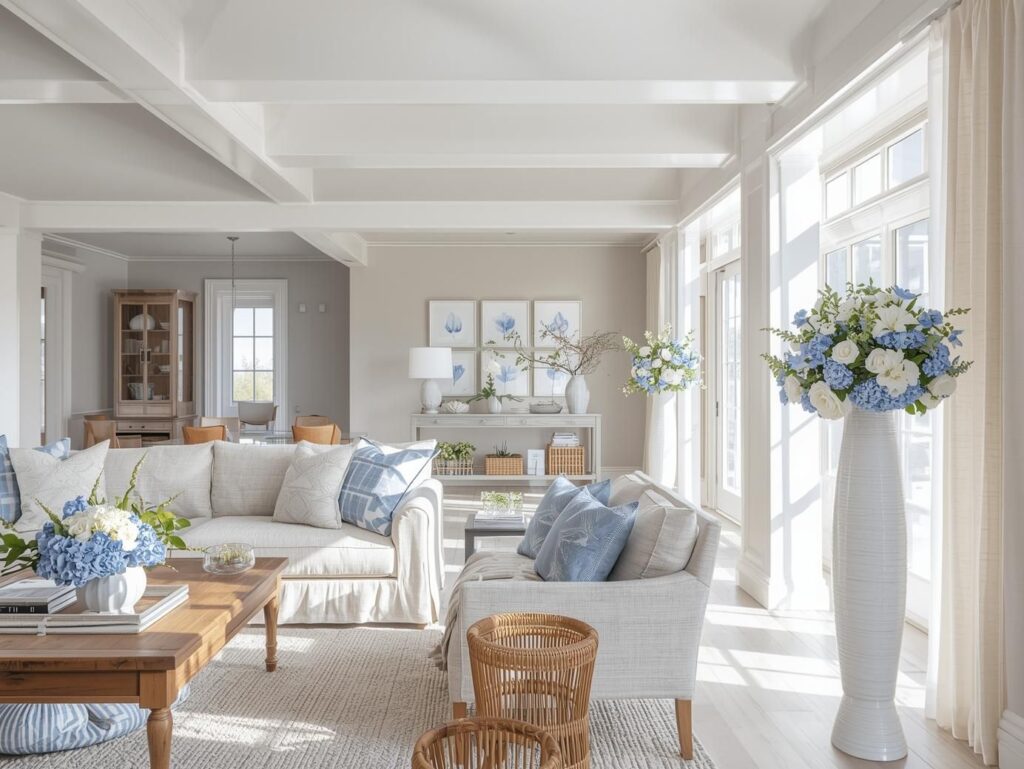
Placement controls how the room feels before color even registers. Eye-level arrangements on consoles or shelves engage immediately. Ground-level placements, like floor vases, ground the space and add weight where furniture feels sparse.
Visual flow improves when flowers follow the room’s natural movement. In an open-plan living area, one statement arrangement often works better than several competing ones. Smaller rooms benefit from subtle repetition: a coffee table arrangement echoed by a smaller piece on a side table.
Placement also affects openness. Large arrangements placed too centrally block sightlines, making even spacious rooms feel crowded. Designers often offset arrangements slightly to maintain visual breathing room, especially in blue and brown interiors where darker furniture already adds weight.
Best Places to Style Blue and White Flowers in a Living Room
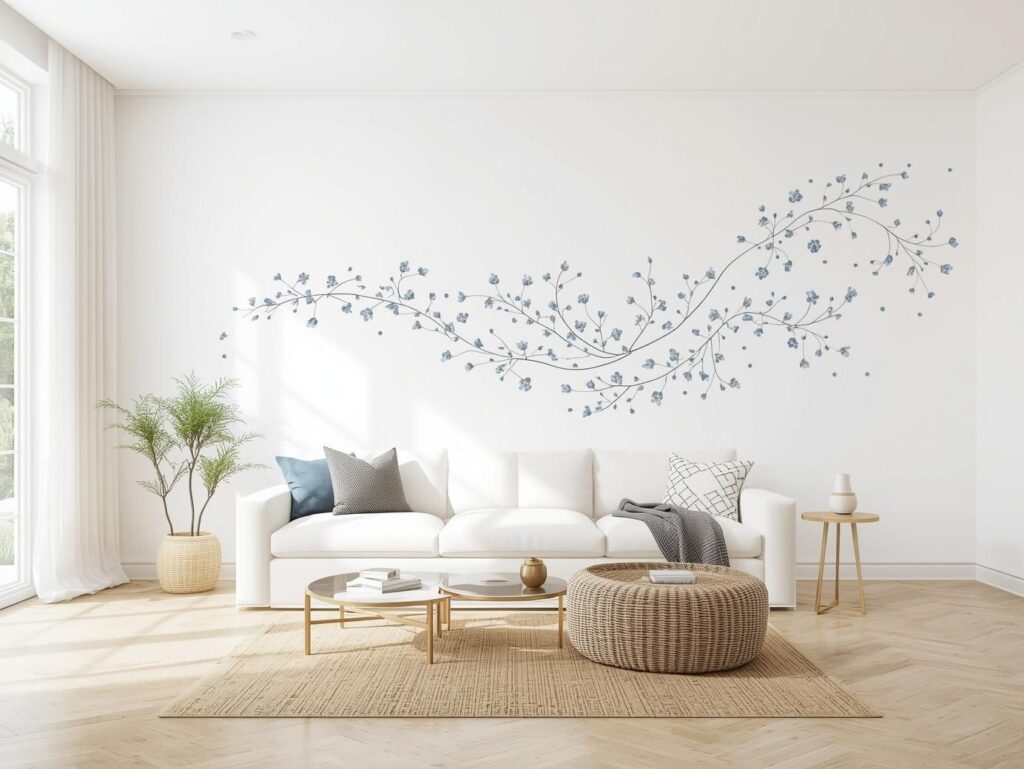
Coffee tables demand restraint. Low, wide arrangements preserve conversation lines and prevent visual interruption. Clear glass vases work well here, allowing stems to become part of the display.
Side tables and consoles allow more height. These areas handle vertical arrangements without disruption. Window-adjacent spaces benefit from blue and white florals because natural light enhances cooler tones without washing them out.
Empty corners often feel forgotten. A tall floor vase with delphinium or faux hydrangea instantly adds purpose. In a navy room, this technique prevents corners from collapsing into darkness.
Vase and Container Ideas That Make Blue and White Flowers Look Expensive
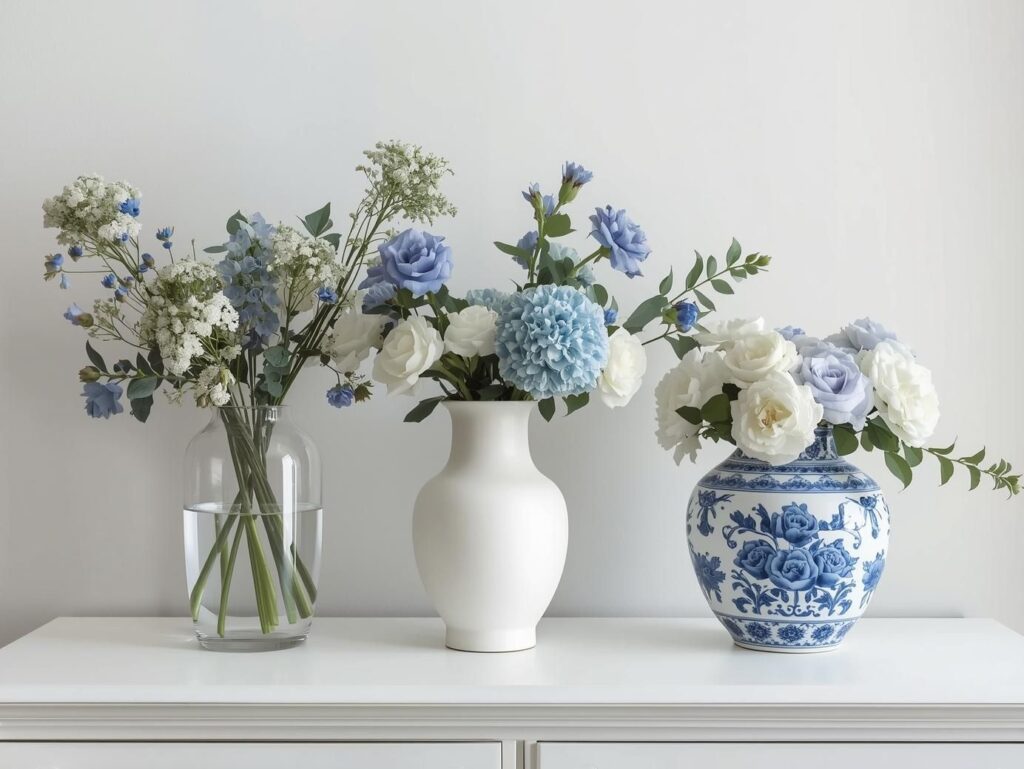
Vase choice defines perceived value. Clear glass feels light and modern, ideal for minimalist spaces. Ceramic vases introduce texture and work well in farmhouse or transitional rooms. Blue-and-white patterned vases add character but require restraint to avoid visual overload.
Finish matters. Matte surfaces absorb light, making flowers feel softer and more organic. Glossy finishes reflect light, creating a sharper, more formal look. Scale completes the equation. A small vase on a large console always looks accidental. Designers match vase height to roughly one-third of the furniture height for balance.
Decorating Ideas With Blue and White Flowers for Different Living Room Styles
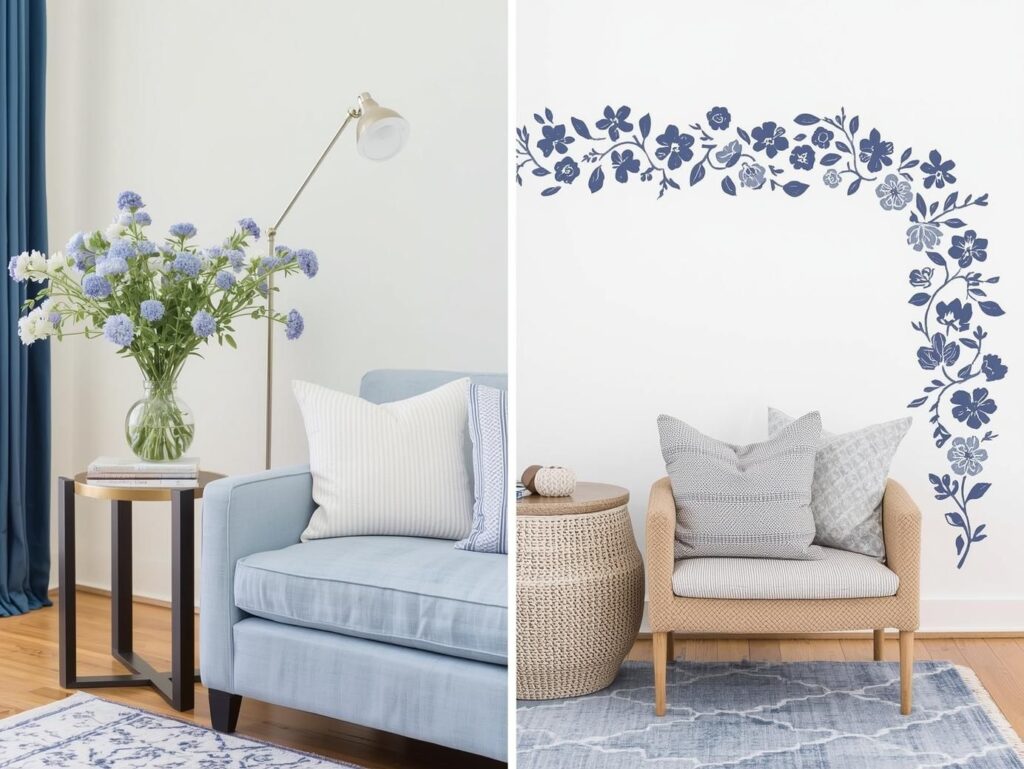
Modern living rooms thrive on restraint. Fewer stems, negative space, and deliberate placement keep the look intentional. In a modern blue room, even three hydrangea stems in a sculptural vase can outperform a full bouquet.
Farmhouse or cottage spaces welcome texture. Linen, wood, and ceramic pair naturally with looser arrangements. Slight asymmetry feels authentic rather than messy.
Traditional living rooms favor symmetry. Matching arrangements on either side of a fireplace or console reinforce structure. Blue and white flowers complement classic furnishings without competing with ornate details.
How to Style Blue and White Flowers So They Don’t Look Seasonal
Seasonal décor fails when accessories dictate the narrative. Avoid holiday-coded ribbons, metallic picks, or themed containers. Neutral fillers like eucalyptus or soft greenery extend usability.
Stem swapping offers a smart alternative to full replacements. Removing one or two blooms refreshes the look without starting over. This method works especially well in a white living room, where subtle changes stand out more.
Common Mistakes
Overmatching remains the most common error. Matching flowers exactly to pillows or rugs creates a staged look. Variation keeps arrangements natural.
Too many blue shades confuse the eye. Successful spaces establish a hierarchy: dominant blue, supporting blue, neutral white. Lighting mistakes also undermine good choices. Warm bulbs dull cool blues, while neutral lighting preserves clarity especially important in darker spaces like a black living room.
Budget-Friendly Decorating Ideas
Grocery store flowers improve instantly with trimming and regrouping. Removing excess stems and using a better vase elevates even inexpensive blooms.
One arrangement can serve multiple areas over time. Moving flowers from the coffee table to a console extends their usefulness. Vases don’t need constant replacement either. Rotating containers between rooms refreshes the entire Living Room Color & Palette without new purchases.
How Often to Refresh Blue and White Flower Arrangements
Weekly micro-refreshes fresh water, stem trimming, light repositioning—keep real flowers presentable. Monthly restyling works better for faux arrangements. Dust collects unevenly, flattening petals and dulling color.
Small cues often signal when a refresh is needed: waterlines visible through glass, petals facing the same direction, or arrangements blending too much into the background. Addressing these details keeps the space intentional.
Final Thoughts
Restraint defines sophistication. One thoughtful arrangement often outperforms several average ones. Blue and white flowers offer flexibility across styles from teal blue white schemes to grounded blue and brown interiors without overwhelming the room.
Experimentation matters, but clutter never helps. Adjust stems, change vases, play with placement. When blue and white florals feel personal rather than perfect, the living room starts telling its own story and that’s when the design truly works.
Ready to elevate your living room? Start with one arrangement, place it intentionally, and let the calm of blue and white reshape the space naturally.
Frequently Asked Questions
Are blue and white flowers suitable for small living rooms?
Yes. Blue and white flowers reflect light and feel visually lighter, which helps small living rooms appear more open and balanced. The key is using compact arrangements and slim vases.
Do blue and white flower arrangements work in modern living rooms?
They do. When styled with fewer stems and simple containers, blue and white flowers complement modern spaces without softening the clean lines or minimal aesthetic.
How can I make blue and white flowers look natural year-round?
Avoid seasonal fillers and overly themed containers. Stick to neutral greenery and swap individual stems instead of changing the full arrangement to keep it timeless.
Are faux blue and white flowers better than real ones for living rooms?
Faux flowers are more practical for low-light or low-maintenance spaces. High-quality faux stems hold their color better than real blue flowers over time.
What is the best vase color for blue and white flowers?
White, clear glass, or muted blue-patterned vases work best. The vase should support the flowers visually, not compete with their color or shape.