 By
By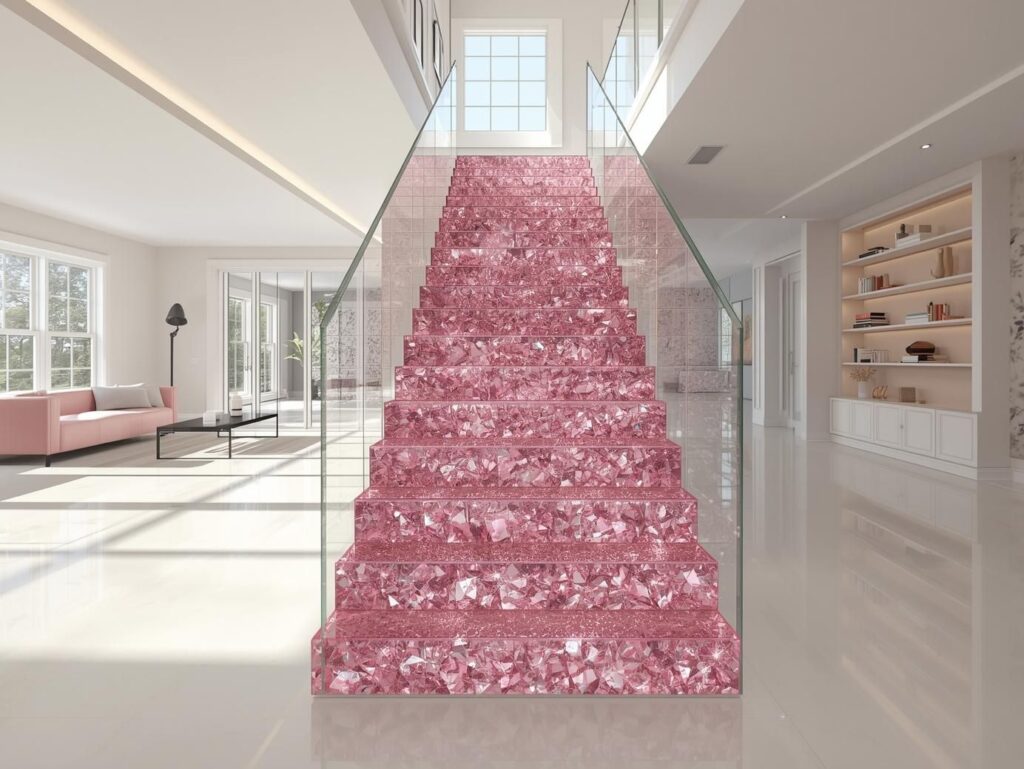
Stairs are often overlooked in home décor and home Improvement. We paint walls, upgrade flooring, change lighting but the staircase usually stays the same. That’s changing fast. Homeowners who want something modern, seamless, and durable are now exploring epoxy on stairs as a bold design and functional upgrade.
At first glance, epoxy stairs look sleek and almost sculptural. But behind that glossy or matte finish is a technical material that behaves very differently from wood, tile, or carpet. Before you decide to coat your stairs with epoxy, it’s important to understand how it works, where it performs best, and where it can go wrong.
This guide walks you through everything honestly, practically, and in plain language.
- What Is Epoxy on Stairs?
- How Epoxy on Stairs Works
- Types of Epoxy on Stairs
- Pros of Using Epoxy on Stairs
- Cons and Limitations of Epoxy on Stairs
- Is Epoxy on Stairs Safe for Everyday Use?
- Best Stair Materials for Epoxy Application
- Epoxy on Stairs Cost and Long-Term Value
- When Epoxy on Stairs Is a Good Idea and When It’s Not
- Are Epoxy Stairs Right for Every Home?
- Frequently Asked Questions About Epoxy on Stairs
- Is epoxy on stairs slippery?
- Can epoxy be applied on wooden stairs?
- How long does epoxy on stairs last?
- Is epoxy on stairs safe for homes with kids or pets?
- Can epoxy stairs be repaired if damaged?
- How much does epoxy on stairs cost?
- Does epoxy on stairs require special maintenance?
- Is epoxy suitable for indoor staircases?
What Is Epoxy on Stairs?
Epoxy on stairs is a resin-based coating system applied over stair surfaces to create a hard, seamless, and protective finish. It’s made by mixing two components, a resin and a hardener which chemically react and cure into a solid surface.
Unlike paint, epoxy doesn’t just sit on top. It bonds to the surface beneath it. Once cured, it becomes resistant to moisture, stains, abrasion, and daily wear. This is why epoxy is commonly used in garages, basements, and commercial spaces and why homeowners are now bringing it into interior design.
When epoxy is used on stairs, the process requires more precision than flat floors. Stair treads, risers, and nosing edges must all be prepared correctly to ensure durability and safety. One mistake in leveling or curing can affect the entire staircase.
In modern homes, epoxy stairs often replace or cover:
- Bare concrete staircases
- Old wooden stairs needing a contemporary refresh
- Utility stairs in basements or garages
The result is a staircase that feels intentional, not forgotten.
How Epoxy on Stairs Works
Every successful epoxy staircase starts long before the epoxy is poured.
First comes surface preparation, the most critical step. Concrete stairs are ground to remove dust, laitance, and weak layers. Wooden stairs must be sanded, repaired, and sealed properly especially if transitioning from an epoxy wood floor elsewhere in the house.
Next is priming. A primer improves adhesion and prevents air bubbles from forming during curing. Skipping this step is one of the most common reasons epoxy fails on stairs.
Then comes the epoxy application. The mixed epoxy is spread evenly across each tread and riser. Because stairs are vertical and stepped, installers work methodically one section at a time to prevent drips and pooling.
Finally, the finish layer defines the look and feel. This could be a glossy epoxy floor finish for a dramatic effect or a matte epoxy floor for a softer, modern aesthetic. Anti-slip additives are often added at this stage to improve safety.
Once cured, epoxy forms a continuous surface that visually connects the staircase to surrounding flooring, such as a clear epoxy floor in adjacent areas.
Types of Epoxy on Stairs
Not all epoxy stairs look the same. Design choices dramatically change how a staircase feels in a space. Below are the most popular epoxy styles used on stairs today.
Metallic Epoxy Stairs
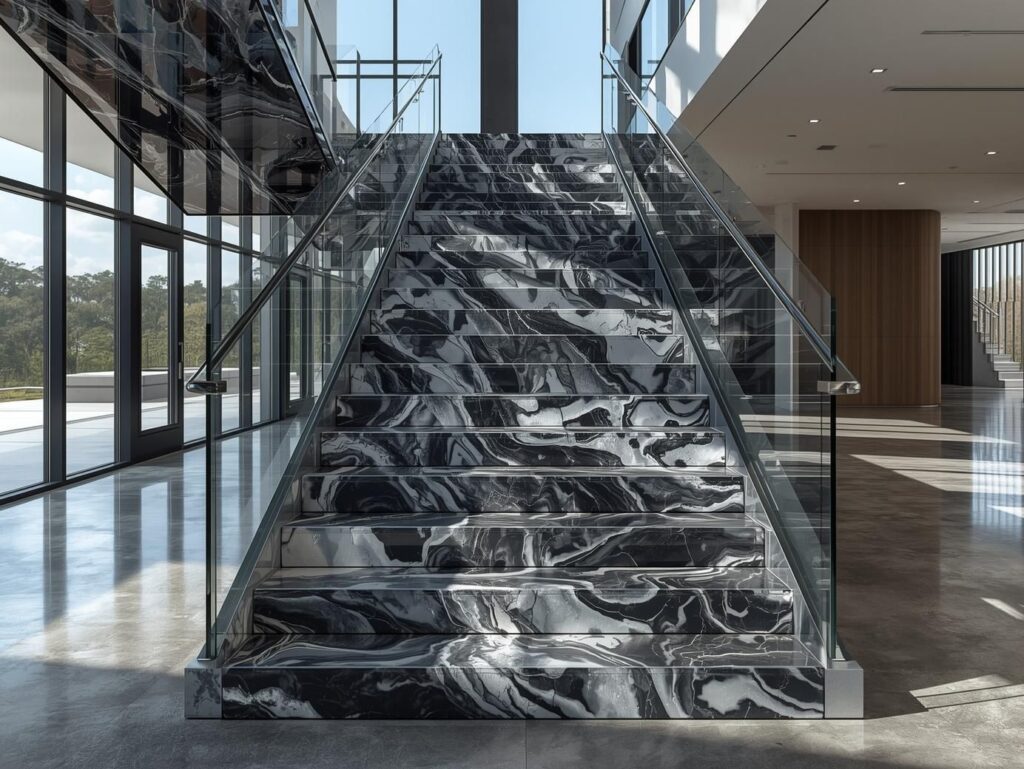
Metallic epoxy stairs use reflective pigments that create movement and depth. Light plays across the surface as you move, making stairs feel sculptural rather than flat. A black metallic epoxy floor on stairs creates a dramatic, luxury look, while softer metallic tones work well in minimalist interiors.
Glossy vs Matte Epoxy Finishes
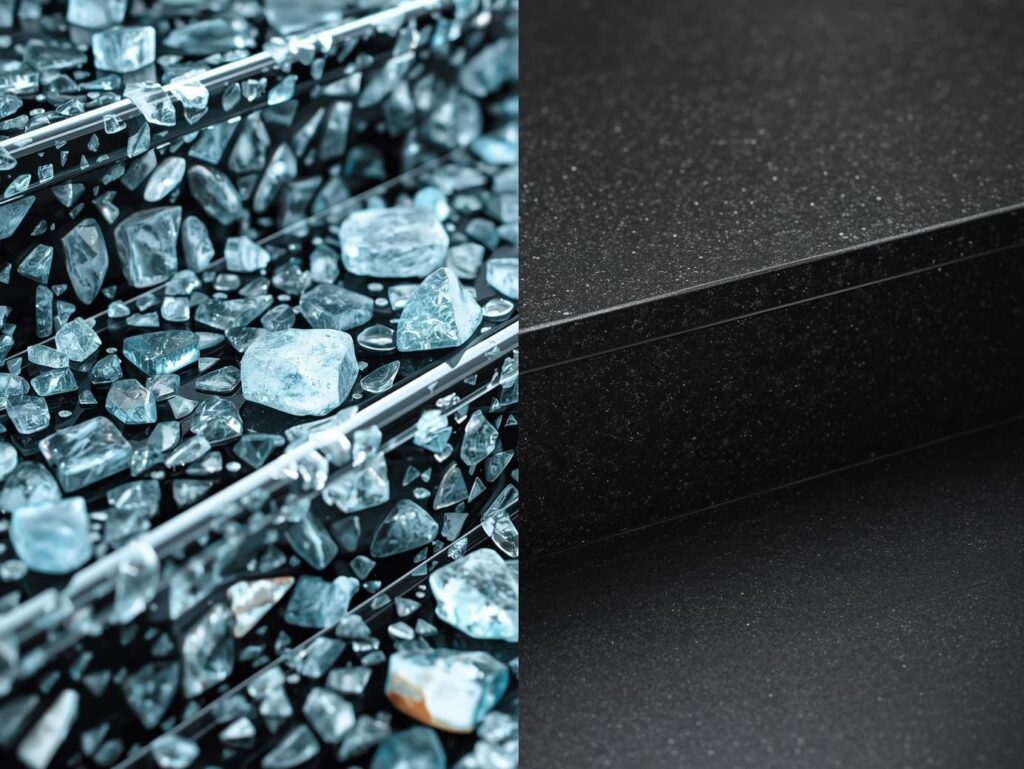
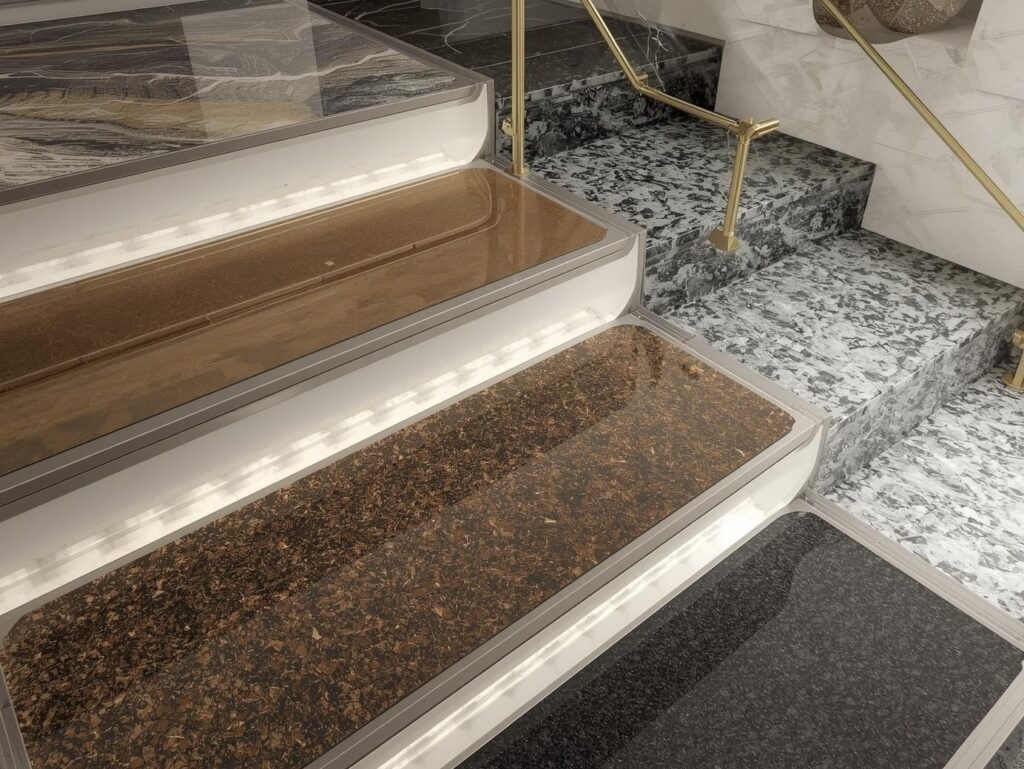
A glossy epoxy floor finish reflects light and makes staircases look bold and polished, ideal for modern or industrial homes. A matte epoxy floor, on the other hand, absorbs light and hides dust and footprints better, making it practical for everyday living.
Clear and Decorative Epoxy Styles

A clear epoxy floor on stairs is often used to seal decorative elements underneath, such as stained concrete or embedded textures. For playful or artistic homes, styles like glitter epoxy floor finishes add subtle sparkle without overwhelming the space.
Glow-in-the-Dark and Creative Designs
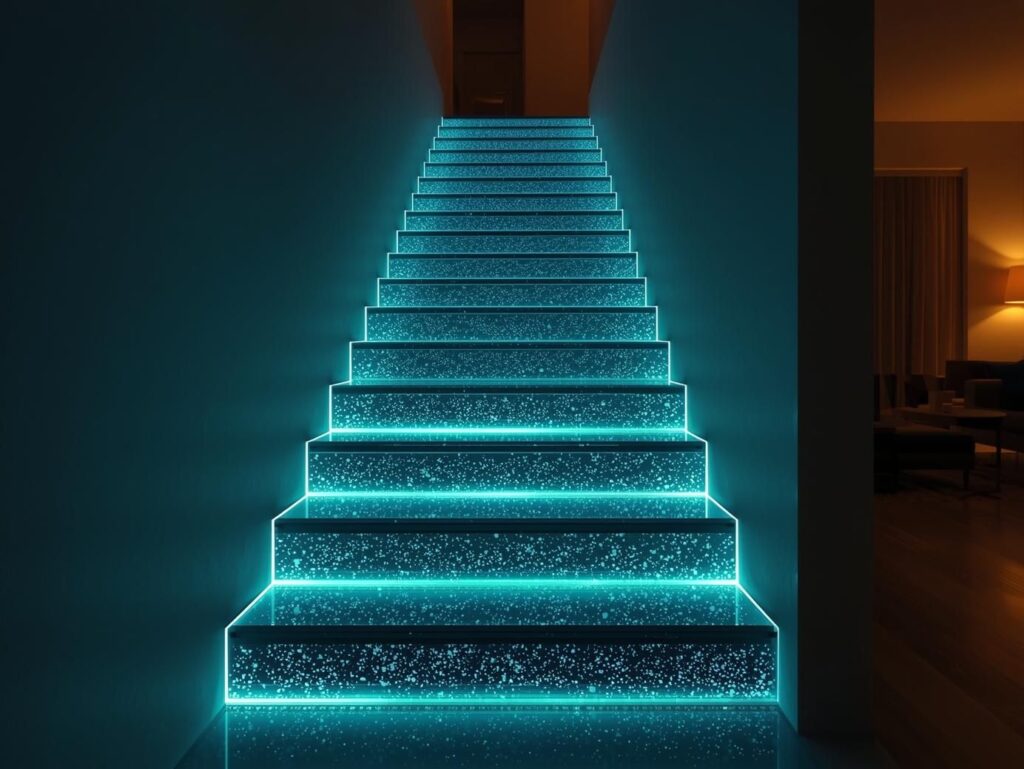
For safety and visual impact, some homeowners use glow in the dark epoxy floor elements along stair edges. This is especially useful in basements or low-light staircases. Artistic options like 3D epoxy floor design can turn stairs into a statement feature, though they require expert installation.
Themed and Color-Based Epoxy Designs
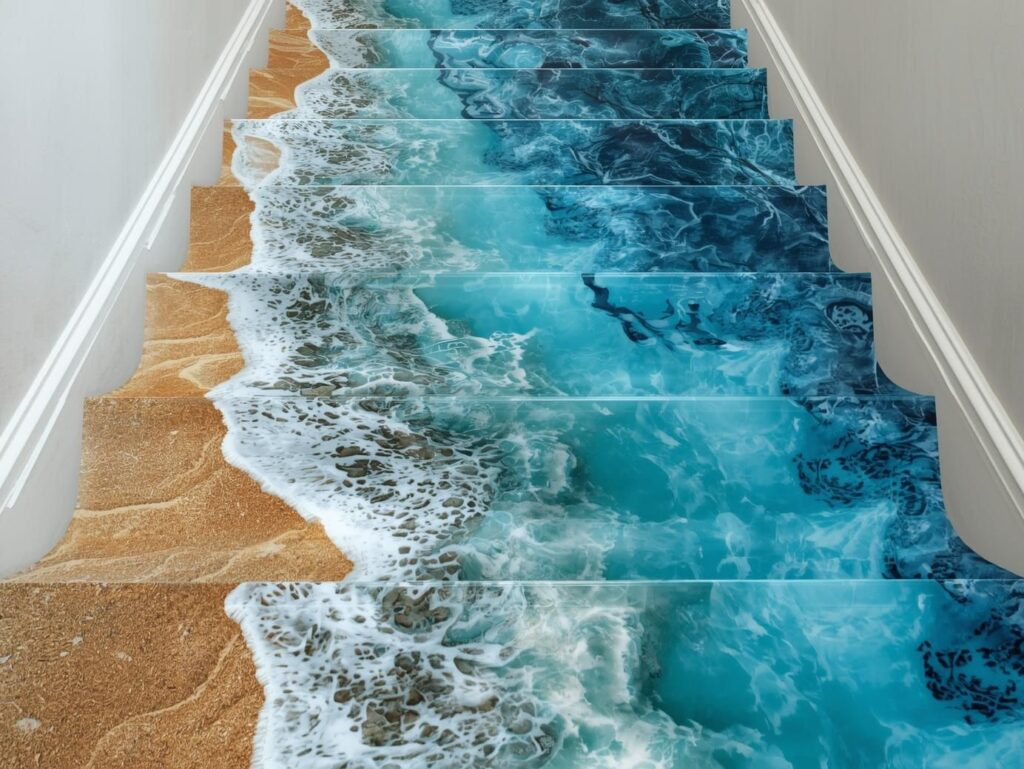
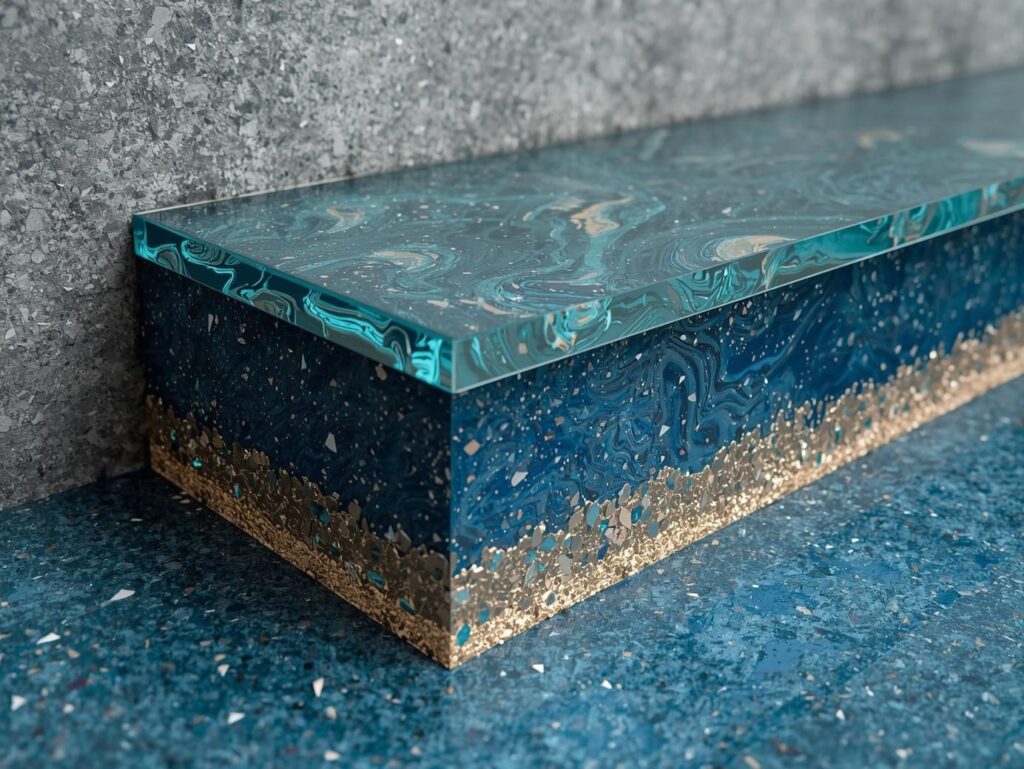
Coastal homes sometimes feature a Beach epoxy floor look with blue and sand-toned effects flowing up the stairs. Clean, minimalist interiors often favor white epoxy flooring, which visually expands the space and pairs well with modern railings.
Each type serves a different purpose: design, safety, or atmosphere and choosing the right one depends on how your staircase is used daily.
Pros of Using Epoxy on Stairs
Epoxy stairs stand out because they combine form and function.
They are extremely durable. Once cured, epoxy resists scratches, moisture, and stains far better than traditional stair finishes. This makes it ideal for high-traffic areas or utility staircases.
Maintenance is simple. A damp mop or cloth is usually enough. There’s no grout to clean and no fibers to trap dust, unlike carpeted stairs.
From a design standpoint, epoxy offers unmatched flexibility. Whether you want a sleek modern look or a bold artistic feature, epoxy adapts. It also creates visual continuity when stairs connect to spaces with epoxy wood floor systems or other resin flooring.
Cons and Limitations of Epoxy on Stairs
Despite its strengths, epoxy is not perfect.
Slip risk is the biggest concern. Without texture or additives, epoxy can be slick especially in glossy finishes. This makes proper anti-slip treatment essential.
Epoxy is also unforgiving. If it chips or cracks, repairs are noticeable and difficult. Unlike wood, you can’t easily sand and refinish a small area.
Another limitation is comfort. Epoxy is hard underfoot and offers no cushioning. For homes with elderly residents or young children, this may be a drawback.
Is Epoxy on Stairs Safe for Everyday Use?
Safety depends entirely on how epoxy is installed and finished.
With anti-slip additives, textured finishes, and proper nosing edges, epoxy stairs can be just as safe as tile or hardwood. Without these, they can be hazardous especially when wet.
Indoor air quality is another consideration. During installation, epoxy releases fumes, but once cured, it becomes inert and safe for daily living. Proper ventilation during application is essential.
In short, epoxy on stairs is safe when treated as a system, not just a surface coating.
Best Stair Materials for Epoxy Application
Concrete stairs are the best candidate. Epoxy bonds naturally to concrete and performs reliably over time.
Wooden stairs can also work, but movement is the enemy. Wood expands and contracts, so proper preparation and flexible coatings are crucial. This is especially important when stairs connect to areas finished with epoxy wood floor systems.
Metal stairs accept epoxy well but require specialized primers. Carpeted stairs must have all adhesive residue removed before epoxy can be considered.
Epoxy on Stairs Cost and Long-Term Value
The cost of epoxy on stairs depends on surface condition, design complexity, and labor.
On average, epoxy stairs cost more upfront than paint or carpet. However, they last significantly longer and require less maintenance, making them cost-effective over time.
Decorative options like metallic epoxy stairs or 3D designs raise costs but also increase visual impact and home value.
When Epoxy on Stairs Is a Good Idea and When It’s Not
Epoxy on stairs works best in:
- Modern or industrial-style homes
- Basements and utility areas
- Homes prioritizing low maintenance
It may not be ideal for:
- Traditional interiors
- Homes needing soft, quiet stair surfaces
- DIY projects without experience
The key is alignment between lifestyle, design goals, and realistic expectations.
Are Epoxy Stairs Right for Every Home?
Epoxy works best when stairs have a solid, stable base. Concrete stairs are ideal, but wood stairs can also be coated if they are structurally sound and properly prepared.
However, epoxy may not suit homes seeking a traditional, rustic feel unless designed to imitate natural textures. It shines most in modern, industrial, or contemporary interiors.
Frequently Asked Questions About Epoxy on Stairs
Is epoxy on stairs slippery?
Epoxy on stairs can be slippery if it is applied with a smooth, glossy finish and no texture. However, most professional installations include anti-slip additives or textured topcoats that significantly improve traction. When treated correctly, epoxy stairs can be as safe as tile or hardwood stairs.
Can epoxy be applied on wooden stairs?
Yes, epoxy can be applied on wooden stairs, but preparation is critical. Wood naturally expands and contracts, so the surface must be properly sanded, sealed, and stabilized. Poor preparation can lead to cracking or delamination over time, especially in high-traffic areas.
How long does epoxy on stairs last?
When installed correctly, epoxy on stairs can last 10–20 years or more. Its lifespan depends on foot traffic, surface preparation, and whether protective topcoats are used. Compared to paint or carpet, epoxy offers superior long-term durability.
Is epoxy on stairs safe for homes with kids or pets?
Epoxy stairs can be safe for homes with children and pets if slip-resistant finishes are used. Matte or textured epoxy surfaces provide better grip than high-gloss finishes. Without these safety measures, epoxy may not be ideal for active households.
Can epoxy stairs be repaired if damaged?
Minor scratches can sometimes be recoated, but deeper damage is harder to fix seamlessly. Unlike wood, epoxy does not blend easily during spot repairs. In many cases, damaged sections require professional resurfacing to restore a uniform appearance.
How much does epoxy on stairs cost?
The cost of epoxy on stairs varies based on design, surface condition, and labor. Basic epoxy coatings are more affordable, while decorative options like metallic or 3D epoxy designs cost more. Although the upfront cost is higher than paint, epoxy usually offers better long-term value.
Does epoxy on stairs require special maintenance?
Epoxy stairs are low maintenance. Regular sweeping and occasional damp mopping are enough to keep them clean. Avoid abrasive cleaners or harsh chemicals, as they can dull the finish over time.
Is epoxy suitable for indoor staircases?
Yes, epoxy is suitable for indoor staircases once fully cured. Modern epoxy systems have low VOC levels after curing and are safe for indoor use. Proper ventilation during installation is important to avoid fumes.