 By
By
The first time a homeowner walks up epoxy-coated stairs that look like a shoreline, the reaction is almost always the same: they stop mid-step. Not because the stairs are slippery, but because the surface feels unexpected. It looks like sand under clear water. Or like waves frozen in motion. That’s the power of a beach epoxy floor for stairs. It doesn’t just cover steps; it turns movement into an experience. And behind every finished staircase is a very real, very technical process that determines how long it lasts and how safe it feels.
What Is a Beach Epoxy Floor?
A beach epoxy floor is a multi-layer resin flooring system designed to recreate coastal elements such as sand, shallow water, shells, and ocean depth. It’s built using liquid epoxy resin that chemically bonds to concrete or prepared stair substrates, creating a seamless and durable surface.
Unlike tile or wood, epoxy doesn’t rely on joints or fasteners. On stairs, this matters. Each step is coated continuously, which reduces wear points and makes cleaning easier. Depending on the design, installers may use pigments, quartz sand, metallic powders, or glow additives, then seal everything under a protective topcoat.
Most beach epoxy stair systems take 2 to 4 days total from surface prep to final cure, with light foot traffic usually allowed after 24–48 hours.
Sandy Shore Design
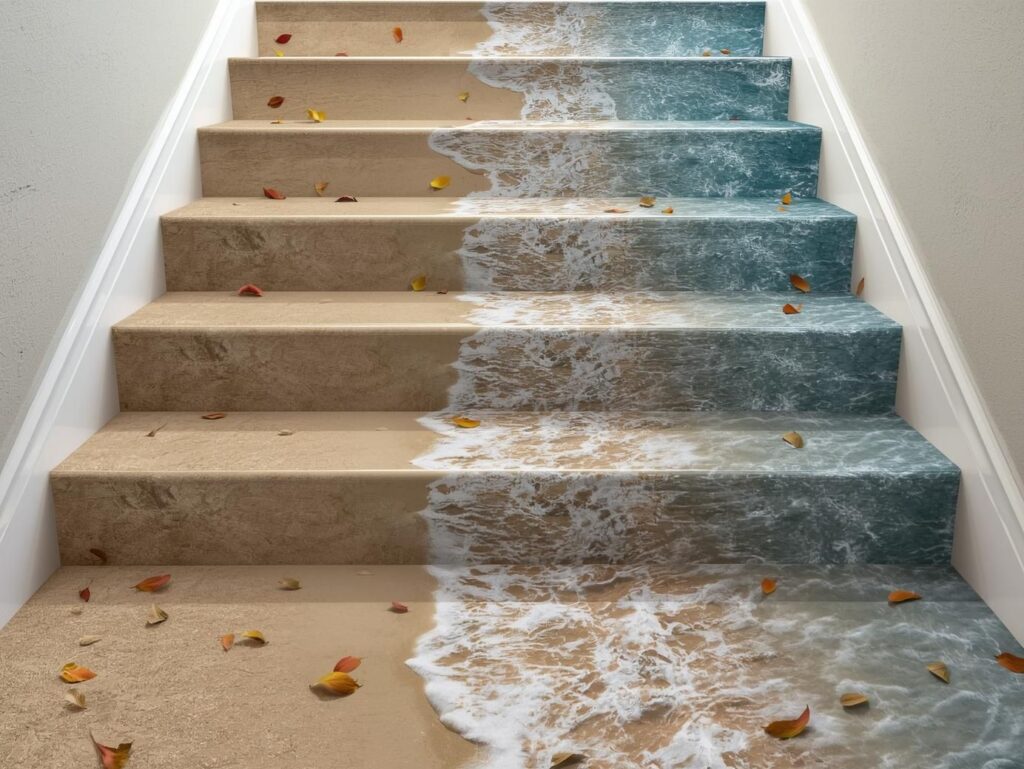
The sandy shore design is the most natural-looking beach epoxy style. It focuses on beige, tan, and soft off-white tones that resemble dry or wet sand.
To create this look, installers start by grinding the stair surface to ensure proper bonding. A tinted base coat is applied, followed by broadcasting fine quartz or sand-like aggregates while the epoxy is still wet. Once cured, excess material is removed and sealed under a clear epoxy floor topcoat with added slip resistance.
Application usually takes 1 full day, with curing overnight. Stairs can typically be walked on carefully after 24 hours, but full hardness develops in about 72 hours.
This design costs around $7–$12 per square foot and pairs well with light wood floors, neutral tile, and White epoxy flooring in nearby spaces.
Ocean Wave Design
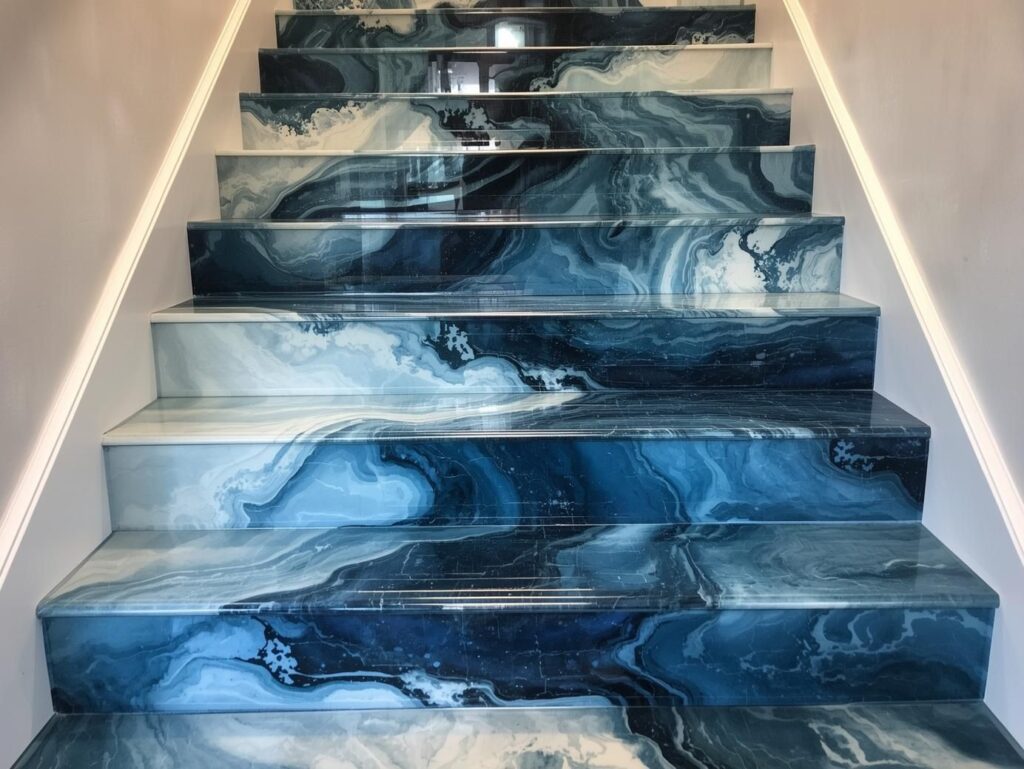
Ocean wave designs are more artistic and require experienced hands. The goal is to recreate the movement of water using layered blues, whites, and translucent effects.
After surface preparation, installers pour multiple tinted epoxy layers and manipulate them using airflow or tools to create wave patterns. Timing is critical pigments must move naturally before the epoxy begins to set. A high-gloss clear coat is often applied to enhance depth.
This process usually takes 2 full application days, with drying between layers. Light foot traffic is allowed after 36–48 hours, while full curing takes 5–7 days.
Costs range from $10–$18 per square foot. These designs look especially striking when paired with polished concrete, modern interiors, or Metallic epoxy stairs nearby.
Tropical Blue Design
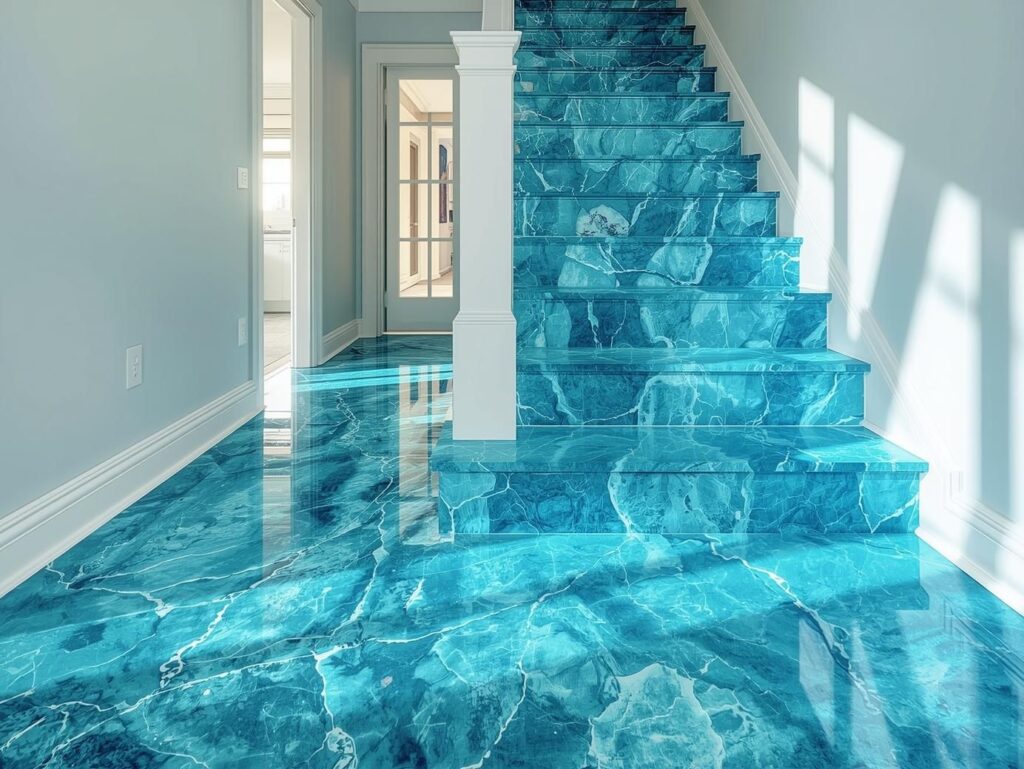
Tropical blue designs are inspired by shallow island waters. They use brighter aqua and turquoise tones that reflect light beautifully on staircases.
The process begins with a light-colored base coat. Vibrant pigments are then layered and blended, followed by a UV-stable clear topcoat to prevent yellowing. On stairs, installers often choose a satin finish to reduce glare.
Installation usually takes 1.5 to 2 days, with drying overnight. Stairs are typically usable after 24–36 hours, and fully cured within 4–5 days.
Expect costs between $9–$15 per square foot. This design works best with white tile, light stone, and coastal-style interiors.
Shell and Pearl Design
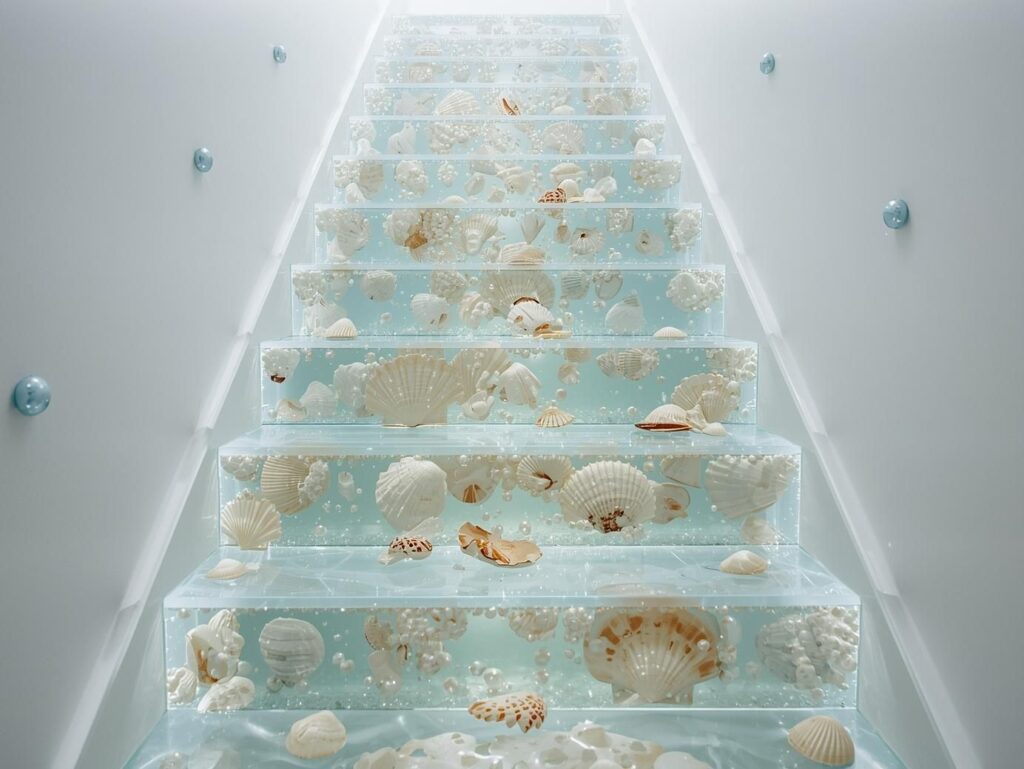
Shell and pearl designs lean toward elegance rather than bold color. Soft whites, creams, and subtle shimmer mimic crushed shells or pearl surfaces.
Installers mix pearlescent powders or fine flakes directly into the epoxy layers. The finish is usually sealed with a satin or matte epoxy floor topcoat to avoid excessive shine on stairs.
This system takes about 1 to 2 days to install, with light foot traffic allowed after 24 hours. Full curing takes around 72 hours.
Costs generally fall between $8–$14 per square foot, and the design pairs beautifully with marble-look floors, upscale interiors, and soft neutral palettes.
Driftwood Tone Design
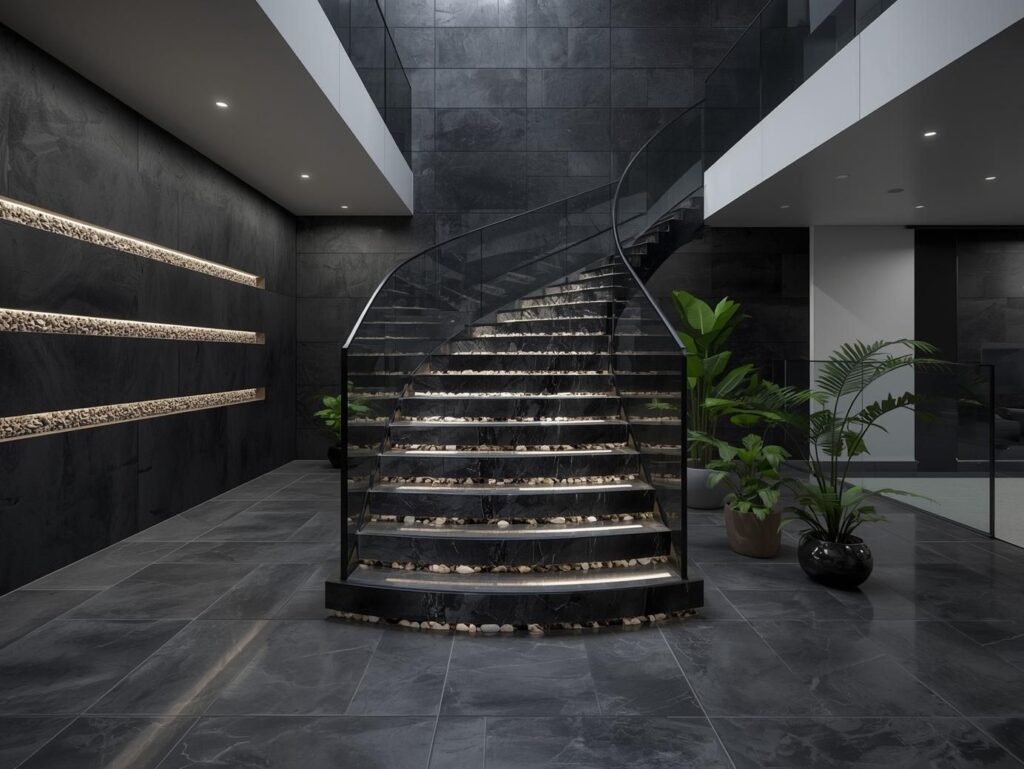
Driftwood-inspired epoxy floors recreate the weathered grays and warm neutrals found in sun-aged coastal wood.
To achieve this look, installers blend muted pigments and use subtle veining techniques during application. A low-gloss or matte finish is commonly chosen to keep the surface grounded and natural.
Application usually takes 1 day, with curing overnight. Stairs are usable after 24 hours, with full strength reached in 3–4 days.
This design costs $7–$11 per square foot and pairs well with wood flooring, stone surfaces, and rustic coastal homes.
Sunset Gradient Design
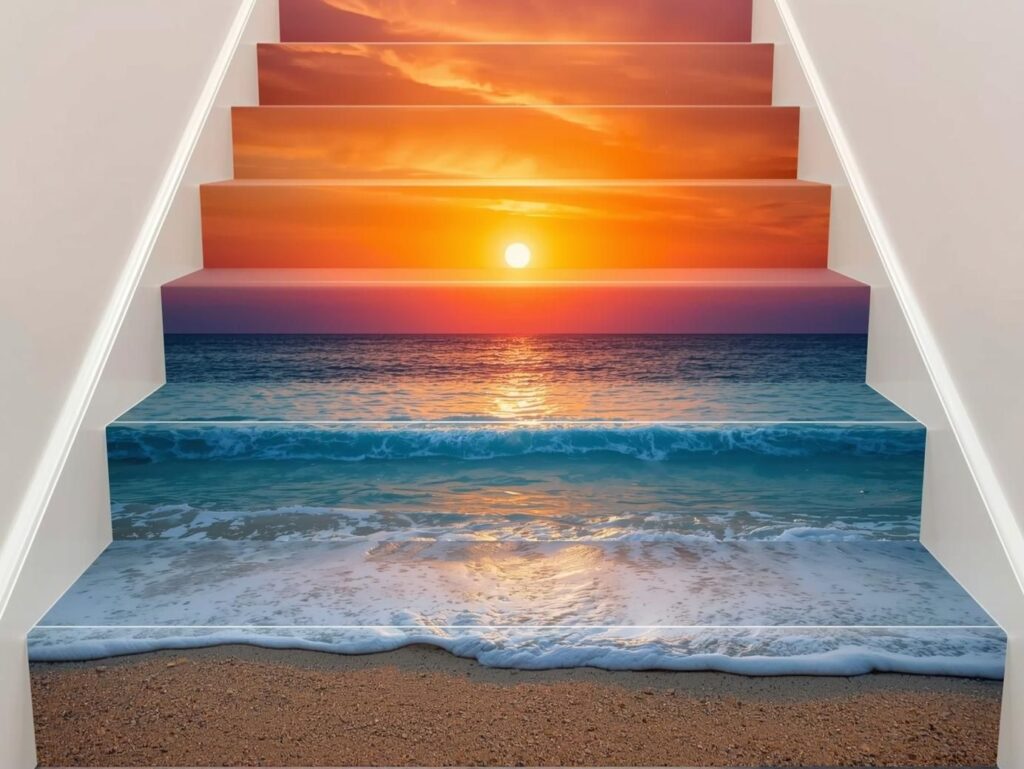
The sunset gradient design tells a story of late evenings by the sea. It blends coral, peach, soft purple, and warm amber tones across stair treads and risers.
Installers apply colors in sequence, carefully blending them before the epoxy sets. Because timing is sensitive, this design often takes longer than simpler styles. A clear epoxy floor topcoat protects the artwork and adds depth.
Installation usually takes 2 days, with curing time of 48 hours before use. Full curing can take up to 7 days.
Costs range from $10–$16 per square foot, and the design pairs well with neutral floors or subtle glitter epoxy floor accents elsewhere in the home.
Safety and Visibility on Epoxy Stairs
Stairs demand attention to safety. Most beach epoxy stair systems include anti-slip additives in the final coat. For homes with low lighting, some homeowners choose a glow in the dark epoxy floor accent along stair edges to improve nighttime visibility.
Adding slip resistance typically adds $1–$2 per square foot and does not affect drying time significantly.
Why Beach Epoxy Floors Work So Well on Stairs
Epoxy doesn’t just decorate stairs, it protects them. It resists moisture, handles foot traffic, and eliminates grout lines that crack or stain. Whether paired with Metallic epoxy stairs or subtle coastal finishes, epoxy creates continuity and flow between levels.
Most importantly, it lasts. When properly installed, epoxy stair systems can perform well for 10–20 years with minimal maintenance.
Conclusion
A beach epoxy floor for stairs is more than a visual upgrade. It’s a carefully layered system where design, timing, and material science work together.
From sandy neutrals to flowing ocean blues and sunset gradients, each design tells a different coastal story, one that unfolds step by step. When done correctly, epoxy stairs don’t just support movement. They shape how a space feels, how it flows, and how it’s remembered.
And that’s what makes them worth the effort.