 By
ByKeeping solar panels clean is one of the easiest ways to protect energy output and extend their life. If you’re searching for the best brush for cleaning solar panels, this guide walks you through the tools to buy, how to use them safely, and the mistakes to avoid — all in plain, friendly language.
By the end you’ll know which solar panel cleaning brush fits your needs and how to clean panels without scratching or harming them.
- Why choosing the right brush for cleaning solar panels matters
- Types of brushes and tools for cleaning solar panels
- What to look for when buying the best brush for cleaning solar panels
- Step-by-step: How to clean solar panels safely with a brush
- Common mistakes to avoid
- How often should you clean solar panels?
- When to call a professional instead
- Top brush types to consider (quick buying guide)
- Safety checklist before you clean
- FAQs
- Final thoughts and next steps
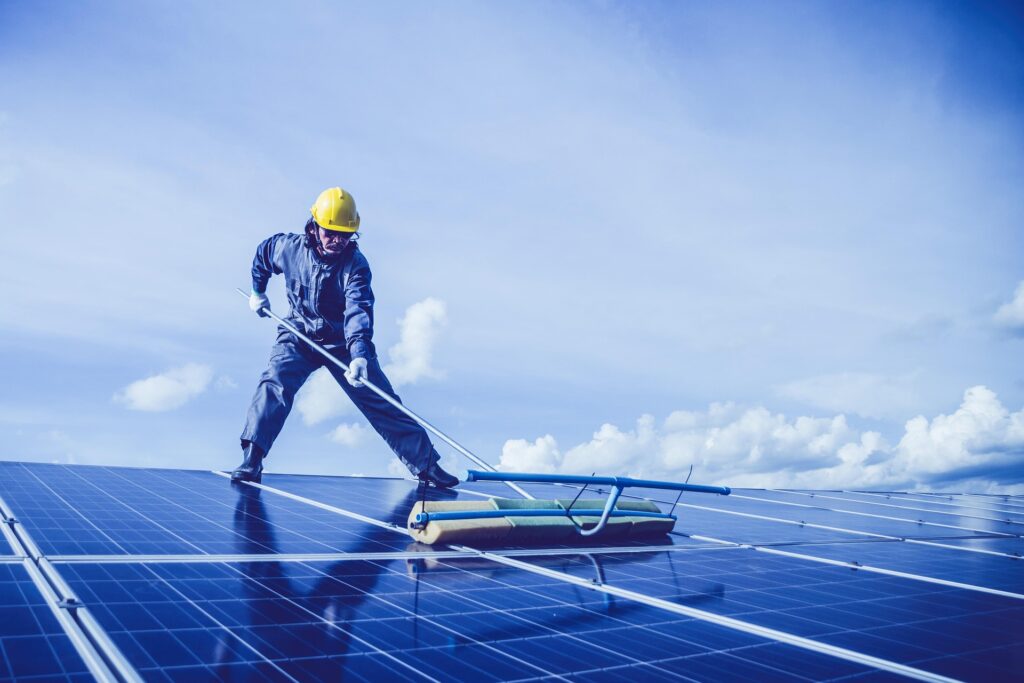
Why choosing the right brush for cleaning solar panels matters
Solar panels are made from tempered glass with special anti-reflective and protective coatings. Abrasive tools or harsh techniques can create micro-scratches or leave mineral deposits that reduce efficiency over time.
A proper brush for cleaning solar panels is soft enough to avoid damage but effective enough to remove dust, pollen, bird droppings, and grime.
Keeping panels clean improves power production, helps warranties stay valid, and avoids other bigger fixes later.
A good brush plus the right technique = safer cleaning and better long-term performance.
Types of brushes and tools for cleaning solar panels
Knowing the kinds of brushes and tools will help you pick the best option for your situation:
Soft-bristle hand brush
- What it is: A small, handheld brush with soft synthetic or natural bristles.
- Best for: Ground-level panels or small, easily reachable arrays.
- Pros: Cheap, easy to control, gentle.
- Cons: Time-consuming for large systems.
Telescopic pole brush (water-fed or plain)
- What it is: A brush head attached to a long, extendable pole — often compatible with water feed systems.
- Best for: Roof-mounted panels where you can reach safely from the ground.
- Pros: Reach without ladders; can attach to garden hose or water feed.
- Cons: Wind and balance can make handling tricky.
Water-fed brush with deionized water
- What it is: A brush connected to a hose that delivers deionized (pure) water through the head.
- Best for: Stubborn dirt and mineral-free rinsing on larger arrays.
- Pros: Leaves no mineral spots; thorough cleaning without scrubbing.
- Cons: Requires source of deionized water or a deionizer system.
Microfiber pad or sponge brush
- What it is: Soft microfiber pads on a handle; very gentle against glass.
- Best for: Light dust and delicate surfaces.
- Pros: Very safe for coatings; low risk of scratching.
- Cons: Not great for hardened grime without water.
Motorized or rotating brushes (specialist)
- What it is: Battery or motor-driven brushes that rotate the head.
- Best for: Large commercial cleaning jobs when used by trained crews.
- Pros: Saves time on large areas.
- Cons: Risk of damage if used improperly; usually overkill for most homeowners.
What to look for when buying the best brush for cleaning solar panels
When shopping, check these features:
- Bristle softness: Look for soft nylon or microfiber — not stiff or wire bristles. The gentler, the better for coated glass.
- Head shape and width: Wide, flat heads clean faster; curved or angled heads reach panel edges well.
- Pole compatibility: Standard threaded fittings let you swap heads or attach water feeds. Telescopic poles with secure locks are safer.
- Rust-proof fittings: Stainless steel or brass connectors last longer than cheap plated parts.
- Ease of rinsing: Brushes designed to flush out dirt are easier to keep clean.
- Water feed option: If you plan to use distilled/deionized water, pick a brush that supports a water feed.
- Weight and balance: Lighter brushes are easier to control on long poles.
Step-by-step: How to clean solar panels safely with a brush
Safety and timing are as important as the brush itself. Follow these steps for the best results:
1. Check the weather and panel temperature
Clean panels in the early morning or late evening when they’re cool. Hot glass + cold water can cause thermal stress and streaking.
2. Turn off the system if required
Some inverters recommend switching off PV strings before cleaning. Check your installer’s guidance or owner manual.
3. Gather the right tools
You’ll need:
- A soft bristle brush or water-fed brush
- A telescopic pole (if reaching)
- Deionized or distilled water (preferred)
- A bucket and sponge or microfiber cloth
- Ladder and fall protection if working on roofs
- Non-slip shoes and gloves
4. Rinse first (if using water)
Use low-pressure hose water to remove loose dust and grit. This reduces the chance of dragging abrasive particles across the glass.
5. Gently brush top → bottom
Use straight, downward strokes. Avoid circular scrubbing which can trap grit and cause scratches. Don’t press hard — let the brush do the work.
6. Rinse and squeegee or towel dry
Rinse with deionized or distilled water to prevent mineral spots. Use a squeegee or microfiber cloth to remove excess water and avoid streaks.
7. Check frames and seals
While cleaning, inspect for loose frames, broken sealants, bird nests, or shading issues. Note anything odd for your installer.
Read: How to Remove a Window Screen Without Breaking It
Common mistakes to avoid
- Using hard or metal brushes — these scratch the glass and ruin coatings.
- Cleaning hot panels — can crack glass or cause streaking.
- Using tap water on mineral-rich areas — leaves deposits; use deionized water if possible.
- Pressing hard while scrubbing — increases risk of scratches.
- High-pressure washers — can damage seals, frames, or the panel backsheet.
- Ignoring safety — never lean over the roof without proper fall protection.
How often should you clean solar panels?
Cleaning frequency depends on local conditions:
- Arid/dusty areas: every 1–3 months.
- Bird- or pollen-heavy areas: every 2–4 months or after visible droppings.
- Rainy/clean areas: once a year or after major soiling events.
- Monitor output: A notable drop in generation (e.g., >5–10%) might indicate it’s time to clean.
A quick visual check after storms, windy days, or heavy bird activity is smart. For long systems, consider monitoring inverter production to detect gradual declines.
When to call a professional instead
DIY cleaning with the best brush for cleaning solar panels works for many homeowners, but call a pro if:
- Panels are on steep or high roofs and access is unsafe.
- Panels need heavy biofilm or sticky grime removal.
- You prefer warranty-recommended cleaning or maintenance contracts.
- You want periodic professional inspections with cleaning.
Professionals have commercial water-fed poles, deionizing systems, and safety gear; they’re usually worth the cost for complex or risky jobs.
Top brush types to consider (quick buying guide)
- Best for small DIY jobs: Soft-bristle handheld brush + microfiber cloth.
- Best for rooftop access from ground: Telescopic pole brush (lightweight, secure locks).
- Best for spotless finish: Water-fed brush with deionized water.
- Best for gentle daily dusting: Microfiber pad on a swivel head.
- Best for large commercial arrays: Trained crew with motorized brushes & water treatment (not recommended for novices).
Safety checklist before you clean
- Clean when panels are cool (AM or PM).
- Wear non-slip shoes and gloves.
- Use a stable ladder and fall protection on roofs.
- Don’t use high-pressure washers.
- Use soft brushes and deionized water if possible.
- Avoid working alone on steep roofs.
FAQs
Q: Is a brush for cleaning solar panels safe to use?
A: Yes — when you choose a soft-bristle or microfiber brush for cleaning solar panels and use gentle, top-to-bottom strokes, it’s safe and effective. Avoid stiff bristles or metal brushes.
Q: Can I use a pressure washer on solar panels?
A: No. High pressure can damage seals and the panel frame. Use low-pressure water or a water-fed brush.
Q: Do I need deionized water to clean solar panels?
A: Deionized or distilled water is best because it won’t leave mineral deposits. In many cases, plain water is okay for light dust, but in hard-water areas use treated water to avoid spotting.
Q: How long does cleaning with a brush take?
A: For a small residential system, 30–90 minutes depending on access and how dirty panels are. Large systems take longer.
Q: Can cleaning void my warranty?
A: Using abrasive tools or improper chemicals could affect warranties. Follow panel manufacturer guidance and use gentle brushes and plain water or manufacturer-approved cleaners.
Final thoughts and next steps
Choosing the best brush for cleaning solar panels depends on your access, system size, and local conditions.
For most homeowners, a soft-bristle brush or a telescopic pole brush used with deionized water gives a gentle, effective clean without risk.
If your array is large, hard to reach, or heavily soiled, a professional cleaning service is a smart option.
If you’d like, download a printable Solar Panel Cleaning Checklist (tools, safety steps, and maintenance schedule) or check our short list of recommended brush styles to match your system — simple choices that keep your panels performing at their best.
Related Content: Can You Use Ceiling Paint on Walls? The Revealing Truth