
 By
By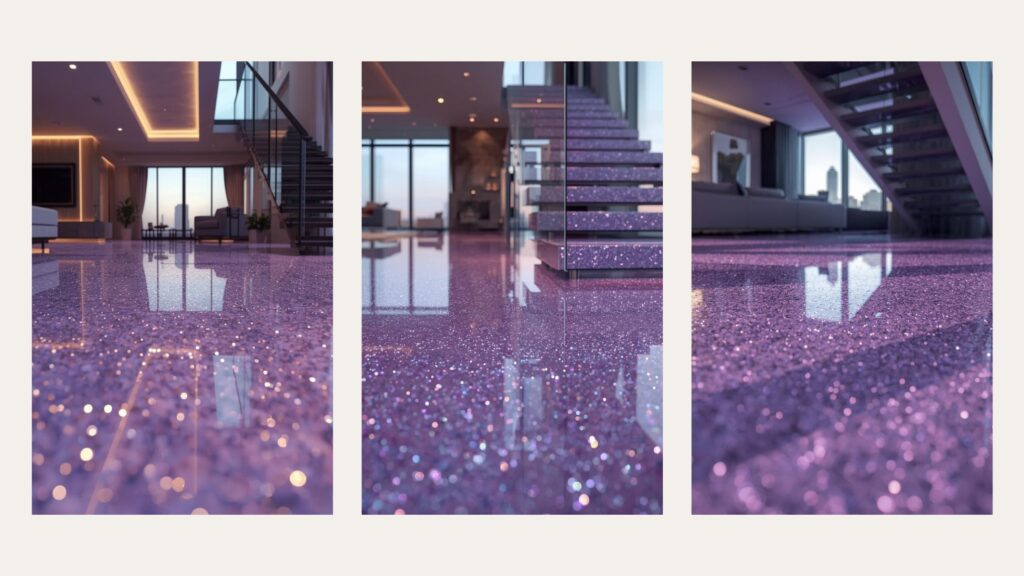
Glitter changes everything. The moment you embed sparkle into resin, the surface stops looking industrial and starts looking intentional. However, when that shimmer moves from a flat room into a staircase, the conversation shifts from design to safety. Many homeowners who consider a glitter epoxy floor for stairs ask one direct question: Will it become slippery? The short answer is it can, but only if installed incorrectly. When engineered properly, it performs very differently from what most people assume.
Let’s break this down in practical, real-world terms.
What Makes Glitter Epoxy Floor Different From Regular Epoxy on Stairs?
A standard epoxy coating creates a smooth, sealed surface. When glitter is introduced, the system becomes layered. Installers either:
- Broadcast glitter into a wet base coat
- Or mix fine glitter directly into a clear topcoat
On stairs, that distinction matters. Unlike a garage slab, stairs experience edge pressure, downward impact, and angled foot contact. Every step forces weight forward onto the stair nosing the front lip of each tread. That’s where slips typically occur.
Now here’s what most bloggers never explain: glitter itself does not create traction. The slip resistance comes from surface texture, not the sparkle. A high-gloss clear finish over glitter can feel slick because light reflection tricks your brain into perceiving smoothness. Yet visual shine and actual grip are not the same thing.
This is why glitter on flat floors behaves differently than glitter applied as epoxy on stairs.
Are Glitter Epoxy Stairs Slippery? The Real Safety Factors
Surface Gloss vs. Coefficient of Friction
Every flooring material has a measurable slip rating called the coefficient of friction (COF). High-gloss epoxy often meets residential safety standards when dry. However, socks, smooth soles, or fast movement down steps reduce grip instantly.
Therefore, gloss level directly influences perceived and actual traction. A matte or satin topcoat increases micro-texture without removing sparkle. That small adjustment dramatically changes underfoot stability.
Dry vs. Wet Conditions
Interior staircases in climate-controlled homes behave differently from entryway stairs exposed to moisture. For example:
- A dry white glitter staircase inside a living room can perform safely for years.
- The same system near a front door in humid weather may require added grit.
Moisture, pet paws, and children running down steps all amplify risk. Consequently, placement matters more than glitter size.
Stair Nosing The Most Overlooked Slip Zone
Most falls happen at the edge of the step. Yet many installers apply glitter evenly and seal it heavily with a thick clear coat, which smooths out micro texture.
A smarter method involves lightly texturing only the nosing strip. This preserves design while increasing traction where it counts most.
How to Make Glitter Epoxy Stairs Slip-Resistant Without Ruining the Look
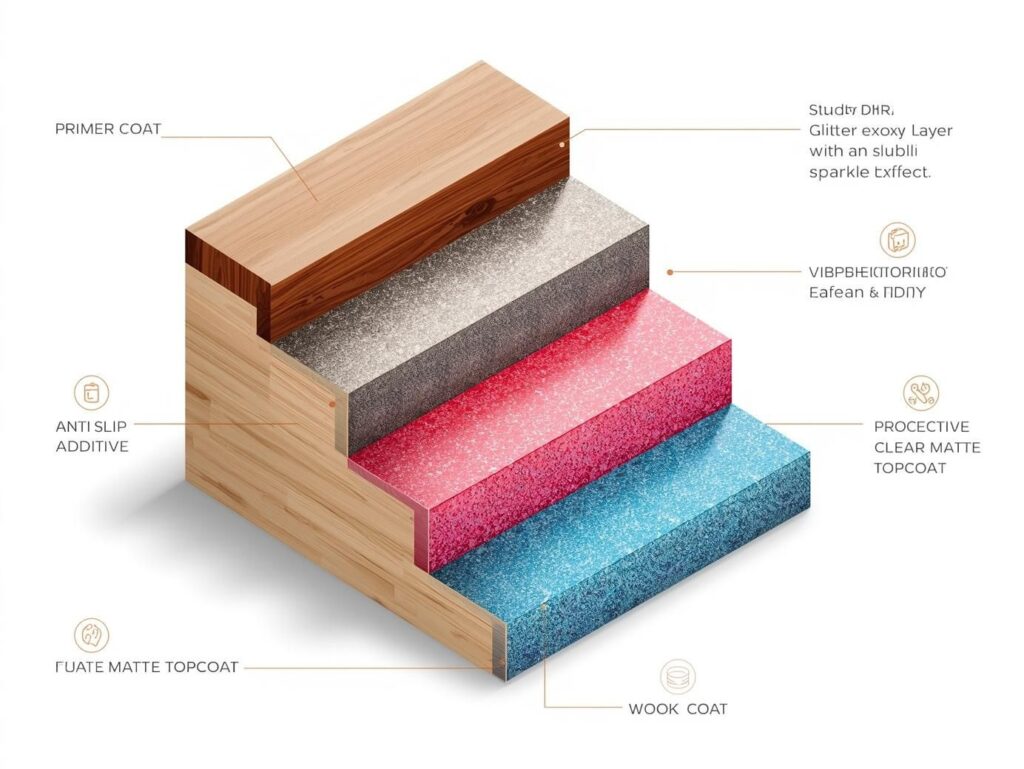
Homeowners often worry that adding grip will destroy the visual effect. In reality, you can protect both safety and style.
Use the Right Anti-Slip Additive
Aluminum oxide provides strong traction but can feel aggressive on bare feet. Polymer grit offers subtler texture and works better for residential stairs.
When embedded into a final clear topcoat, the fine-grade additive maintains sparkle. Coarser particles can cloud a metallic or reflective finish, so particle size selection matters.
Apply Texture Strategically
Instead of broadcasting grit across the entire tread, apply texture only:
- Along the front 2–3 inches of the tread
- Or in a subtle band pattern
This technique keeps the decorative 3D glitter depth intact while improving stability.
Choose a Satin or Matte Sealer
A fully gloss-coated black glitter staircase may look dramatic, but it increases glare and visual slipperiness. Switching to a satin or matte sealer softens reflection and improves underfoot confidence.
Design remains intact; safety improves quietly.
Installation Mistakes That Increase Slip Risk
After inspecting several stair remodel failures, I’ve seen patterns repeat.
- Over-applying thick topcoats, which smooth out texture
- Skipping sanding between coats, causing uneven adhesion
- Ignoring wood movement when applying wood epoxy systems
- Applying glitter inconsistently, leaving slick resin pockets
- Failing to reinforce stair edges
Wood expands and contracts seasonally. When someone installs a rigid glitter epoxy floor over untreated wood stairs without proper prep, micro-cracks can form. Eventually, the surface polishes down under traffic and becomes smoother.
Correct preparation prevents that cycle.
Is Glitter Epoxy Floor Suitable for All Types of Stairs?
Wooden Stairs
Wood requires careful priming. A flexible base layer is essential before applying epoxy on stairs built from timber. Otherwise, movement stress transfers to the topcoat.
When installed properly, wood stairs can support decorative glitter finishes beautifully.
Concrete Stairs
Concrete offers better structural stability. Adhesion improves because the surface is porous. As a result, glitter epoxy tends to perform more predictably.
Outdoor Stairs
Outdoor exposure introduces UV light, rain, and dust. Unless UV-resistant resin is used, yellowing may occur especially on lighter tones like white or pastel glitter blends. Additionally, exterior stairs require heavier anti-slip integration.
Long-Term Wear
Over time, high-traffic paths polish. Micro-abrasions flatten surface texture, especially on stair centers. However, this doesn’t mean the entire glitter epoxy floor system fails.
Instead, periodic re-topcoating restores traction. Light sanding followed by a fresh satin or textured clear coat renews grip without removing sparkle.
Interestingly, darker shades like black or deep metallic finishes hide wear better than lighter systems. Meanwhile, decorative additions like subtle glow in the dark particles do not affect slip resistance at all; they only enhance nighttime visibility.
Maintenance, therefore, determines longevity.
When Glitter Epoxy Stairs Make Sense
Glitter epoxy stairs work well in:
- Interior residential spaces
- Feature staircases in modern homes
- Decorative remodels with controlled humidity
However, reconsider this system if:
- Elderly residents use the stairs frequently
- The staircase sits near a wet entry point
- Local building codes require specific commercial slip ratings
In some cases, pairing glitter epoxy with a narrow runner provides both style and security.
Practical Considerations Before You Decide
Before committing to a glitter epoxy floor on stairs:
- Test a small sample board with chosen topcoat finish
- Walk on it wearing socks and regular footwear
- Evaluate glare under natural and artificial lighting
- Confirm anti-slip additive grade
Design trends such as 3D depth effects or layered metallic finishes look impressive, yet they require thoughtful sealing to maintain traction.
When done professionally, the result feels solid underfoot and visually striking.
Making the Right Choice for Your Staircase
So, can a glitter epoxy floor be used on stairs without slipping?
Yes but only when texture, gloss level, and substrate preparation are engineered together.
Sparkle alone doesn’t determine safety. Surface science does.
If you approach the project with the same seriousness as any structural finish selecting proper additives, reinforcing nosing, and choosing the right topcoat you can enjoy shimmer without sacrificing stability.
Before starting your project, assess your environment honestly. Then choose materials that balance design ambition with real-world performance.
If you’re planning to upgrade your staircase and want it to last beautifully and safely, start by testing finishes not just admiring them.