
 By
ByFlat paint looks beautiful. Soft. Smooth. Modern. And then someone touches it. A handprint near the light switch. A mystery scuff in the hallway. A grease mark in the dining area. Suddenly, you try to Clean Flat Paint On Walls and end up with a shiny patch that looks worse than the stain.
Here’s the truth most guides skip: flat paint isn’t “hard to clean” because it’s weak. It’s hard to clean because of how it’s engineered.
Let’s break this down properly and do it the right way.
- Why Flat Paint Is Harder to Clean Than Other Finishes
- So, Can You Safely Wash Flat Paint or Will It Ruin the Finish?
- Now Let’s Talk About Safe Cleaning Solutions for Flat Paint Walls
- Step-by-Step: How to Clean Flat Painted Walls Without Damage
- How to Remove Common Stains from Flat Paint
- What NOT to Do on Flat Paint
- When Cleaning Will Ruin the Finish
- How Often Should You Clean Flat Painted Walls?
- Quick Cleaning Checklist
Why Flat Paint Is Harder to Clean Than Other Finishes
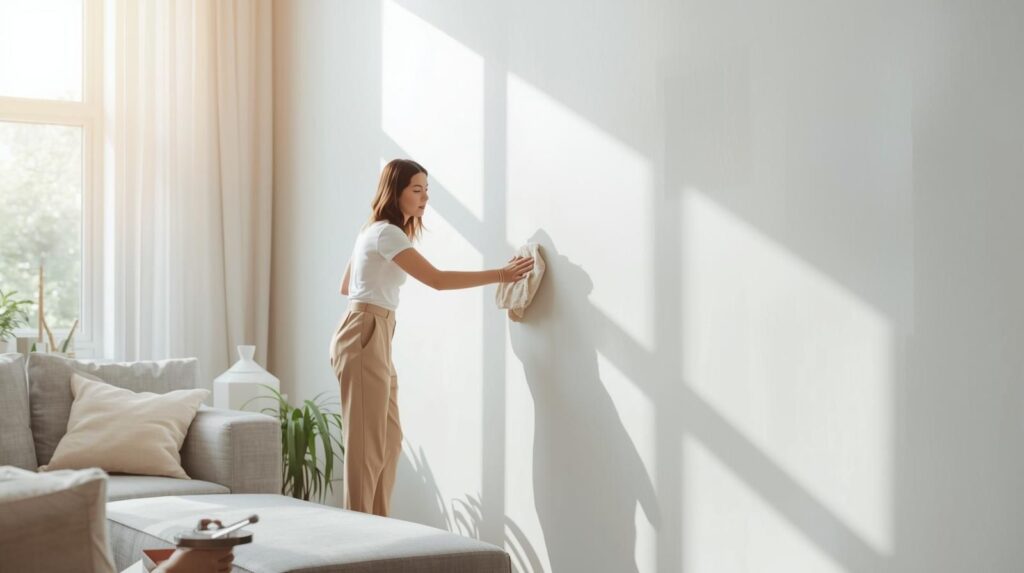
How Flat Paint Absorbs Moisture
Flat (also called matte) paint has a higher pigment-to-binder ratio. That’s what gives it that non-reflective, velvety look.
But here’s what that also means:
- Less binder = less surface protection
- More porous surface
- Micro-texture that traps dirt
When you apply water, the surface absorbs it instead of resisting it. That absorption changes how light reflects which is why cleaned spots can look slightly darker or shinier after drying.
It’s not always damaged. It’s altered texture.
Why Scrubbing Causes Shiny Patches
Scrubbing compresses the paint film.
Flat paint gets its matte appearance from microscopic irregularities on the surface. When you rub aggressively:
- The surface texture becomes compressed and flattened
- Light begins to reflect more directly
- A shiny patch forms due to burnishing
Once that happens, no cleaning trick will reverse it. The only fix is repainting that section.
Flat vs Eggshell vs Satin
- Flat: Best at hiding imperfections. Worst for washability.
- Eggshell: Slight sheen. Moderately washable.
- Satin: Durable and moisture-resistant. Easy to clean.
Flat is often used in living rooms, bedrooms, and ceilings places with lower traffic. If it’s in a hallway or kids’ area, cleaning becomes much riskier.
So, Can You Safely Wash Flat Paint or Will It Ruin the Finish?
Yes but not the way most people try.
Common mistakes:
- Using too much water
- Using “all-purpose” cleaners
- Scrubbing in circles
- Using magic erasers aggressively
Flat paint can handle light, controlled cleaning. It cannot handle repeated soaking or friction.
The goal isn’t to “wash” the wall.
It’s to lift surface dirt without disturbing the paint film.
That’s a big difference.
Now Let’s Talk About Safe Cleaning Solutions for Flat Paint Walls
1. Water Only (Best First Option)
For:
- Dust
- Light smudges
- Fresh marks
Use lukewarm water. No soaking. Just damp, not wet.
Many stains come off with just water if you catch them early.
2. Mild Dish Soap (Correct Ratio Matters)
If water alone doesn’t work:
Mix:
- 1 quart (1 liter) warm water
- 2–3 drops mild dish soap
Not a squirt. Drops.
Too much soap leaves residue and streaking, which looks worse on matte surfaces.
3. What to Avoid (Even If the Internet Recommends It)
Vinegar
Acidic. Can dull the surface and alter color over time.
Baking Soda
Abrasive. Causes micro-scratches → shiny patches.
Magic Erasers
They are melamine foam, essentially ultra-fine sandpaper. On flat paint, they remove texture fast.
You might not see damage immediately. You’ll see it once the wall dries.
Step-by-Step: How to Clean Flat Painted Walls Without Damage
Short. Precise. Controlled.
Remove Surface Dust First
Use:
- Microfiber cloth
- Soft dry sponge
- Vacuum with brush attachment
Dust acts like sandpaper when wet. Always remove it first.
Test a Hidden Spot
Behind furniture. Inside a closet. Near baseboards.
Let it dry fully before judging the result. Some sheen changes only appear after drying.
Use Minimal Moisture
Dip your microfiber cloth.
Wring it out completely.
If water drips, it’s too wet.
Blot, Don’t Scrub
Gently press and lift.
Do not rub in circles.
Do not apply pressure.
If the stain doesn’t lift after light blotting, stop. Repeated attempts increase damage risk.
Dry Immediately
Use a dry microfiber cloth to blot the area.
Letting moisture sit increases absorption marks.
How to Remove Common Stains from Flat Paint
Different stains behave differently. Treat them accordingly.
Grease
Common in dining areas or near kitchen entries.
Method:
- Use warm water + 2 drops dish soap
- Lightly blot
- Immediately dry
If grease has penetrated deeply, cleaning may create a halo. In that case, spot priming and repainting is cleaner-looking than overworking it.
Scuff Marks
Usually from shoes or furniture.
Try:
- Clean dry microfiber cloth first
- Slightly damp cloth if needed
Avoid magic erasers unless you’re prepared for possible sheen change.
Pro tip: Sometimes rubbing gently with a clean white pencil eraser works better than water — but test first.
Handprints
Body oils cause these.
Use:
- Warm water
- Tiny amount of dish soap
Blot gently. Dry immediately.
If it’s an older stain, oxidation may have slightly changed the paint. Cleaning may not fully restore the color.
Crayon
If it’s a wax-based crayon:
- Gently scrape excess with a plastic card
- Light soap solution blot
- Stop if sheen changes
Heavy crayon damage often requires repainting. Flat paint doesn’t tolerate aggressive removal methods.
What NOT to Do on Flat Paint
- Avoid abrasive sponges
- Never oversaturate the wall
- Apply cleaner to the cloth, not directly to the surface
- Limit repeated rubbing on the same spot
- Stay away from high-alkaline cleaners
- Skip steam cleaning entirely
Steam cleaning can soften the binder and permanently change texture.
And once flat paint becomes shiny it stays shiny.
When Cleaning Will Ruin the Finish
Here’s something most people don’t hear:
Sometimes cleaning costs more visually than repainting.
If:
- The stain is older than a few months
- The wall has been previously spot-cleaned
- You see uneven sheen already
- The paint brand was low-quality
You’re likely to create patchiness.
Professionals often:
- Spot prime with stain-blocking primer
- Repaint corner to corner (not just the stain)
That avoids flashing where touch-up paint reflects differently under light.
Flat paint is excellent at hiding wall imperfections.
But once uneven sheen appears, only repainting truly fixes it.
How Often Should You Clean Flat Painted Walls?
Light dusting: Every 2–3 months.
Spot cleaning: Only when necessary.
Over-cleaning flat paint reduces its lifespan.
If you find yourself cleaning often, consider switching to eggshell in high-touch areas next time you repaint.
Quick Cleaning Checklist
Before you Clean Flat Paint On Walls, remember:
- Dust first
- Use minimal water
- Add only 2–3 drops mild soap if needed
- Blot gently
- Dry immediately
- Stop if sheen changes
Flat paint rewards restraint.
The less you disturb it, the better it looks long-term.