 By
By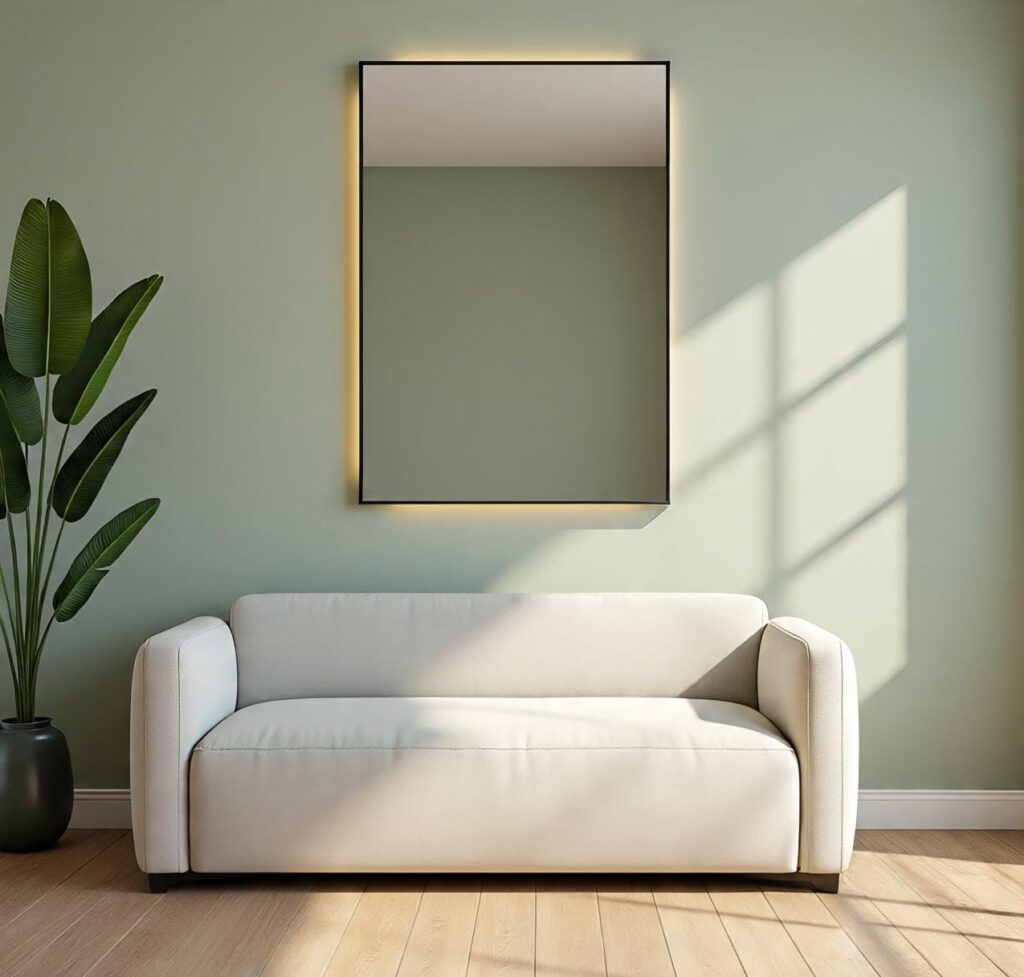
There’s always that one moment when you walk into someone’s home and feel the room pull you in brighter, taller, calmer, more intentional. Most people assume it’s expensive furniture or designer lighting, but in reality, it’s often a single, well-placed mirror doing all the heavy lifting. Decorative mirrors for living room aren’t just shiny accents; they shift light, redirect attention, open up cramped layouts, and even balance awkward architecture.
I’ve seen homeowners stuck in the same loop: buying art that feels too busy, rugs that don’t anchor the space, or shelves that turn a wall into visual noise. But the second they introduce the right mirror? The entire room recalibrates. And when you combine mirrors with living room corner decor or patterned living room wallpaper decor, the effect becomes even more dramatic, almost editorial.
If you’re trying to elevate a wall decor living room without overwhelming your space, or if you’re chasing small living room decor ideas that actually work, the following ten mirror styles will redefine the room more effectively than you expect.
- 1. Oversized Round Mirrors
- 2. Arched Vintage Mirrors
- 3. Minimalist Metal-Frame Mirrors
- 4. Sunburst Mirrors
- 5. Gallery-Style Mirror
- 6. Floor-Length Leaning Mirrors
- 7. Antique Gold-Framed Mirrors
- 8. Backlit LED Mirrors
- 9. Geometric Mirrors
- 10. Rustic Wood-Framed Mirrors
- How to Choose the Right Mirror for Your Living Room
- Where to Place Mirrors for Maximum Impact
- Final Tips to Avoid Common Mirror Mistakes
- Conclusion
1. Oversized Round Mirrors
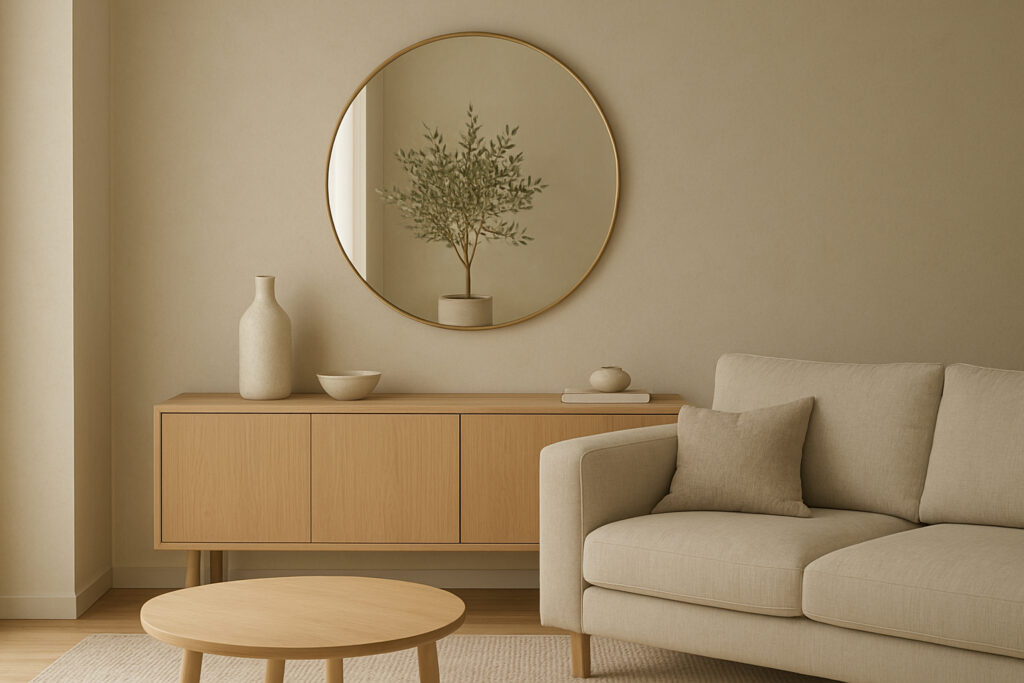
Round mirrors are like visual shock absorbers; they soften harsh lines from sofas, consoles, and windows. Circles feel organic, which matters when you’re working with a room full of rectangles. Designers love them because they disrupt monotony without shouting for attention. The oversized format, especially 36–48 inches, creates the illusion of wider walls and a higher ceiling.
Place one across from your largest window. You’ll double the natural light and create the sensation that your living room has a “second” window. If your layout blocks that option, position it above a console so it captures lamp lighting and spreads warmth across the room. For open-concept homes, a round mirror near the transition point (like between kitchen and lounge) helps define zones without adding clutter.
If you have bold living room wallpaper decor — stripes, florals, textured prints — a round mirror helps break the pattern so the wall doesn’t feel too dense. And for a neglected corner, angle the round mirror slightly toward a nearby plant or lamp. It expands the view and makes your living room corner decor feel intentional instead of accidental.
2. Arched Vintage Mirrors
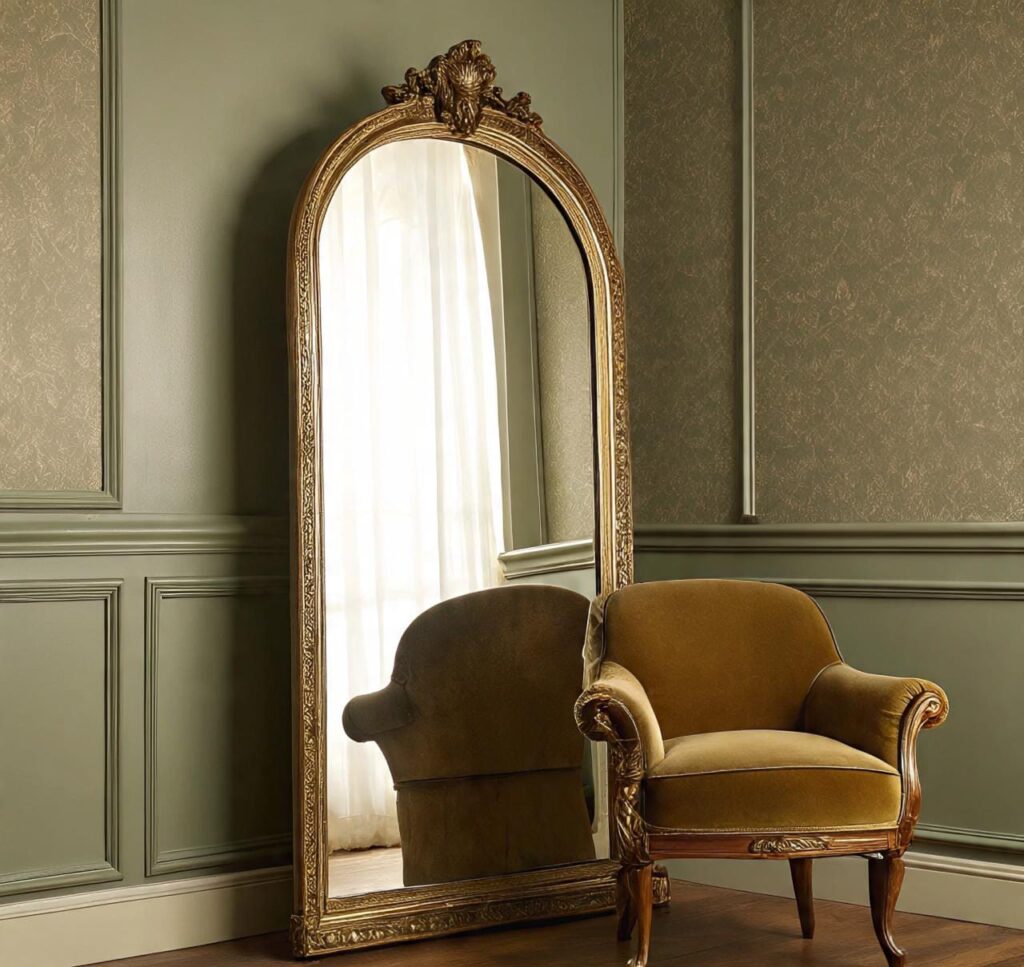
Arched mirrors mimic doorways or windows, tricking the eye into reading the room as taller and more structured. That’s why you’ll find them in older European homes. They introduce quiet drama. Even if your home is modern, an arched shape introduces softness and architectural interest without touching the actual structure.
If you have subtle textured wallpaper (linen, plaster-effect, geometric emboss), the arch feels sculptural against it. The curve contrasts beautifully with vertical patterns, creating rhythm along the wall. For bolder wallpaper, choose an arched mirror with a thin frame so it doesn’t compete.
A client once had a narrow living room with a low ceiling. We added a 72-inch arched mirror behind her accent chair. Instantly, the ceiling felt at least eight inches higher. Her reaction? She said it looked like “the room just learned how to breathe.”
3. Minimalist Metal-Frame Mirrors
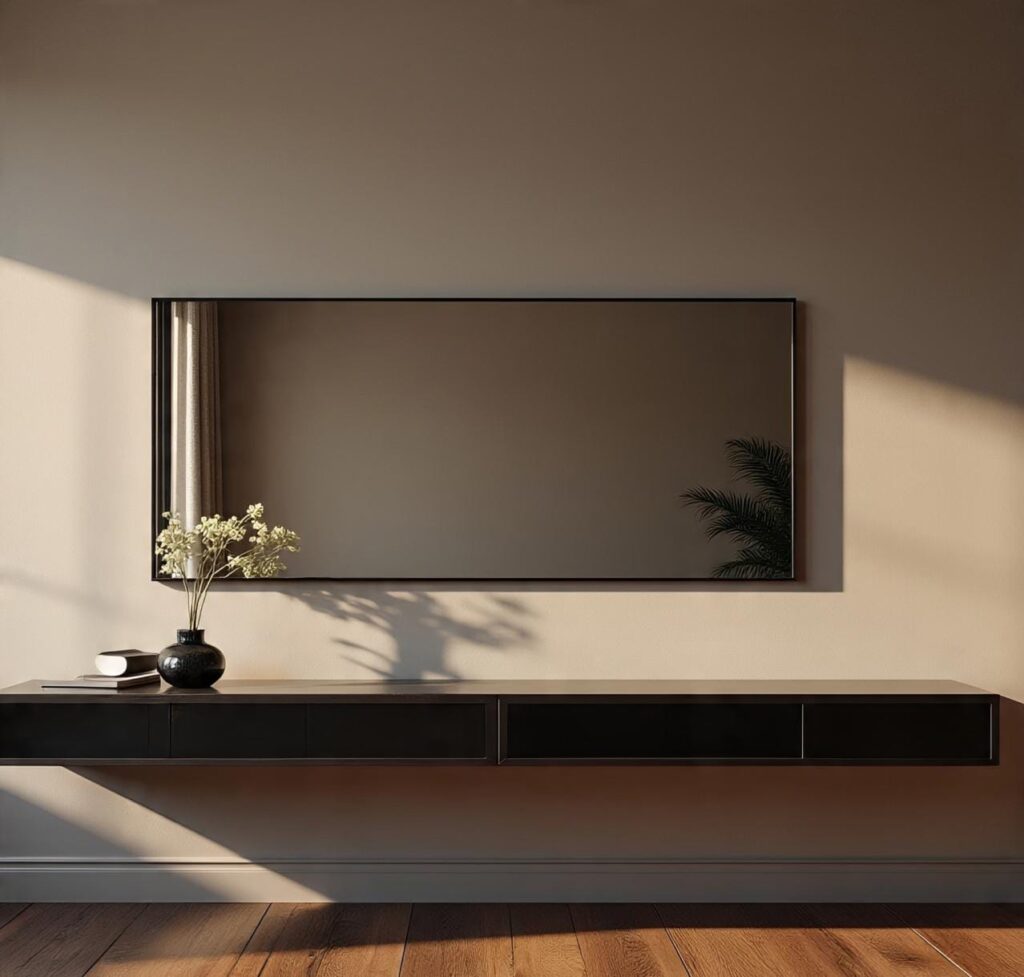
- Matte black: Architectural, crisp, grounding. Ideal for modern and industrial homes.
- Brass: Warm, soft, slightly vintage. Works well with wood tones and warm fabrics.
- Chrome: Clean, reflective, futuristic. Perfect for ultra-modern or minimalist spaces.
The “Right Height” Rule:
Designers follow this positioning rule:
Center of the mirror = 57–60 inches from the floor.
This aligns with average eye level and ensures the mirror interacts with the room instead of floating above it.
Most people mount metal-frame mirrors too high or choose frames that are too thick. Both mistakes make ceilings feel lower. Choose a frame under 1 inch thick, and always hang it so it reflects something meaningful: a window, plant, or open walkway, not the back of a couch.
4. Sunburst Mirrors
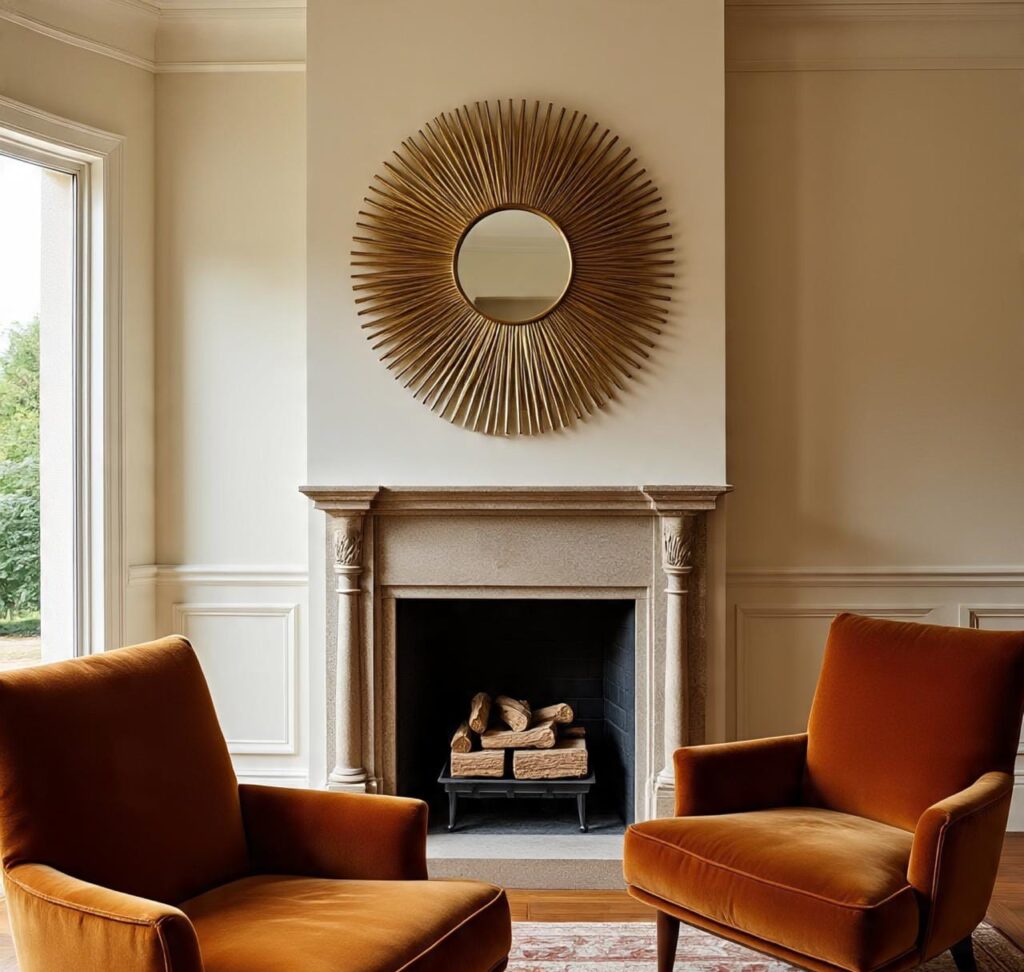
Sunburst mirrors have energy literal radiating lines. They can overpower a small wall if you don’t balance them. Pair them with clean, uncluttered surroundings. If your furniture is already ornate, go for a slimmer sunburst design.
The 70% Wall Rule
Choose a sunburst mirror that occupies at least 70% of the wall’s visual width. Anything smaller looks like a “floating badge.” Anything larger competes with the room’s architecture.
Best Spots:
Over a fireplace, they look regal. In an entryway leading to the living room, they set the tone. If you have an empty corner that never feels finished, hang a medium sunburst above a tall plant instant sculptural drama.
5. Gallery-Style Mirror
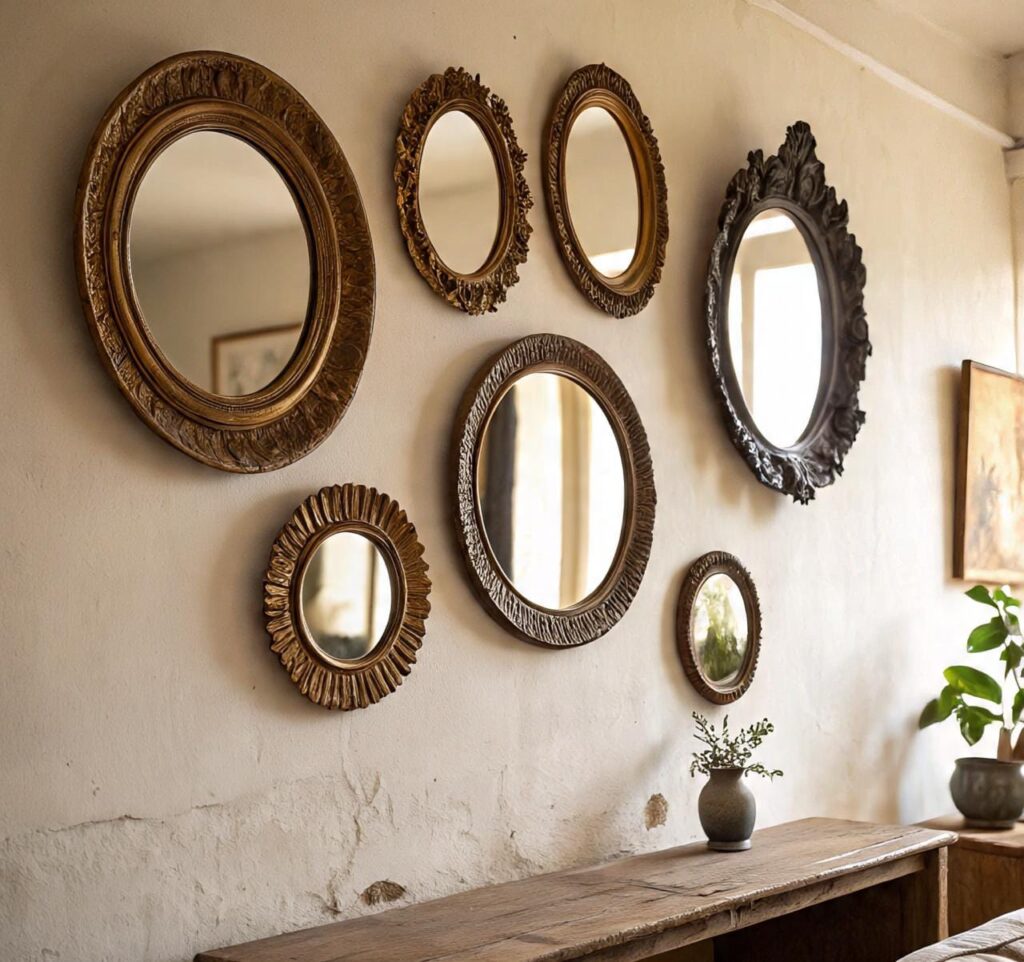
A mirror gallery wall should feel collected, not chaotic. Designers mix 2–3 shapes (round + oval + rectangle) and stick to one finish. The mirrors should share a theme of antique frames, mid-century silhouettes, or thin modern lines.
Follow a visual center line. Choose one “hero” mirror and build around it with smaller ones. This creates momentum instead of randomness.
Mix thrifted mirrors with one or two high-quality pieces. Spray paint mismatched frames in the same shade to make them feel unified. LED strips behind a few mirrors add a custom-built glow perfect for evening ambiance.
6. Floor-Length Leaning Mirrors
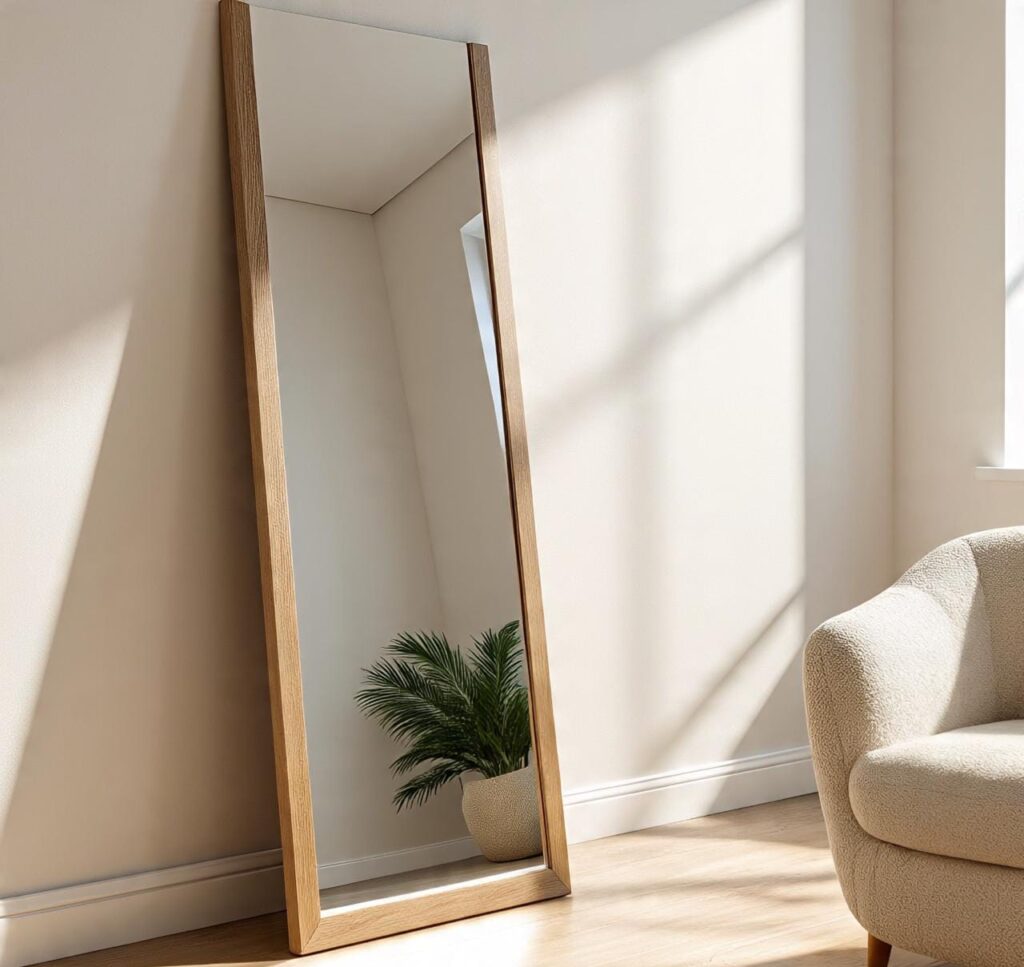
People assume leaning mirrors work only in large rooms, not true. In compact spaces, vertical mirrors stretch the room upward and create depth near seating areas. They also balance heavy furniture (like sectionals) with light visual presence.
- Add non-slip bumpers behind the mirror.
- Secure the top to the wall with a hidden anti-tip bracket.
- Keep it at a slight backward angle; straight vertical placement looks flat.
Place a floor mirror behind a tall plant and let the leaves reflect; the room feels instantly lusher. A mirror next to a floor lamp doubles the light, creating a warm, lounge-like glow, a trick designers use to make living rooms feel expensive during evening hours.
7. Antique Gold-Framed Mirrors
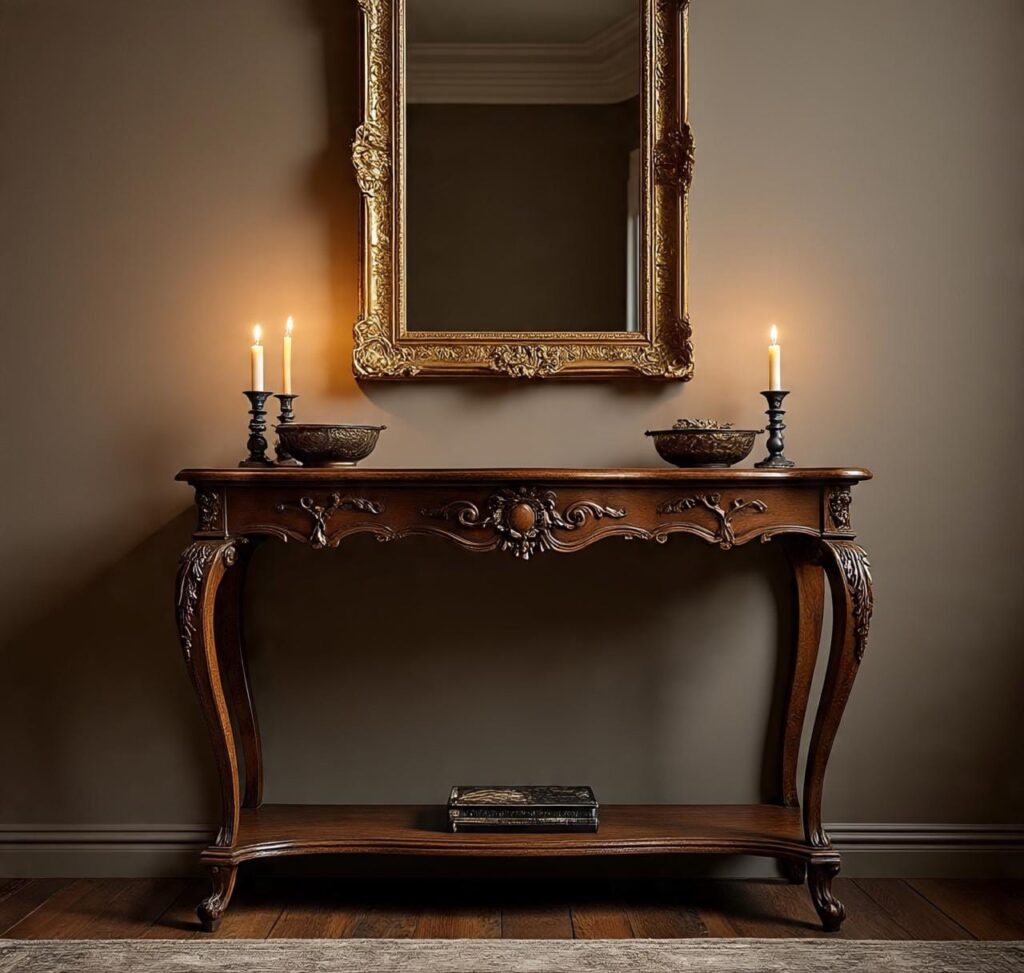
Antique gold frames tell a story of tiny cracks, worn edges, layered finishes. These imperfections add emotional warmth and break the overly “perfect” feel of new furniture.
Pairing an ornate gold frame with a sleek sofa creates contrast that feels curated, not mismatched. The trick is to repeat the gold tone at least once in a lamp, cushion zipper, or side table detail.
If your living room has walls at odd angles or uneven widths, antique mirrors help disguise imbalance. Their decorative edges distract from architectural flaws.
8. Backlit LED Mirrors
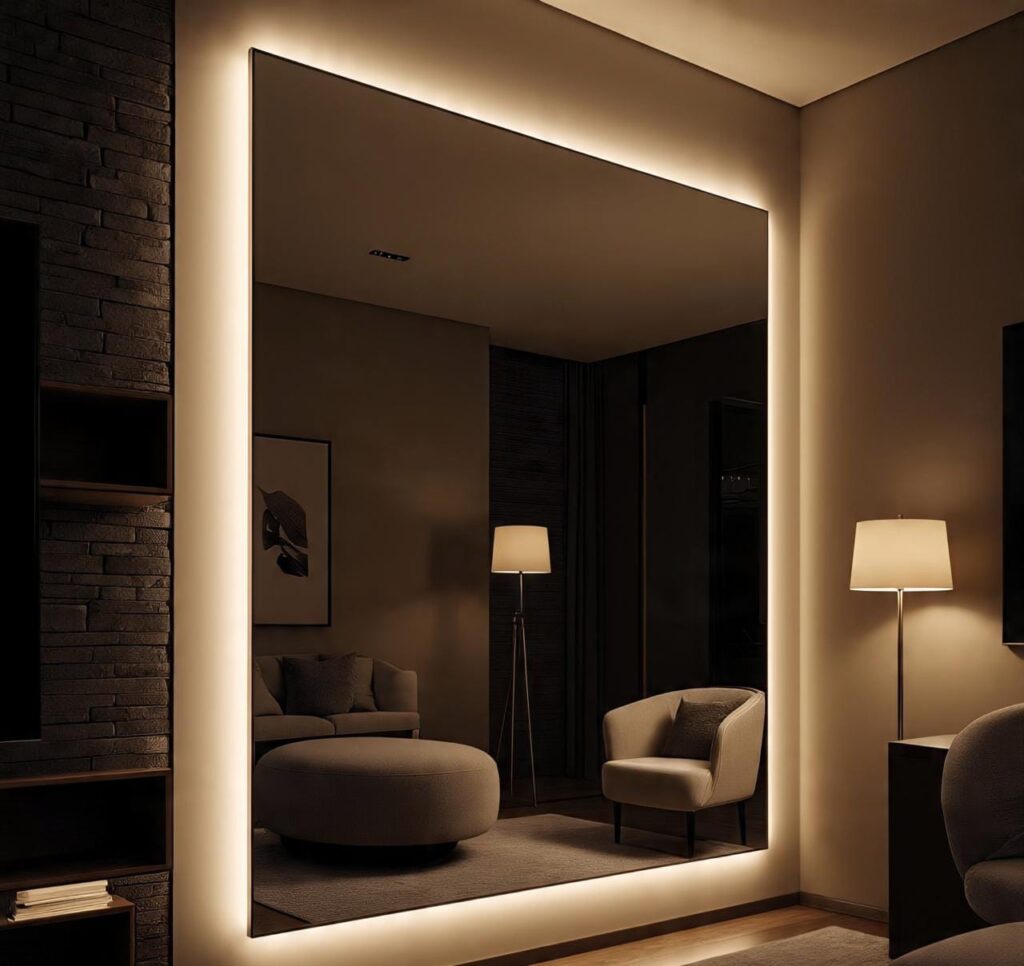
Backlit mirrors create a halo effect that makes the room feel like a boutique hotel. In the evening, the light softens shadows and adds depth without needing extra lamps.
Use adhesive cable channels painted to match the wall color. For renters, battery-powered LED strips also work well and require zero drilling.
Choose warm white (2700–3000K) for a cozy glow. Look for energy-efficient LED strips with UL certification so the lighting operates safely for long durations.
9. Geometric Mirrors
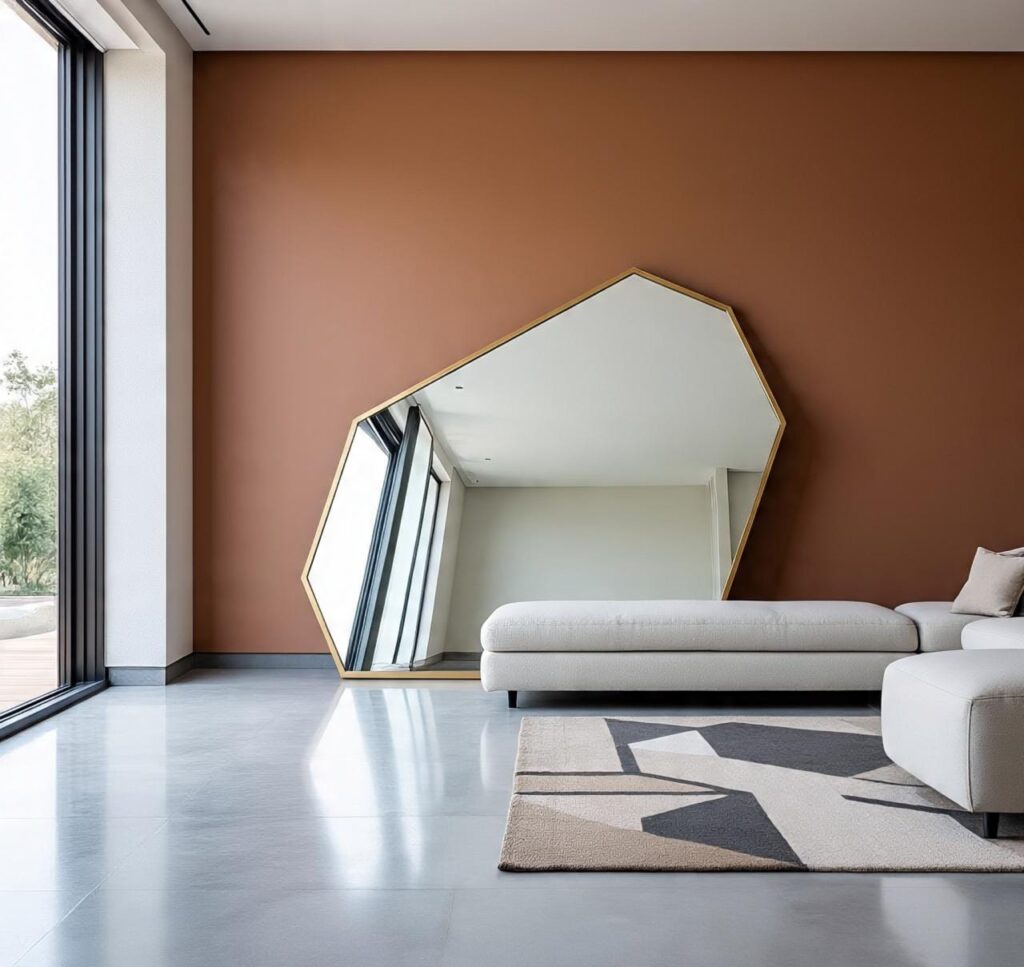
Geometric mirrors act as functional art. Hexagons look clean and graphic; ovals soften minimal spaces; capsule shapes feel modern; asymmetrical mirrors feel youthful and sculptural.
Geometric mirrors suit rooms with straight-lined furniture mid-century mod, modern, or minimalist. Round mirrors suit rooms needing softness or visual breathing space.
If your wallpaper has strong patterns, choose a single geometric mirror, not a cluster. The shape should contrast, not compete.
10. Rustic Wood-Framed Mirrors
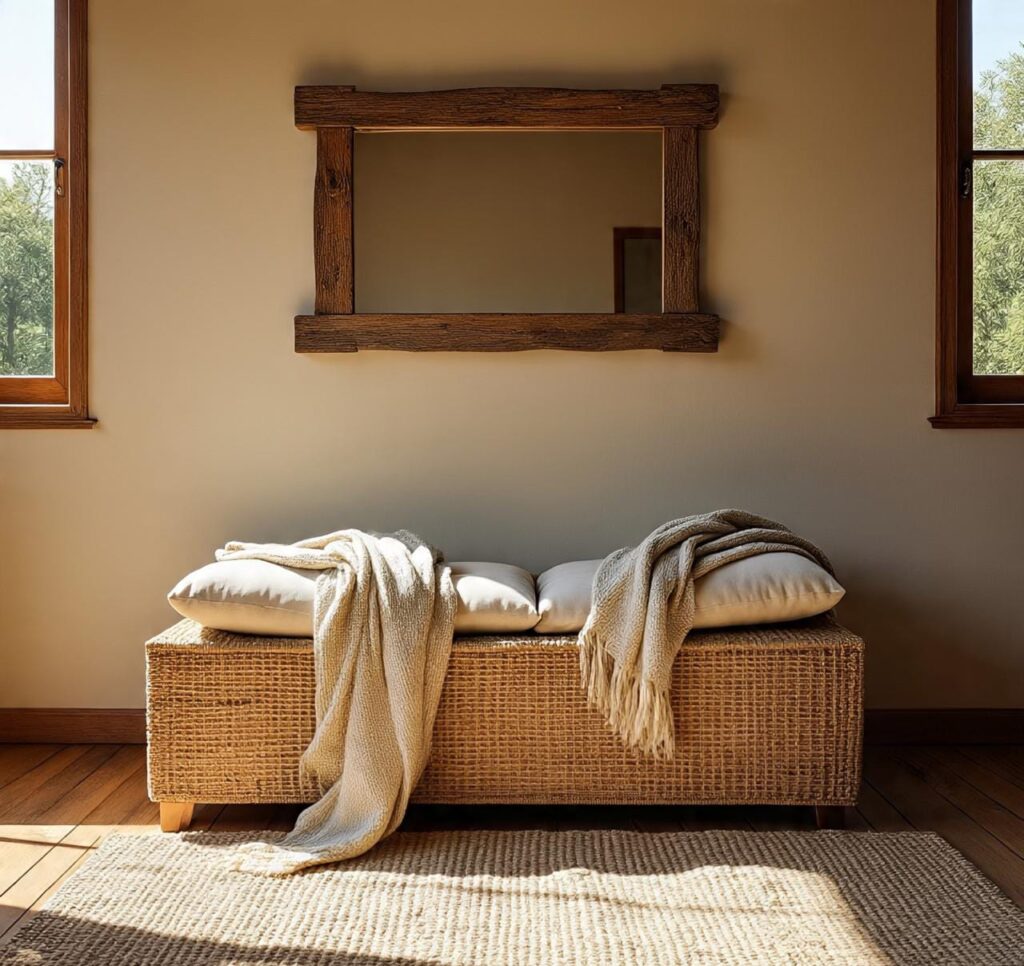
Wood frames add grounding energy. They pair beautifully with textured rugs, linen sofas, and warm lighting. In busy or cluttered rooms, wood mirrors act as the visual “anchor.”
Combine rustic mirrors with creams, beiges, and soft grays for a Scandinavian or coastal mood. Add woven baskets or cotton throws to tie everything together.
Rustic mirrors thrive in homes that prioritize warmth, simplicity, and natural materials. The more textural the space, the more a wood frame blends seamlessly.
How to Choose the Right Mirror for Your Living Room
Light Direction Test
Stand where you plan to hang the mirror and check what it reflects. A good mirror multiplies light; a bad placement reflects clutter or dark voids.
Height + Width Formula
- The mirror should be two-thirds the width of the furniture beneath it.
- The center should hit 57–60 inches from the floor.
This prevents the “floating mirror” effect.
Contrast vs. Blend
Use contrast when your wall color is bold. Use blending when your furniture is the star. A mirror shouldn’t fight with the room, it should enhance it.
Where to Place Mirrors for Maximum Impact
Opposite Windows
This is the #1 rule. You instantly double brightness and integrate outdoor views.
Above Consoles
This creates a natural vignette lamp + console + mirror = instant designer styling.
Corner Placement for Awkward Layouts
If your living room corner decor feels lonely, place a mirror to pull attention upward and outward. It makes the layout feel cohesive.
Final Tips to Avoid Common Mirror Mistakes
- Never let a mirror reflect clutter.
- Always reflect light or greenery when possible.
- Don’t place a mirror opposite the TV — it doubles screen glare.
Heavy mirrors need anchors rated for at least twice their weight. Leaning mirrors need anti-tip brackets especially in homes with kids or pets.
A tiny mirror above a large sofa looks like an afterthought. Match scale thoughtfully to anchor the room properly.
Conclusion
When chosen with intention, a mirror becomes more than a reflective accessory; it becomes the quiet force shaping how your living room feels every day. Whether you’re expanding a small space, warming up a modern layout, or adding character without clutter, the right mirror elevates everything around it. Your walls, your corners, your lighting they all work harder with a single, thoughtfully selected design.
If you’re ready to upgrade your space, start with the mirror that speaks to your style and let it transform the room in ways furniture alone never could.
Ready to refresh your living room? Start with one mirror and let the room surprise you.
Read: Engineered Hardwood Flooring: The Complete Buyer’s Guide
Visit primelivingspace.