
 By
ByWood stairs live a hard life. Shoes, pets, humidity, sunlight, the occasional coffee spill at 7 a.m. they take it all. And when you’re standing between epoxy on wood stairs vs polyurethane or stain, you’re really choosing how that story will age over the next 5–15 years.
I still remember the first time a homeowner asked me, “Can I just pour epoxy on my wooden stairs and be done forever?”
It sounded simple. It never is.
Let’s walk through it like a real project, not a brochure.
What Is Epoxy on Wood Stairs?

Epoxy is not a “finish” in the traditional sense. It’s a plastic-based coating that cures into a hard shell. When people talk about epoxy on stairs, they’re usually picturing that seamless, glossy, modern look you see in lofts, studios, or dramatic design homes.
On wood stairs, epoxy works by sealing the surface completely. Once cured, moisture can’t get in and that’s both the strength and the risk.
wood moves, epoxy doesn’t.
Solid wood expands and contracts with humidity. Epoxy is rigid. On stable, well-sealed stair treads (especially engineered wood), epoxy can last years. On softer or poorly acclimated wood, micro-cracks can appear over time. You don’t see them right away but six months later, they show up like fine spider lines under light.
That said, epoxy gives you creative freedom nothing else does:
- Clear epoxy for a glass-like seal over natural grain
- Metallic epoxy stairs for bold, flowing patterns
- Glitter epoxy when homeowners want subtle sparkle under lighting
- Glow in the dark epoxy for safety edges or modern accents
- Beach epoxy Ocean-inspired look with flowing water effects and natural depth on wood stairs.
- Matte epoxy for people who want durability without the shine
Epoxy is a statement. It doesn’t whisper.
What Polyurethane Really Does to Wood Stairs
Polyurethane is the quiet professional of stair finishes. It doesn’t shout, but it shows up every day and does its job.
Unlike epoxy, polyurethane flexes with the wood. That flexibility is why it has been the go-to for hardwood stairs for decades. It forms a protective film, but it breathes just enough to move with seasonal changes.
In real homes, this matters more than durability charts.
Oil-based poly deepens the wood tone and hides minor scratches over time. Water-based poly keeps the color light and dries faster, which homeowners love when stairs are the only path upstairs.
One thing people underestimate is safety. High-gloss polyurethane can be slippery, but satin and matte versions provide better traction than most epoxy finishes without additives.
Polyurethane doesn’t transform stairs, it preserves them.
Where Stain Fits (And Where It Fails)
Stain alone is not protection. That’s the biggest myth.
Stain only changes color. It soaks into the wood and leaves the surface exposed. On stairs, that means:
- fast wear on nosings
- uneven fading
- visible traffic patterns within months
Stain makes sense only when paired with a topcoat, usually polyurethane. Without it, you’re basically asking your stairs to age in fast-forward.
Some homeowners ask about staining under epoxy. Technically possible, yes but tricky. Adhesion depends on the stain type, drying time, and sealing process. One mistake and the epoxy lifts, clouds, or refuses to bond evenly.
Epoxy vs Polyurethane: The Real Comparison
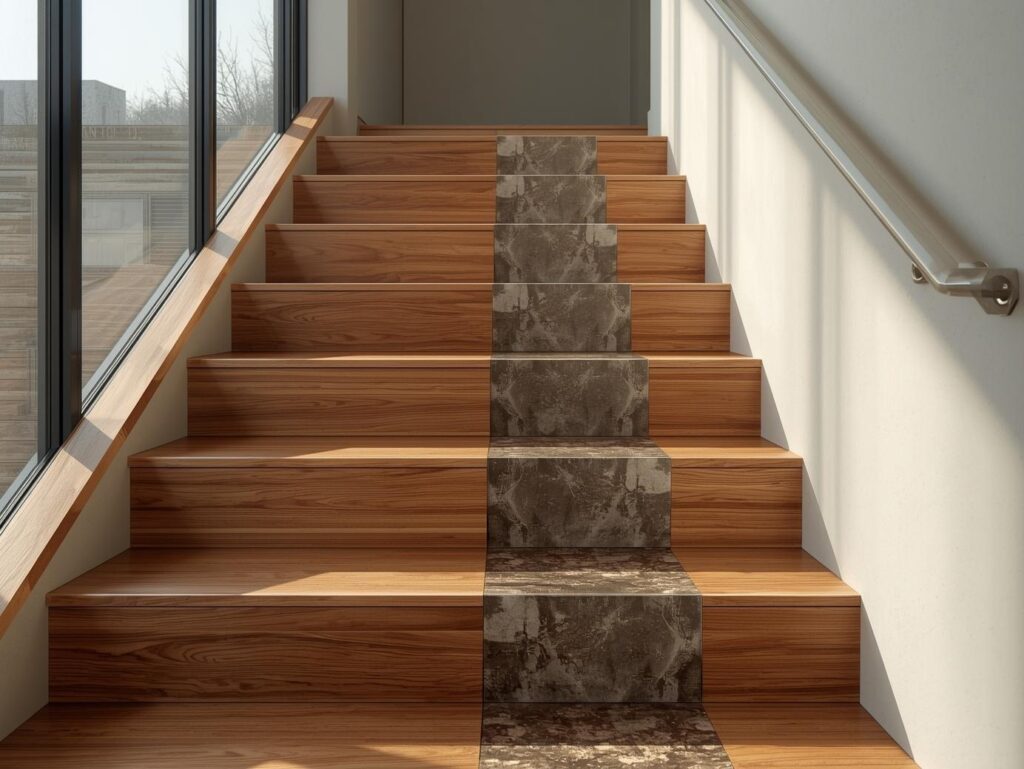
Forget marketing claims. Here’s how they actually behave in real houses:
Epoxy wins when:
- water resistance is critical
- the design is modern or artistic
- stairs are structurally stable
- visual impact matters more than easy repair
Polyurethane wins when:
- stairs see daily family traffic
- wood movement is unavoidable
- future touch-ups matter
- you want a natural, timeless look
Repairs are where epoxy struggles. A damaged epoxy step usually means sanding and recoating the entire tread. Polyurethane? You can feather in repairs without anyone noticing.
Sunlight is another quiet factor. Epoxy, especially clear and decorative types can be amber over time. Polyurethane, particularly water-based formulas, stays more color-stable.
Epoxy vs Stain: What People Don’t Realize
This comparison isn’t fair unless you understand one thing:
stain is not a competitor to epoxy.
Epoxy is a surface barrier.
Stain is color.
If someone is choosing between them, what they’re really asking is:
“Do I want durability or aesthetics first?”
In most homes, the smarter move is stain plus polyurethane. Epoxy becomes the choice only when durability and visual drama outweigh tradition.
Safety: The Quiet Deal-Breaker
Stairs aren’t floors. What works in a living room can be dangerous on steps.
Glossy epoxy looks incredible but without anti-slip additives, it can be risky. This is where matte epoxy or textured finishes make sense. Designers love the look; contractors love fewer callbacks.
Polyurethane’s advantage here is predictability. Satin and matte polys offer grip without changing the feel of the stairs.
If safety is a concern and it usually is, this decision matters more than aesthetics.
So… Which One Should You Choose?

I’ve seen epoxy stairs last beautifully in modern homes with controlled environments. I’ve also seen them fail where wood movement was ignored.
I’ve seen polyurethane stairs look “boring” on day one and still look elegant ten years later with simple maintenance.
If your goal is a bold, artistic staircase that becomes a focal point, epoxy makes sense. If you want stairs that age gracefully and forgive mistakes, polyurethane is hard to beat. And if color is your only concern, stain is just the first step not the solution.
Final Thought
Choosing between epoxy, polyurethane, and stain isn’t about trends. It’s about how you live, how your home moves, and how much maintenance you’re willing to accept.
If you’re exploring epoxy on stairs as part of a larger design vision or deciding between metallic epoxy stairs and a classic poly finish make the choice with the next decade in mind, not just the reveal photo.
If you want deeper guides on finishes, textures, or decorative epoxy ideas, explore our related articles and build a staircase that tells the right story for your home.