 By
By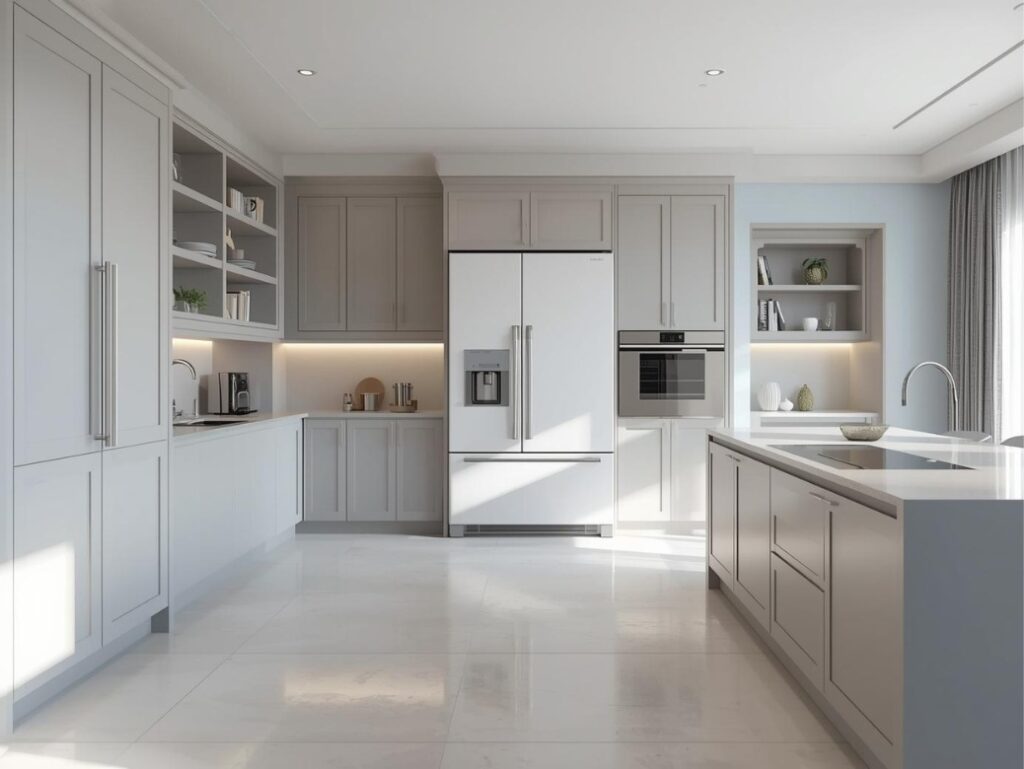
Most homeowners don’t realize how much space their kitchen actually has until they remodel it. The issue usually isn’t the square footage, it’s the way storage, movement, and visual weight are handled. A small kitchen that’s optimized with the right layout and materials can outperform a larger one with poor planning. The Kitchen Remodeling ideas below come from real remodels where simple repositioning, tweaks in cabinet depth, and smarter workflow decisions created breathing room without major structural changes.
- Smart Layout Strategies to Make a Small Kitchen Feel Bigger
- Vertical Space Solutions That Add Storage Without Bulk
- Small kitchen remodel ideas
- Space-Saving Kitchen Cabinet Edge & Corner Solutions
- kitchen cabinet corner diy
- Clever Light, Texture & Color Upgrades That Create Visual Space
- Functional Appliance Choices That Protect Floor Space
- mud kitchen DIY
- DIY kitchen cupboards
- DIY Outdoor kitchen kits
- Creative Pantry Alternatives for Kitchens Without Space
- Multifunctional Furniture That Works Harder in Compact Kitchens
- Budget-Friendly Remodeling Choices That Maximize Space
- Mistakes That Make Small Kitchens Feel More Cramped
- Conclusion
Smart Layout Strategies to Make a Small Kitchen Feel Bigger
The classic “fridge–sink–stove” triangle still matters, but in tight kitchens, contractors now think in terms of traffic protection. A fridge door that swings into the main walkway or a sink that forces you to turn sharply can make the smallest kitchen feel chaotic.
A practical fix:
If your fridge is near a corner, swap it with a pantry cabinet and slot the fridge between two tall surfaces. This keeps doors from blocking flow and stops people from walking through your prep zone.
I’ve seen galley kitchens gain nearly two feet of usable aisle space simply by switching the fridge and microwave cabinet no new construction required.
Instead of the standard “prep, cook, clean” hierarchy, micro-zones break the kitchen into small, task-based pockets. This method turns dead corners and thin strips of counter into usable areas.
Examples:
- A 14-inch strip beside the stove becomes a spice-and-oil zone with a pull-out vertical rack.
- A small ledge near the sink can produce scrub brushes, freeing drawer space.
- A narrow wall near the entrance becomes a coffee station with a floating shelf and plug strip.
Micro-zoning stops clutter from spreading across the kitchen and lets two people work without stepping over each other.
Not every household needs a fixed island. A floating prep board — hinged or fold-down — adds instant workspace and folds flat when not in use. Professionals use these in small galley kitchens where adding an island disrupts sightlines.
Choose a hardwood or butcher-block hinged board mounted on a concealed metal bracket. When lifted, it’s sturdy enough for chopping; when folded, it gives full walkway clearance.
Vertical Space Solutions That Add Storage Without Bulk
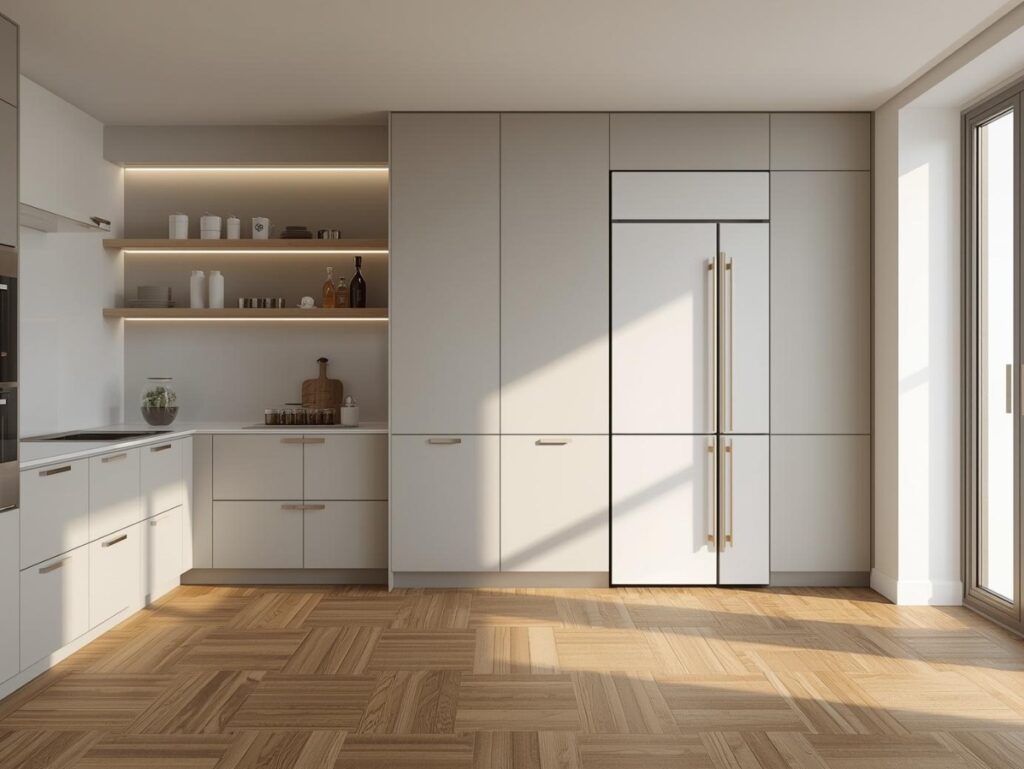
Building cabinets to the ceiling looks clean, but the top 10–14 inches easily becomes wasted storage if the doors are too deep or hard to access. A contractor trick is reducing the depth of the topmost row so the lower cabinets’ doors don’t shadow the space.
If your ceilings are eight feet or lower, avoid stacking two bulky boxes. Instead, install a slimmer secondary cabinet above the main set ideal for items used only a few times a year.
Open shelving works only when placed away from the kitchen’s “messy” zones. You don’t want shelves above a stove or next to the dishwasher where steam and splashes make everything grimy.
The ideal placement:
- One to two shelves above a coffee station
- A shelf over the sink for plants or everyday cups
- A narrow shelf above the backsplash for spices
This gives airiness without sacrificing cleanliness.
Most homes overload drawers with utensils, spatulas, and gadgets. A slim rail system installed under upper cabinets frees drawer space and keeps frequently used tools within reach.
The trick:
Only hang essentials and the tools you use every day. Everything else belongs inside drawers so the surface doesn’t turn chaotic.
Small kitchen remodel ideas

Reducing cabinet depth from 24 inches to 18 inches can completely change how usable your floor space feels. Homeowners often assume shallower cabinets store less, but vertical organizers, baking sheet dividers, and risers compensate for the lost depth.
Bonus:
Shallow bases let you gain 4–6 inches in walkway width — a game-changer in galley kitchens.
A 20-inch-wide island may seem too narrow, but with proper legroom recesses and integrated drawers, it becomes the most hardworking feature in a small kitchen. Contractors use slim islands in condos all the time because they function without disrupting circulation.
You can even mount small, under-counter appliances like a beverage fridge or warming drawer on one side.
Most kitchens waste the 4–5 inches under base cabinets. Toe-kick drawers store baking sheets, foil rolls, cutting boards, and kids’ art supplies.
Pull-down racks (the type often used in tall closets) also work inside upper cabinets, letting short homeowners access higher shelves without a step stool.
Space-Saving Kitchen Cabinet Edge & Corner Solutions
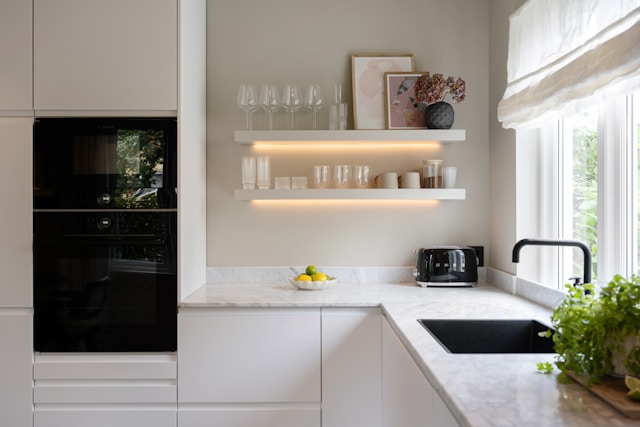
The biggest misconception is that corner cabinets must be filled. Overstuffing them makes items hard to reach and leads to wasted space.
Many contractors now suggest:
- Converting corner areas into dead space and using adjacent cabinets more efficiently
- Or using custom triangular shelving instead of complex mechanisms
The goal isn’t to use every inch but to use the right inches effectively.
When a Lazy Susan is actually the wrong upgrade
Lazy Susans look convenient, but in tiny kitchens they often reduce storage because the circular platform wastes the square cabinet corners. For cabinets that store pots or small appliances, a fixed diagonal shelf holds more.
Choose a Lazy Susan only if the items needing retrieval are small and lightweight like snacks, spices, or plastics.
Pull-out, pivot, and diagonal configurations compared
- Pull-out corner drawers: Great for organizing heavy cookware but need precise installation.
- Pivot shelves: Bring items fully into view but require wide door clearance.
- Diagonal corner cabinets: Offer the most internal volume, but you need proper reinforcing.
The best choice depends on the items you store daily, not what looks fancy in catalogs.
kitchen cabinet corner diy
A common DIY fix is installing a vertical divider inside a corner base cabinet. This creates two zones: one for tall items like baking sheets and one for small appliances.
Another trick is adding cleats inside the cabinet to support a handmade shelf that follows the cabinet’s irregular shape. It’s inexpensive and adds 30–40% more usable area.
DIY slide-out trays using low-cost runners
Instead of buying expensive pull-out systems, you can build custom trays using plywood, edge banding, and full-extension drawer slides. These trays eliminate the need to crouch and reach deep into dark corners.
Make them ½ inch smaller than the cabinet opening so they glide smoothly without binding.
Corner cabinets often sag because homeowners store cast irons and Dutch ovens inside them. Reinforce shelves with metal brackets or plywood strips attached under the shelf. This distributes weight evenly, preventing the bowing that eventually cracks veneer or laminate.
Clever Light, Texture & Color Upgrades That Create Visual Space
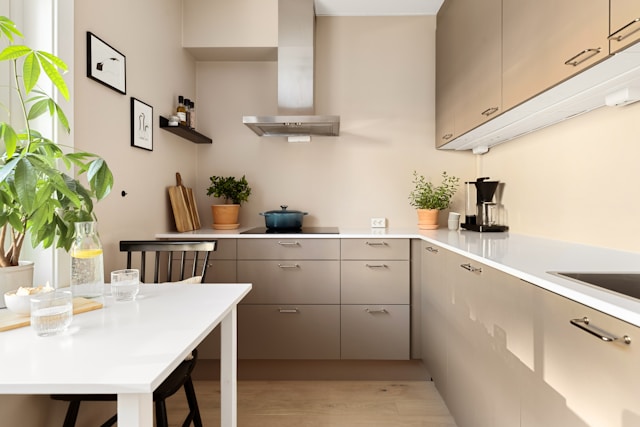
A single cabinet finish from floor to ceiling can feel heavy in a small kitchen. Designers often mix two tones — darker lowers, lighter uppers — to visually lift the room. Matte finishes reduce glare, while glossy surfaces bounce light into shadowed corners.
The trick is contrast: enough to differentiate layers, not enough to feel busy.
Instead of relying solely on ceiling lights, add LED strips under cabinets and inside toe-kicks. These low-set light lines visually push the floor outward.
Wall washers — lights that cast downward along a wall — also reduce harsh shadows, which makes the kitchen feel deeper.
Thick countertops look luxurious but in a tiny kitchen they shrink the visual volume. A 1.2–1.5 cm profile gives a cleaner, lightweight feel and visually expands the base cabinets.
If you prefer thick counters, choose waterfall edges only on one side to avoid making the kitchen look boxed in.
Functional Appliance Choices That Protect Floor Space
A 24-inch oven or fridge can perform just as well as its 30-inch counterpart for most households. European kitchens rely on compact appliances because they cook efficiently and fit tighter footprints.
If you bake often, a single wall oven paired with a countertop convection oven saves cabinet space without compromising functionality.
Dishwashers, microwave drawers, beverage coolers, and even washer-dryer combos can be placed under counters to keep top surfaces open and streamlined. Under-counter microwaves not only free eye-level space but prevent cabinets from hanging too low over prep areas.
Bulky range hoods crowd the upper wall. A slim, concealed hood inside a cabinet or a downdraft system on the cooktop maintains airflow without occupying visual space. These are especially effective in island cooktops in small homes.
mud kitchen DIY
A mud kitchen, even a simple one handles messy work like washing garden tools, prepping outdoor meals, rinsing pots, or letting kids do hands-on activities. This indirectly frees indoor space by shifting bulky or dirty tasks outside.
A basic structure with pallet wood, a metal basin, and hooks instantly becomes a utility zone.
Most DIY mud kitchens don’t need plumbing. A large basin combined with a drain bucket underneath works for washing produce or rinsing tools. Just empty the bucket when full.
This keeps indoor sinks free during busy cooking times.
Use galvanized shelves or marine-grade plywood for outdoor storage. Store items that don’t require climate control cleaning tools, charcoal, outdoor cookware so your indoor cabinets stay dedicated to daily essentials.
DIY kitchen cupboards
Every kitchen has awkward inches: the 8-inch gap beside a fridge, the low space below a window, the narrow wall beside a doorway. Custom DIY cupboards turn those “unusable” spots into micro-storage zones.
A 6–10 inch pull-out spice cupboard near the stove stores more than a full drawer.
In tight paths, a standard cabinet door can block the aisle. Use:
- Bi-fold cabinet doors
- Sliding doors
- Tambour-style roll-up fronts
- Pocket hinges that slide the door inward
These designs prevent collisions and keep the kitchen moving smoothly.
Modern DIY cupboards often use quality plywood with iron-on edge banding. Once painted, the cupboards look like custom millwork but cost significantly less. Plywood also resists moisture better than MDF, making it ideal for sink-adjacent areas.
DIY Outdoor kitchen kits
Outdoor kitchen kits act as an overflow station. By shifting grilling, prep, and washing tasks outside, you reduce indoor countertop traffic especially during large gatherings.
Pick a kit with modular components so you can expand slowly: start with a grill base and add storage or a sink later.
Modern kits come with attachable sink bays, prep shelves, and sealed cabinets. These extras keep the outdoor area functional enough to take over many indoor tasks, especially during summer when heat from cooking makes kitchens feel even smaller.
Families with frequent guests or multiple cooks often rely on outdoor kitchens to split cooking tasks. One person grills outside while another prepares sides indoors. This reduces bottlenecks and keeps the main kitchen clearer and calmer.
Creative Pantry Alternatives for Kitchens Without Space
Slim wall-mounted pull-out systems make use of narrow vertical spaces. They’re ideal beside fridges or in hallways and can store everything from cereal boxes to cleaning supplies.
If your kitchen backs into a hallway or laundry area, create a recessed pantry by borrowing a few inches between studs. It turns shallow wall space into deep storage without pushing into the kitchen footprint.
The underside of a staircase is often underutilized. Install custom shelves or drawers for dry goods, small appliances, or bulk items. This approach keeps the main kitchen light and uncluttered.
Multifunctional Furniture That Works Harder in Compact Kitchens
A fold-out counter mounted on a sturdy bracket adds instant prep space during meal prep and folds away afterward. These work especially well in apartments where the stove and sink are close together.
A narrow rolling cart can act as a movable pantry or prep station. Slide it under the counter, pull it out when cooking, and tuck it away when done.
Built-in benches for small dining corners not only save floor space but also store appliances, linens, or pantry overflow. They’re ideal for homes with limited cabinet space.
Budget-Friendly Remodeling Choices That Maximize Space
Sliding doors save aisle space and prevent traffic jams. They’re perfect for tight galley kitchens or cabinets near entrances.
Instead of replacing all cabinets, trim the existing doors or switch to open shelving in a few areas to lighten the look. Removing bulky trim and rebuilding slimmer fronts refreshes the kitchen without major cost.
Plywood, MDF, and laminate sheets let you build custom shelves, toe-kick drawers, and organizers tailored to your kitchen’s exact measurements. A well-designed DIY organizer often outperforms store-bought inserts.
Mistakes That Make Small Kitchens Feel More Cramped
Dark cabinets paired with dark walls shrink the room visually. If you prefer deep tones, restrict them to the lowers and keep the upper light.
Large handles look elegant on big kitchens but overwhelm small cabinets. Slimline pulls maintain a sleek look and reduce visual clutter.
Placing the dishwasher next to a wall corner creates a pinch point when opened. Similarly, an oven door that swings outward into the main walkway can obstruct everything. Repositioning appliances by even a few inches can completely change usability.
Conclusion
Maximizing kitchen space is less about adding more cabinets and more about understanding how you live in the kitchen. Once you identify your movement patterns, storage habits, and daily cooking routines, space starts opening up in places you never noticed inside toe-kicks, under stairs, above appliances, and in corners that seemed useless. A small kitchen becomes spacious when every inch works efficiently and every design choice supports clear traffic, smart storage, and easy accessibility.