 By
By
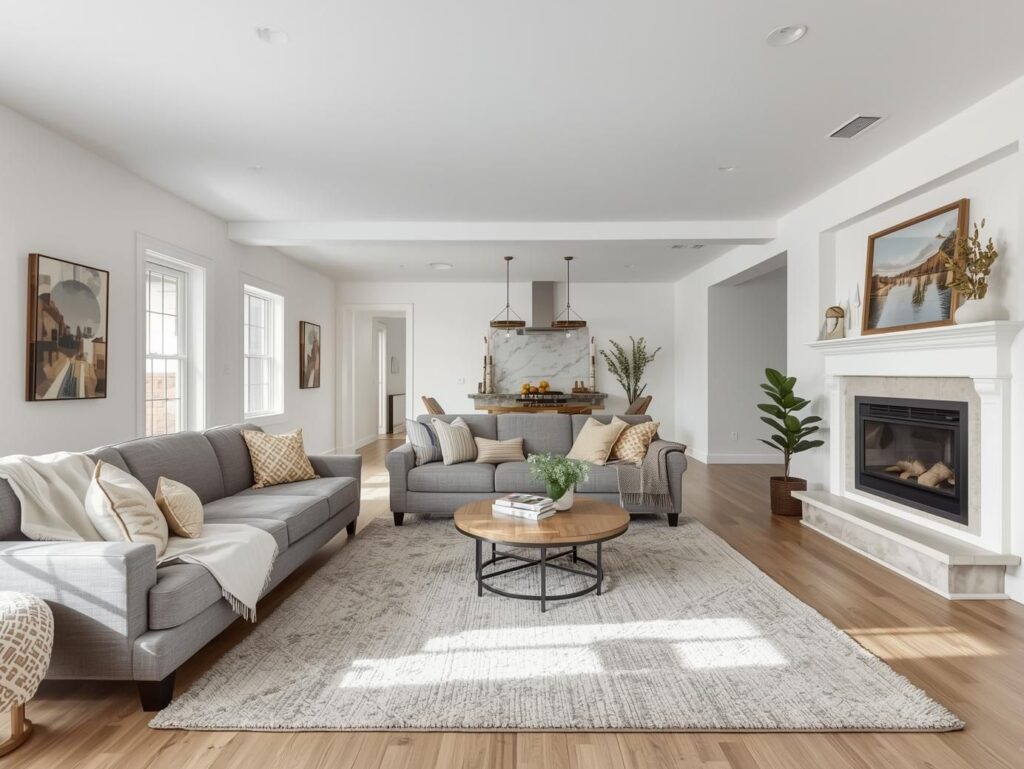
A grey sofa is often the first “grown-up” furniture choice people make. It feels timeless, practical, and safe. But if you’ve ever looked at your living room and thought, “Why does this still feel unfinished?” The sofa probably isn’t the problem. The styling around it is. Designers love grey sofas because they behave like a neutral canvas. Homeowners struggle with them because that canvas can easily look flat, cold, or forgettable. The guide Living Room Decor Ideas With a Grey Sofa breaks that cycle. Below, you’ll learn exactly what to add to make a grey sofa shine and what to avoid so it doesn’t drain the life out of your living room.
What To Add
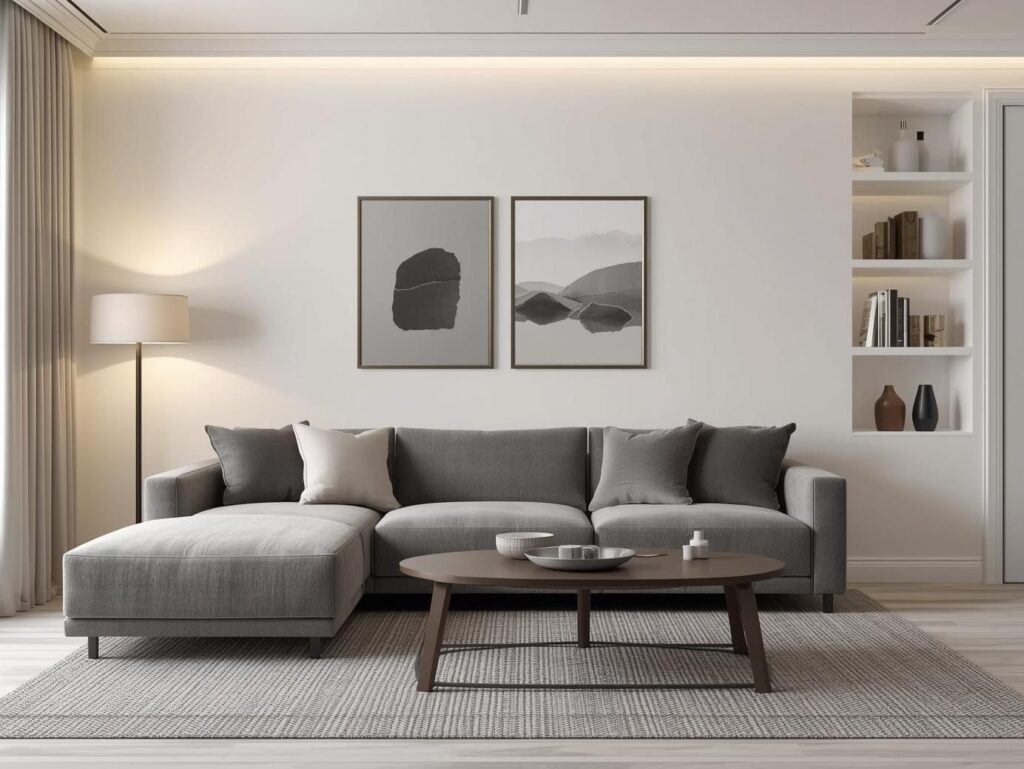
Wall Colors That Balance a Grey Sofa
Grey upholstery reflects whatever surrounds it. That’s why wall color matters more than most people realize.
Warm whites, soft greige, muted clay tones, and gentle taupes help grey feel grounded. In a grey and beige living room, for example, beige walls soften the sofa’s edges and create a calm, layered look that never feels sterile.
Be cautious with stark white. Pure white walls paired with a grey sofa can feel harsh especially in rooms without strong natural light. If you love contrast, a single black and white wall works best when the rest of the room includes warmer textures like wood or woven textiles.
If you’re exploring broader Living Room Color & Palette Ideas, think of grey as the anchor not the star. The wall color should support it, not compete.
Rugs That Ground the Space
A grey sofa floating on bare flooring is one of the most common styling mistakes designers see. Rugs don’t just decorate, they visually “lock” the seating area in place.
The best rug colors for grey sofas include warm neutrals, faded patterns, earthy tones, or soft blends. In a blue and brown living room, a rug that mixes both hues can connect the sofa to surrounding furniture beautifully.
Size matters more than pattern. At minimum, the front legs of the sofa should sit on the rug. Ideally, all seating pieces should share the same rug footprint. Too-small rugs make even expensive rooms look temporary.
Texture also plays a role. Flat-weave rugs keep things modern, while wool or high-pile rugs make grey feel cozier and more lived-in.
Accent Colors That Work With Grey
Grey pairs well with almost every color but not all at once.
Pick one or two accent colors and repeat them subtly across pillows, art, and accessories. Soft greens, dusty blues, warm browns, and muted mustard tones all work well. A white yellow and navy blue living room, for instance, adds energy to a grey sofa without overwhelming it.
Avoid scattering random colors “just to add interest.” That’s how rooms lose cohesion. Designers use repetition intentionally if a color appears three times, it feels planned, not accidental.
Textures That Break Up the Neutral Look
If there’s one expert-level tip that transforms grey sofas instantly, it’s this: texture matters more than color.
Grey is visually quiet. Texture gives it depth. Bouclé pillows, linen curtains, wool throws, leather accents, ceramic lamps these layers keep neutral rooms from feeling flat.
In a Pastel living room, texture becomes even more important because colors are intentionally soft. Without texture, everything blends into visual noise. With it, the space feels thoughtful and warm.
Lighting That Complements Grey Upholstery
Lighting can make the same grey sofa feel warm and inviting or cold and unwelcoming.
Use layered lighting: overhead fixtures for function, table lamps for intimacy, and floor lamps for balance. Warm or neutral bulbs (2700K–3000K) flatter grey fabrics far better than cool lighting.
Natural light matters too. In rooms with limited daylight, reflective surfaces like light-toned walls, mirrors, or pale rugs help grey stay lively rather than dull.
Coffee Tables & Side Tables That Balance Grey
Grey sofas often have visual weight, especially darker ones. Tables help counterbalance that weight.
Wood coffee tables warm things up. Stone or concrete adds sophistication. Metal works best when it’s brushed or matte not shiny. Rounded tables soften boxy sofas and keep layouts feeling approachable.
A good rule designers follow: if your sofa is simple, let the table add character. If the sofa has texture or detailing, keep tables quieter.
Throw Pillows & Accessories That Add Depth
Pillows are not about matching, they’re about layering.
Use a mix of solids, subtle patterns, and tactile fabrics. Odd numbers look more natural than perfectly paired sets. Instead of buying everything at once, build slowly so the room evolves naturally.
Accessories should echo your chosen palette. In neutral homes inspired by Living Room Color & Palette Ideas, restraint is key. Fewer, better pieces always beat clutter.
What To Avoid
Matching Everything to the Same Grey Tone
Grey-on-grey sounds cohesive but usually looks lifeless. When walls, sofa, rug, and pillows all share similar tones, the room loses dimension.
Contrast doesn’t require bold color; it can come from warmth, texture, or depth. Even in minimalist homes, variation is essential.
Cool-Only Color Schemes Without Contrast
Cool greys paired only with blues and silvers can feel icy. This happens often in modern homes where everything leans cool.
If you love cooler palettes, soften them with warm woods, brass accents, or natural textiles. Even a subtle tan or brown element can save the room from feeling clinical.
Shiny Metals That Clash With Grey Fabric
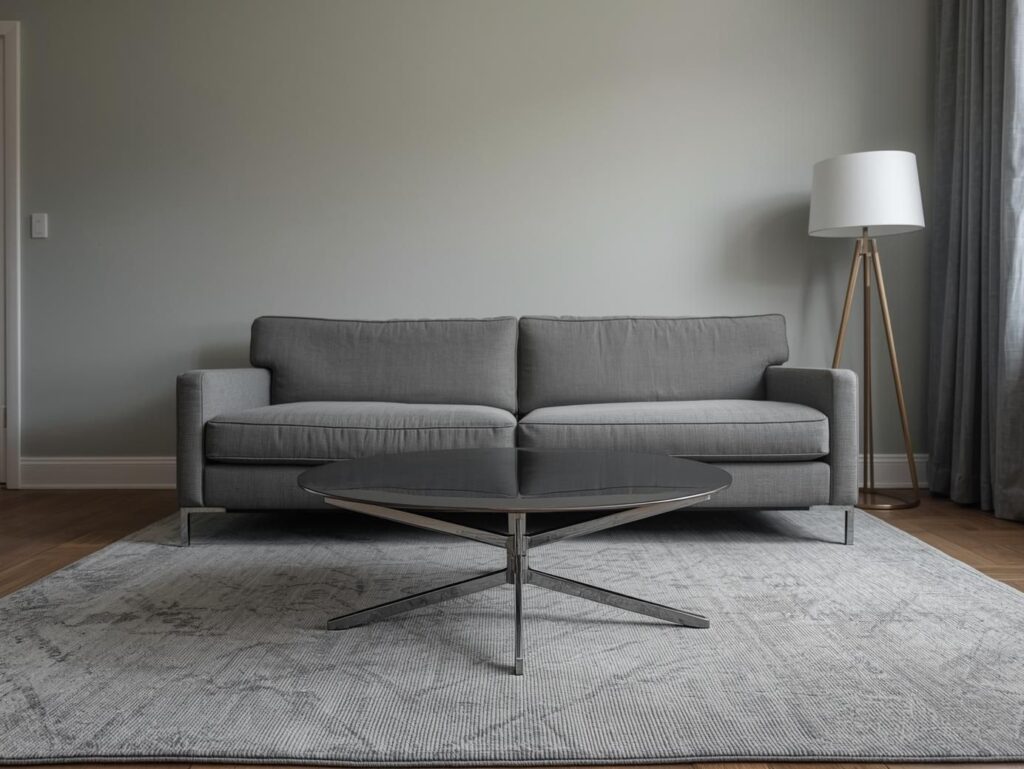
Highly polished chrome or mirror-finish metals often clash with soft grey upholstery. The contrast feels accidental rather than intentional.
Brushed brass, matte black, or aged bronze pair far better. These finishes add richness without stealing attention from the sofa.
Undersized Rugs and Art
Small rugs and tiny wall art make a living room feel disconnected. Grey sofas, especially sectionals, need properly scaled elements to feel grounded.
Art should be wide enough to visually relate to the sofa beneath it. Rugs should frame the entire seating zone, not just the coffee table.
Ignoring Undertones (Warm vs Cool Grey)
Not all greys are the same. Some lean warm, others cool.
A warm grey sofa looks best with beige, tan, and earthy accents. A cool grey sofa pairs better with blues, crisp whites, and charcoal tones. Ignoring undertones is one of the fastest ways to make a room feel “off” without knowing why.
Overstyling a Grey Sofa
Grey sofas shine when they’re styled with intention—not excess.
Too many pillows, too many colors, too many decorative objects can overwhelm a neutral base. Designers often remove one item at the end of styling—not add another.
Close with Real-World Scenarios
If Your Grey Sofa Is Light vs Dark
Light grey sofas feel airy but can disappear without contrast. Dark grey sofas feel grounding but need light elements nearby to avoid heaviness. Adjust wall color, rug tone, and lighting accordingly.
If Your Living Room Is Small
In smaller rooms, grey sofas work best when paired with light walls, leggy furniture, and minimal visual clutter. Mirrors and light rugs help reflect space and prevent the sofa from feeling dominant.
If You Want a Neutral but Not Plain Look
Layer neutrals thoughtfully. Combine beige, ivory, soft grey, and muted accents. A grey and beige living room or even a Pastel living room proves you don’t need bold color to create personality, just depth and intention.
If You Want Your Grey Sofa to Look Expensive
Invest in the things people subconsciously notice: rug size, lighting quality, texture variety, and scale. These details matter far more than trendy accessories.
Final Takeaway
A grey sofa isn’t boring it’s honest. It reflects the choices you make around it. When you add warmth, texture, balance, and contrast and avoid common pitfalls your living room stops feeling “safe” and starts feeling designed.
Use this framework as a guide, personalize it to your lifestyle, and let your grey sofa become the quiet confidence of your space rather than its biggest question mark.