 By
By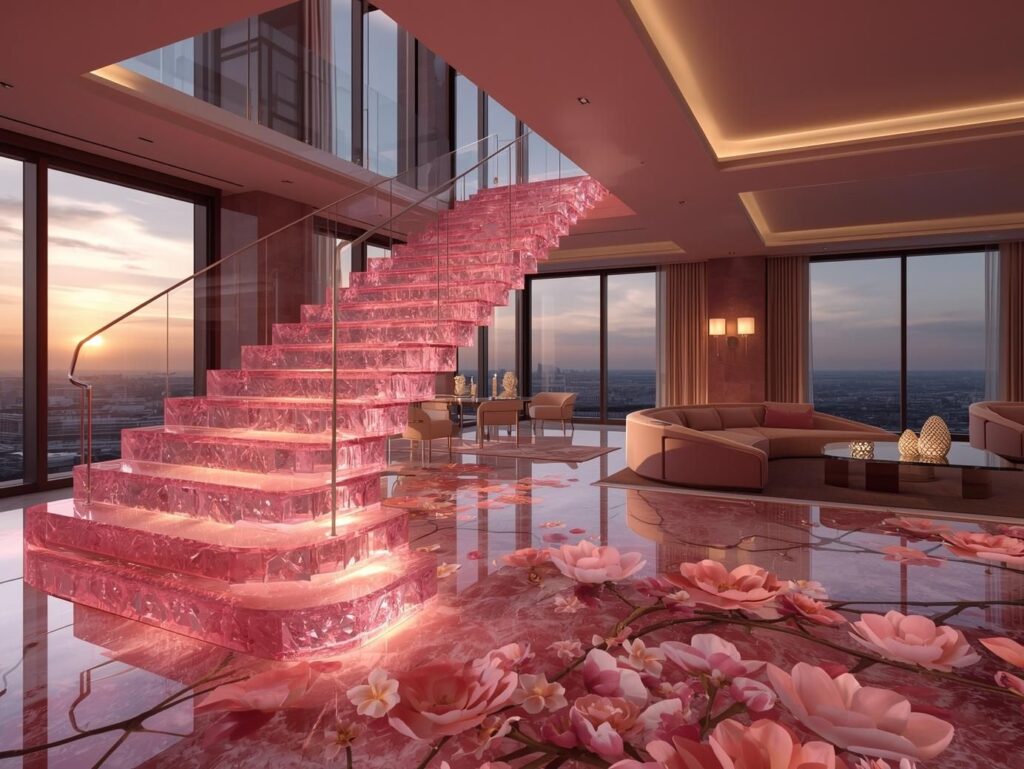
Stairs tell a story before any room does. Every step carries weight, friction, moisture, dirt, and time itself. Homeowners often focus on flooring but forget that stairs age faster than any surface in the house. This is where a clear epoxy floor quietly changes everything not by hiding the material underneath, but by protecting and elevating it.
A clear epoxy floor doesn’t shout for attention. It seals, strengthens, and enhances what’s already there wood grain, concrete texture, even decorative elements. When used correctly on stairs, it becomes both armor and art.
This guide walks you through when a clear epoxy floor is the right choice, how it behaves over time, what it looks like after months of use, and how design lovers are pushing it far beyond basic protection.
What Is a Clear Epoxy Floor?
A clear epoxy floor is a two-part resin system made from epoxy resin and a hardener. When mixed, it chemically cures into a solid, non-porous surface that bonds tightly to the substrate beneath.
Unlike paint or varnish, epoxy doesn’t just sit on the surface it becomes part of it. On stairs, this matters more than anywhere else. Each step experiences repeated impact, edge wear, and pressure that traditional coatings can’t handle for long.
Clear epoxy is used when the goal isn’t to change color, but to:
- Preserve the natural look of wood or concrete
- Add durability without visual clutter
- Create depth, gloss, or subtle texture
This is why clear epoxy is often chosen for epoxy on stairs, wood epoxy applications, and even artistic finishes like 3D epoxy floor designs.
How Clear Epoxy Protects Stairs Over Time
Stairs don’t just wear down, they fracture invisibly.
Every footstep creates micro-abrasion. Over time, those tiny stresses open pores in wood and hairline cracks in concrete. Clear epoxy seals those weaknesses early, before they spread.
It also blocks moisture, which is one of the most overlooked causes of stair damage. Spills, humidity, wet shoes epoxy stops all of it from soaking in.
On wood stairs, wood epoxy behaves like armor. It reinforces soft grain without hiding it, preventing dents and splintering that normally show up within a year on high-traffic staircases.
This is why epoxy floors last decades in garages and why stairs, which take more abuse than floors, benefit even more.
Will Clear Epoxy Turn Yellow Over Time?
This is the question no one asks loudly but everyone worries about.
Epoxy yellows because of UV exposure. It’s chemistry, not poor workmanship. Indoor stairs away from direct sunlight rarely show noticeable yellowing for many years. Stairs near large windows or skylights are more vulnerable.
Professional installers reduce this risk by applying UV-stable topcoats that act as a shield. Without that step, yellowing becomes a matter of when, not if.
The good news? Yellowing doesn’t weaken epoxy. It’s a visual change, not a structural failure. But if clarity matters, UV protection is non-negotiable.
Why Clear Epoxy Looks Different After 6 Months
New epoxy always looks perfect. Six months later, reality shows up.
This doesn’t mean failure, it means use.
Micro-scratches develop where feet land most often. Light begins to diffuse differently across those areas. On stairs, traffic patterns are more visible than on flat floors, simply because movement is repetitive.
Most of these changes are cosmetic. They don’t affect strength or safety. Structural issues like peeling or soft spots are rare and usually tied to poor surface prep.
Understanding this difference prevents panic and unnecessary repairs.
Clear Epoxy on Stairs With Kids or Pets
Families worry about slipping and they should.
Clear epoxy is smooth by default. That’s why traction additives exist. These are mixed into the topcoat to create grip without turning the surface rough.
Pet claws don’t damage epoxy the way people expect. What they do is highlight wear sooner in high-use zones. The damage is visual, not functional.
The real safety issue is edges. Parents often focus on treads and forget nosing traction. Proper epoxy systems address both.
Used correctly, clear epoxy floor systems are not more dangerous, they’re more predictable.
Design Benefits of Clear Epoxy on Stairs
What most people don’t realize is this:
when you see a “designed” clear epoxy stair, the beauty didn’t happen at the end. It happened in layers, pauses, and decisions made while the epoxy was still liquid.
Design under a clear epoxy floor isn’t decoration added on top, it’s construction that happens inside the system.
Here’s how professionals actually build those designs.
Cloudy & Floral Epoxy Effects on Stairs
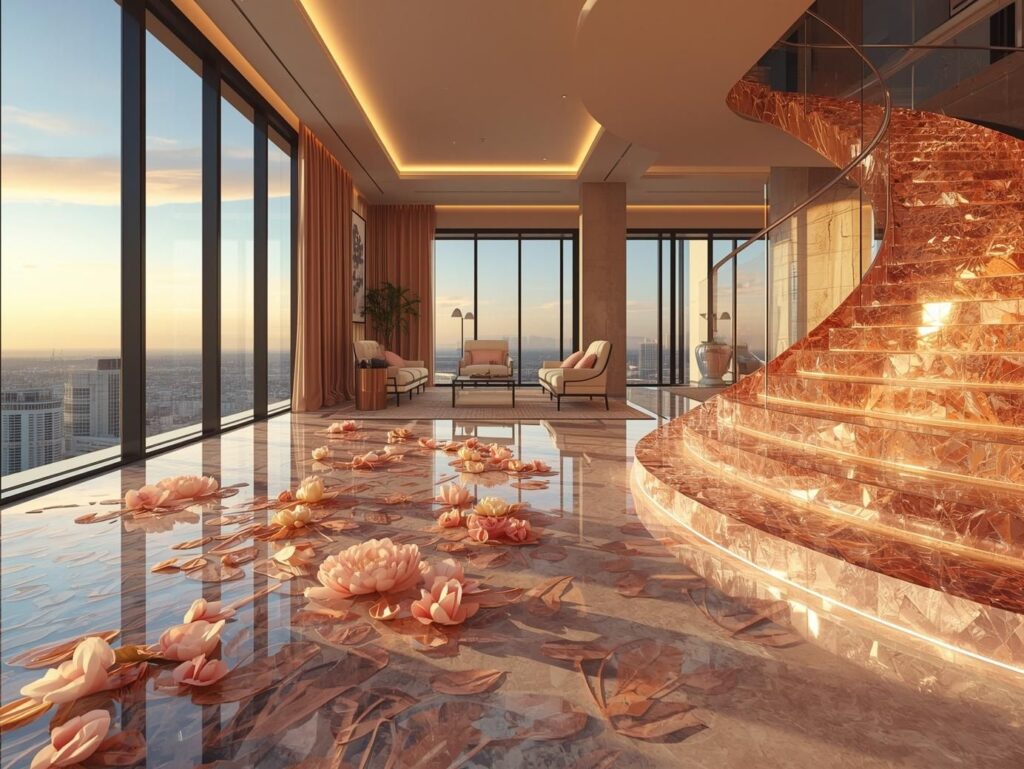
This design starts before epoxy is even mixed.
Workers first seal the stair surface completely. This step is critical any open pores will pull pigment uncontrollably and ruin the effect. Once sealed, a thin base epoxy layer is applied and allowed to partially cure, not fully harden.
The cloudy effect is created during the working window, when epoxy is thick enough to hold movement but still fluid. Installers introduce pigment or translucent additives in controlled amounts, then guide the flow using gravity, air movement, and subtle tool manipulation. No brushes. No random swirling. Everything is intentional and slow.
For floral or organic inclusions, the process becomes even more delicate. Elements are pre-sealed separately so they don’t release air or moisture. They’re placed by hand into the tacky epoxy layer and gently pressed just enough to lock position and not sink.
Another clear epoxy layer is poured on top after curing, sealing everything permanently. Once cured, the design isn’t “on” the stairs, it’s inside them.
Crystal & Glass-Like Epoxy Stair Finishes
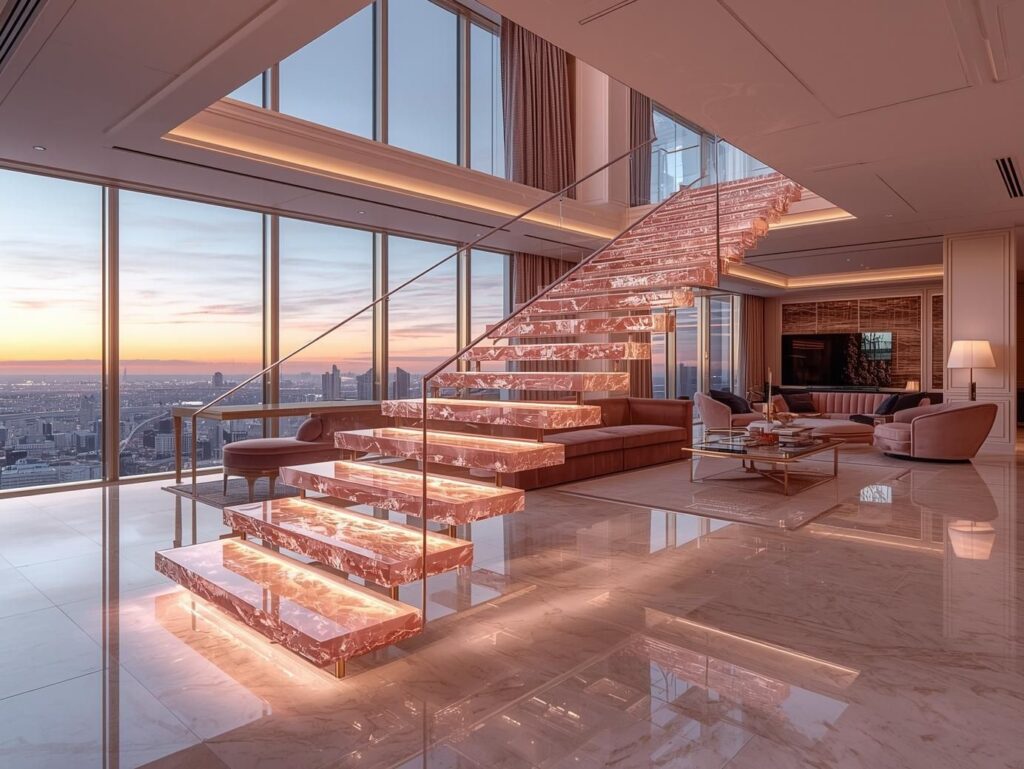
Crystal-clear epoxy stairs are built through discipline, not creativity.
Workers start by leveling the stair surface to near perfection. Any slope or dip will distort light once epoxy cures. After sealing, epoxy is poured in multiple thin layers, never one thick coat.
Each layer cures fully before the next is applied. This prevents internal heat buildup, clouding, and distortion. Between layers, surfaces are lightly sanded to promote adhesion without scratching clarity.
Air control is everything here. Installers use heat tools carefully too much heat causes rippling, too little traps bubbles. The goal is clarity without movement.
This technique is often chosen instead of aggressive visuals like a full 3D epoxy floor, because it delivers depth and elegance without distraction.
Subtle Glitter Accents Embedded Under Clear Epoxy
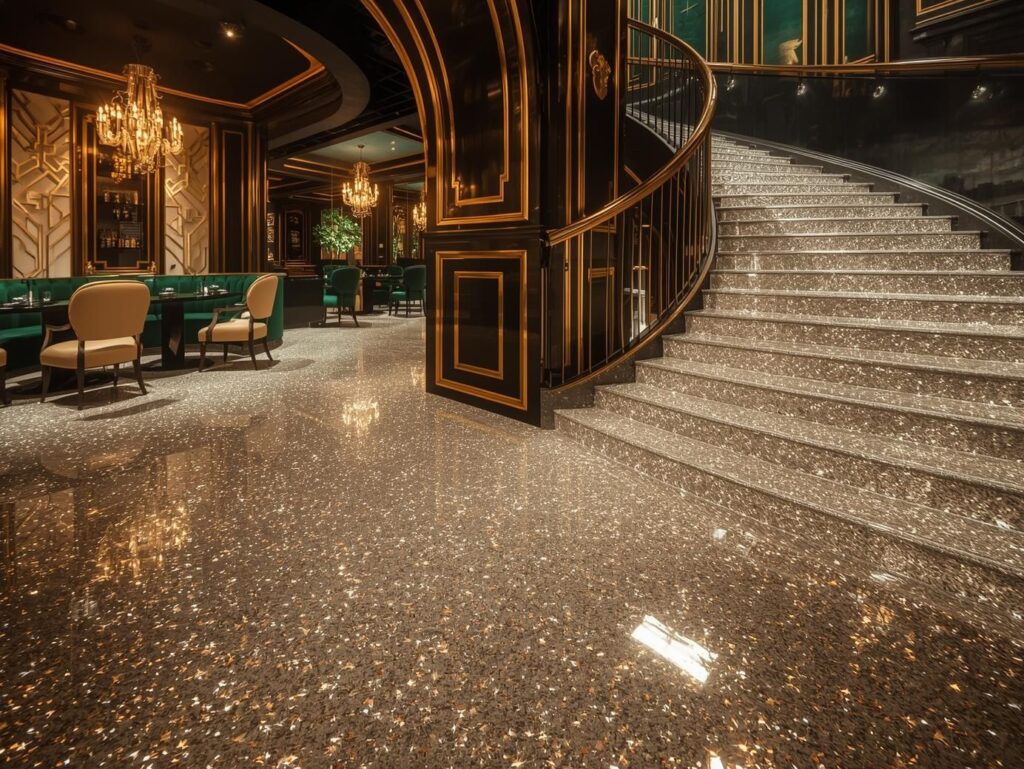
Professionals never sprinkle glitter on wet epoxy. That’s how amateur jobs fail.
Instead, glitter is mixed into a separate suspension batch of epoxy at a precise ratio. This keeps particles evenly distributed and prevents clumping or sinking.
That suspended layer is applied strategically often between base and top coats so it’s protected from direct wear. Workers avoid high-impact tread zones and focus on controlled areas like risers or stair edges.
Once cured, a final clear epoxy floor layer seals everything smooth. Nothing sheds. Nothing catches under shoes. The effect stays visual, not physical.
This technique is common when homeowners want the subtle depth associated with glitter epoxy without sacrificing safety.
Artistic Themes Built Beneath Clear Epoxy on Stairs
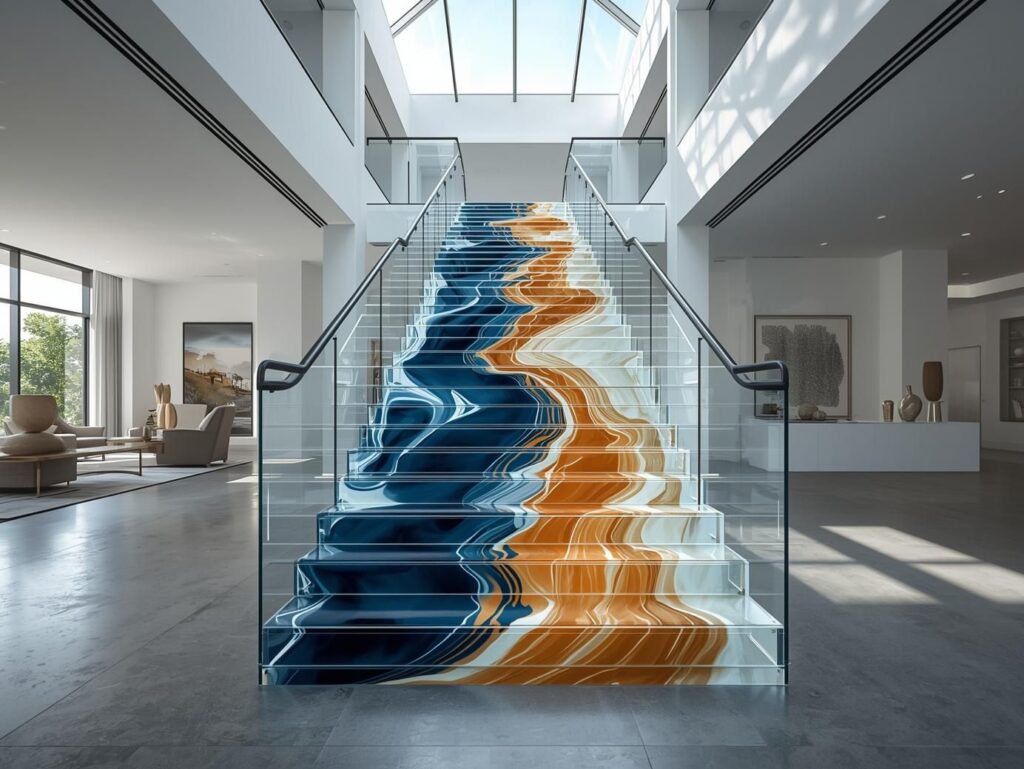
This is where epoxy becomes architectural.
For artistic stair designs, workers treat each stair like a canvas built in stages. The base is sealed. Then imagery, textures, or materials are placed and fixed using bonding coats so they don’t shift.
In beach-inspired builds, for example, layered materials are locked in one stage at a time each layer cured before the next is added. This prevents movement and preserves separation, which is what gives beach epoxy design its realism.
For visibility features like glow in the dark epoxy, installers embed the material in protected zones rather than traffic paths. The glow material is sealed beneath clear epoxy so it charges from ambient light but never wears away.
Every artistic layer is finished with at least one structural clear coat. By the time the stairs are complete, the design is not exposed, it’s entombed.
Is Clear Epoxy Safe for Stair Traction?
Safety depends on decisions made before installation, not after.
Without additives, epoxy is slick. With them, it meets building code standards comfortably. The key is balance: too much grit ruins the look; too little increases risk.
Professionals test traction before final curing. DIY installers often skip this step.
Clear epoxy becomes unsafe only when aesthetics override function.
Common Mistakes Homeowners Make
The biggest mistake is assuming all epoxy is the same.
Using floor-grade epoxy instead of stair-rated systems leads to premature wear. Skipping surface prep causes adhesion failure. Ignoring sunlight causes yellowing surprises.
Another mistake is assuming clear means maintenance-free. It doesn’t. It means lower maintenance, not zero.
Maintenance and Cleaning Expectations
Clear epoxy stairs are low maintenance, not zero maintenance.
Best practices:
- Sweep regularly to reduce grit abrasion
- Use pH-neutral cleaners
- Avoid harsh scrubbers
Most residential staircases need:
- Light refresh coat every 5–7 years
- Spot repair rather than full replacement
Compared to wood refinishing, epoxy maintenance is simpler and less disruptive.
When You Should Avoid Clear Epoxy on Stairs
Clear epoxy isn’t ideal for:
- Fully outdoor stairs
- Constant direct sunlight
- Severely damaged stair structures
In these cases, tinted systems or alternative coatings perform better.
Professional Installation vs DIY
Stairs leave little room for error. Uneven curing or slip miscalculations become dangerous quickly.
DIY may work for:
- Simple basement steps
- Low-traffic areas
Professional installation is safer for:
- Main staircases
- Artistic designs
- Homes with kids or pets
Final Verdict: Is Clear Epoxy Right for Your Stairs?
A clear epoxy floor isn’t just a finish, it’s a long-term decision. When used on the right stairs, with the right design and installation, it protects better than almost any alternative while telling a visual story unique to your home.
If your goal is durability without sacrificing beauty, clear epoxy isn’t a trend it’s a solution.